

List of Russian Ballistic Missiles, from the Scud Missile to the Sarmat Missile – HobbyMiliter.com – As the main heir of the dissolved Soviet Union, Russia obtained most of the Soviet Union’s missile technology along with its nuclear weapons. Meanwhile the other three heir states of Soviet nuclear weapons, Ukraine, Kazakhstan and Belarus, were forced to hand over (or destroy) their nuclear weapons to Russia in exchange for security and development credit from Russia and America, and then joined the NPT treaty.
As the owner of most Soviet military technology, Russia is the owner of the largest inventory of ballistic missiles and cruise missiles in the world. Russia, after successfully struggling to repair its economy, which was in shambles after the Soviet Union was left behind, continues to develop its various missile technologies of all types. And the Russian strategic rocket forces remain the most important element in every Russian global military strategy.
Russian missiles have diverse duties and missions. Starting from missiles that have the duty of carrying out anti-access/area denial strategy in small scale local conflicts to strategic missiles tasked with bringing doom to their opponents across the continent.
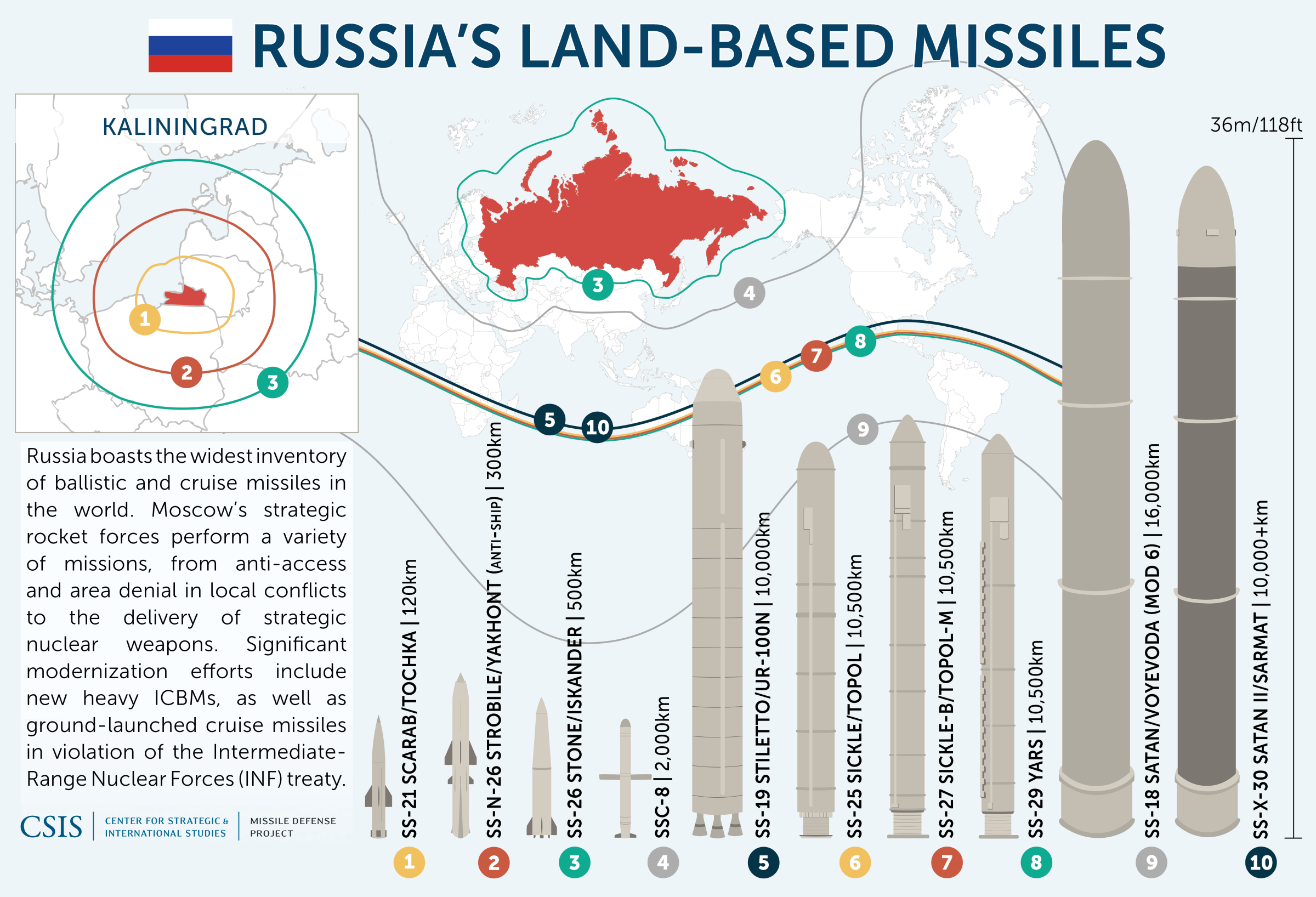
The modernization program of its strategic rocket forces continues to be carried out with significantly advanced development. Post-Soviet Russia retired many of its old missiles and developed a new generation of ballistic missiles to maintain its capability as one of the nuclear armed countries. Apart from that, Russia also developed new cruise missiles that are far more precise than the technology developed by the Soviets, approaching the capability of ballistic missiles made by its main rival.
On the following pages we will get to know the types of Russian ballistic missiles. This list is not complete and will always be completed and updated if there are developments in the future.
Russian Scud Missile (SS-1)
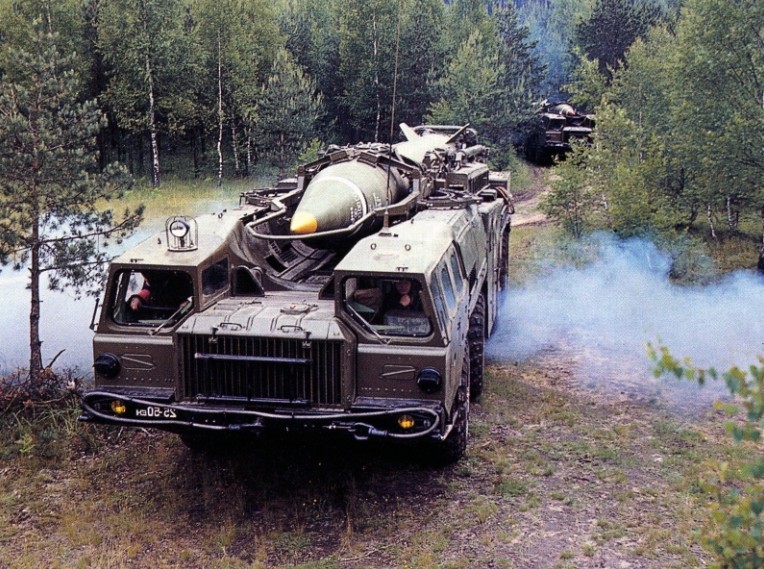
The Scud missile (SS-1) is a short range regional ballistic missile developed by the Soviet Union during the cold war era. At present, thousands of Scud missiles have been retired and recycled by Russia. Even so, the Scud missile is still a weapon for many other countries that bought it from the Soviet Union. They even later developed their strategic rocket industries based on reverse engineering of this Scud missile.
This Scud missile began to become famous during the Iran-Iraq war. Each country had quite a lot of Scuds. Iraq obtained them directly from the Soviet Union and Iran obtained them as a result of an intelligence operation in Libya (and later North Korea). From 29 February to 20 April 1988, Iraq launched 189 Al Hussein missiles (Scud missiles that had been upgraded on its own) at Iran, of which 135 successfully landed in Tehran.
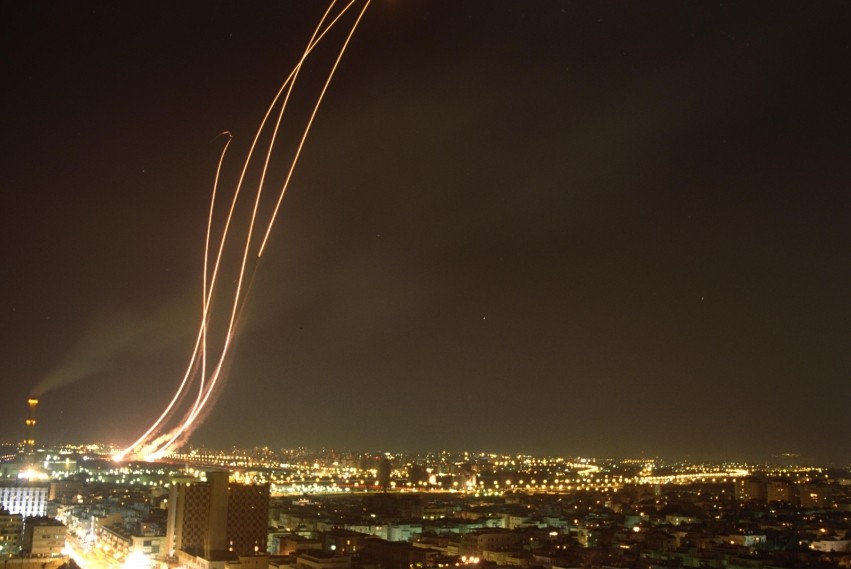
And in return, Iran launched around 80 Hwasong 5 missiles (Scud missiles that had been upgraded by North Korea), which then landed successfully in Baghdad. This period is known as the Scud Duel, alias the War of the Cities.
The original Soviet version of this Scud missile has a range of around 180 kilometers with an accuracy of around 3 kilometers and is known as the Scud A. An accuracy of 3 kilometers means that, if launched at a target, it could land off course within a radius of 3 km from the target. The last version of the original Scud missile, the Scud D, has a range of 700 kilometers with an accuracy of around 50 meters.
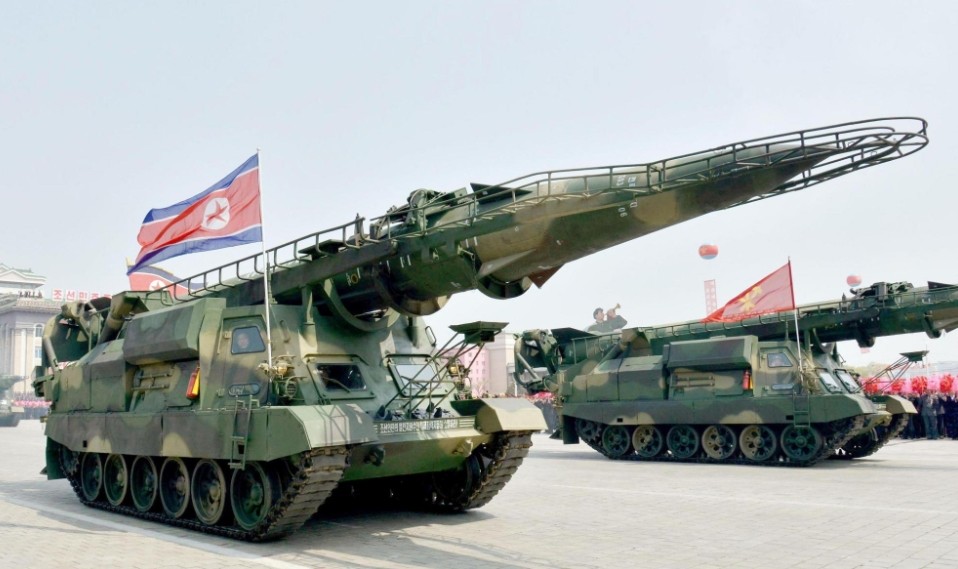
When the Soviet Union dissolved, Russia received around 300 Scud missile launcher vehicles from the Soviets and thousands of its missile stock. The name “Scud” itself is the NATO code for the missile with the original Soviet codes R-11 (early version) and R-17 (later version).
Scud Missile Specifications
Height: 11.25 meters
Diameter: 0.88 meters
Fuel: Liquid,
Warhead: Single, nuclear (5 – 80 KT), chemical and conventional (985 kg).
Range: 180 km (Scud A), 300 km (Scud B), 600 km (Scud C) and 700 km (Scud D)
Russian Scarab Missile (SS-21)
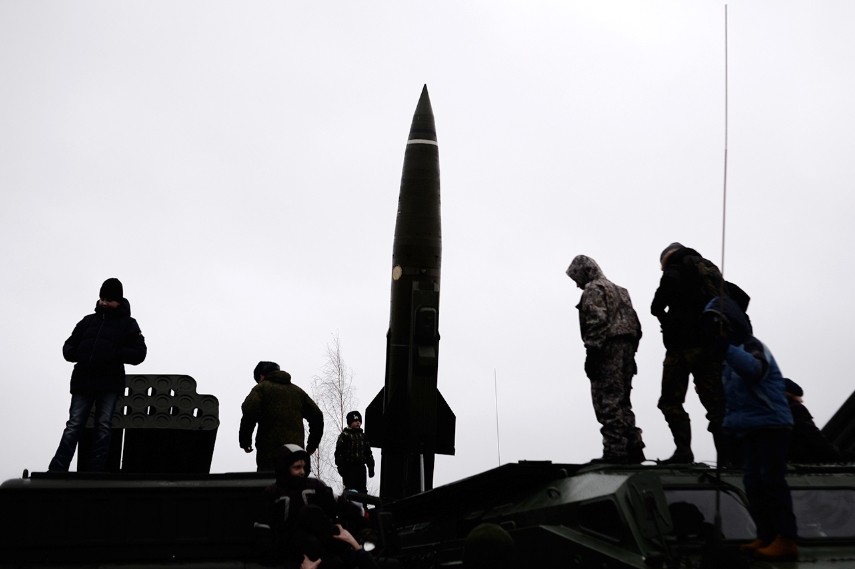
This SS-21 Scarab missile has the original Soviet code OTR-21 Tochka, or 9K79. In truth, this Russian ballistic missile is a short range regional ballistic missile replacing the SS-1 Scud. This missile is launched from a missile launcher vehicle, so it can move in a mobile fashion and can better survive a sudden enemy attack, and can be deployed quickly as a tactical ballistic missile force together with other ground assets.
This Russian SS-21 Scarab ballistic missile is designed to carry out high precision tactical attacks on opponent tactical targets such as control posts, bridges, storage facilities, troop concentrations and air bases.
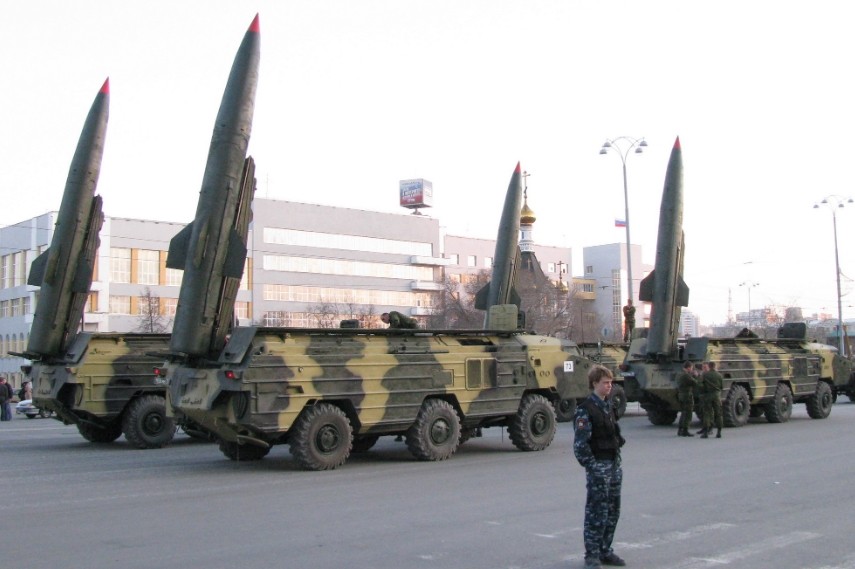
Troops armed with this Russian SS-21 Scarab ballistic missile are deployed in units at brigade level. Usually one SS-21 Scarab brigade has 18 launcher vehicles with the capability to swim rivers (limited amphibious), where each launcher has 1 missile ready to fire and 2 reserve missiles in a transport vehicle. So in total one brigade has a strength of 54 missiles.
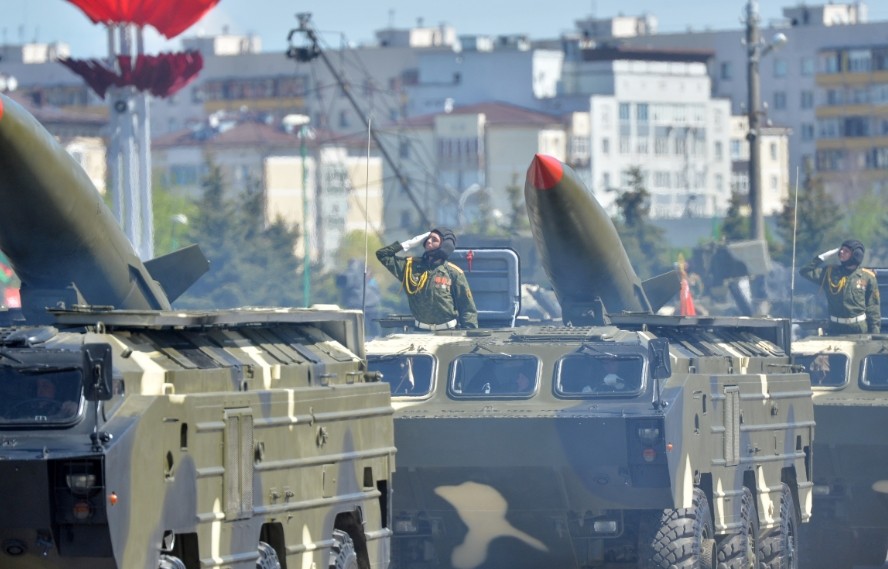
This Russian SS-21 Scarab ballistic missile has a range of 70 kilometers for the early version and 185 kilometers for the last version. When the Soviet Union dissolved, Russia received around 220 launcher vehicles and several thousand missiles.
In 2004, the Russian Scarab missile fleet was given an upgrade and a life extension, so that it could last until 2020 and beyond, until the Iskander missile entered full production and operational status. All Scarab missile brigades will be rejuvenated and replaced by Iskander missiles.
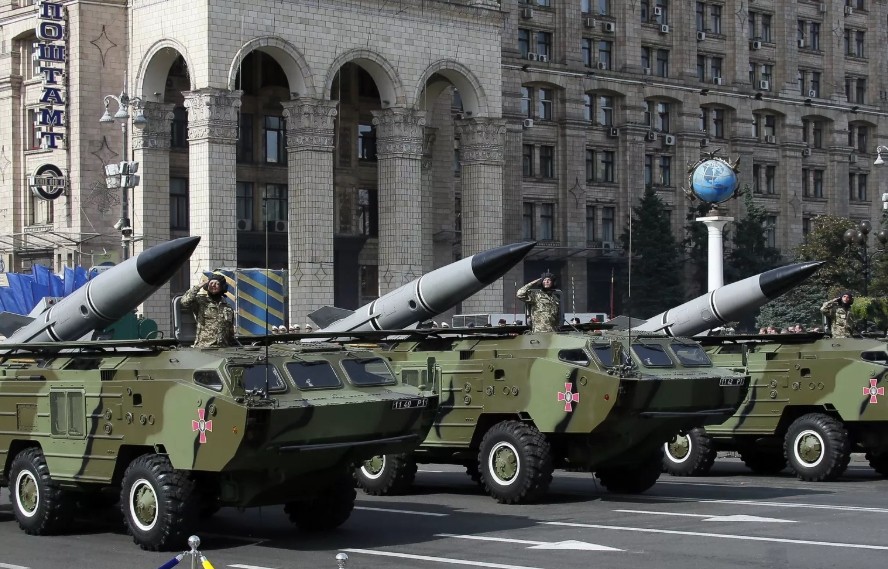
Tochka Missile Specifications
Height: 6.4 meters
Diameter: 0.65 meters
Fuel: solid fuel
Warhead: Single, nuclear (100 KT), chemical, EMP and conventional (485 kg).
Range: 70 km (Scarab A), 120 km (Scarab B) and 185 km (Scarab C)
Russian SS-26 Stone Missile, alias the Iskander Missile

The SS-26 Stone, or in Russia known as the Iskander missile, is the newest generation of medium range ballistic missiles from Russia. The missile with the original code 9K720 has a range starting from 50 to 500 kilometers.
This Russian Iskander missile can be armed with cluster bomb warheads, air explosive warheads (like America’s MOAB), HE warheads and up to nuclear warheads. Apart from that, its newest version can also be equipped with an earth penetrator warhead that can penetrate underground bunkers and explode after being inside the ground, and reportedly can be equipped with an electromagnetic pulse warhead for anti-radar missions.
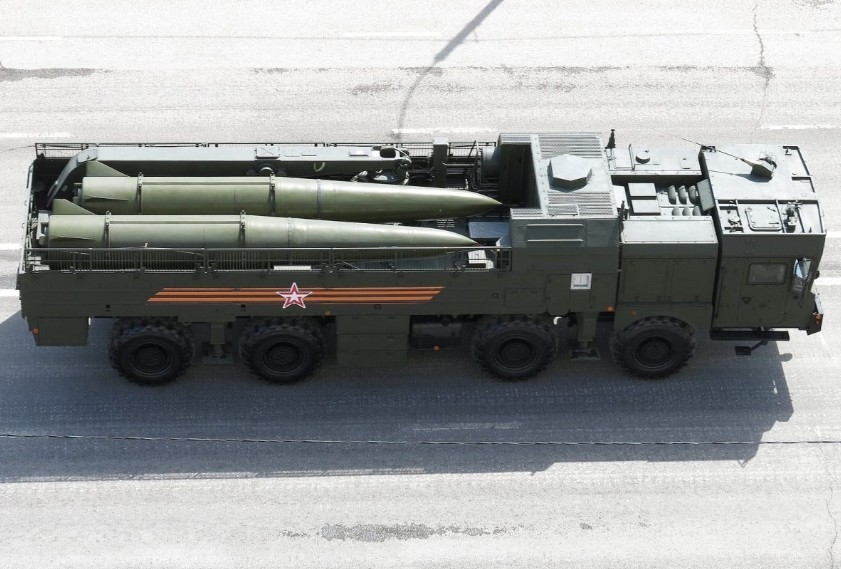
The Iskander is a Russian ballistic missile designed after the dissolution of the Soviet Union. The first test was carried out in 1996, 22 years ago. The placement of this Iskander missile in the Russian region of Kaliningrad (a Russian region in the Baltic that is separated from Russian territory and surrounded by NATO countries) has drawn protests from its neighbors.
Most recently, it is known that Russia has also placed this Iskander missile system in its operational region in Syria. The Iskander is predicted to replace the entire Russian fleet of short and medium range ballistic missiles. Russia itself has currently exported the missile to Armenia and Algeria, and is offering this Iskander missile to Vietnam.
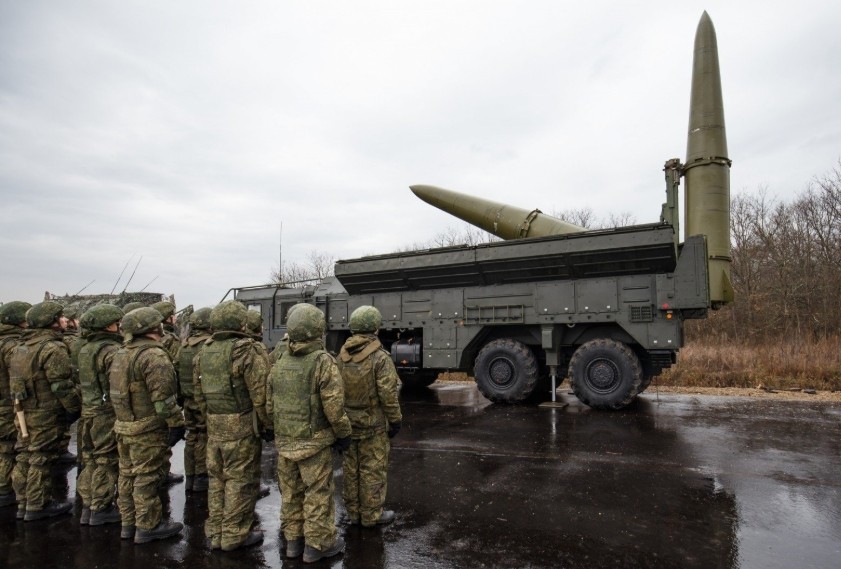
Iskander Missile Specifications
Height: 7.3 meters
Diameter: 0.92 meters
Fuel: Solid Fuel
Warhead: Single, nuclear (5 – 80 KT), chemical, EMP, thermobaric and conventional (700 kg).
Range: 500 km
Note: Different from the Scud and Scarab, which are truly ballistic missiles. The Iskander has maneuvering capability in the final phase of its flight, and is equipped with decoys. This is intended so that it can avoid interception by opponent air defenses.
Russian SS-27 Topol Ballistic Missile
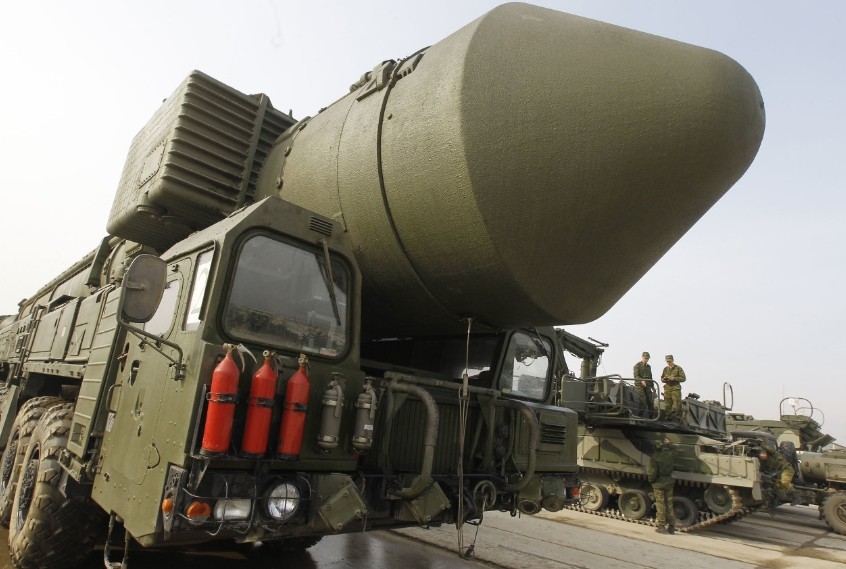
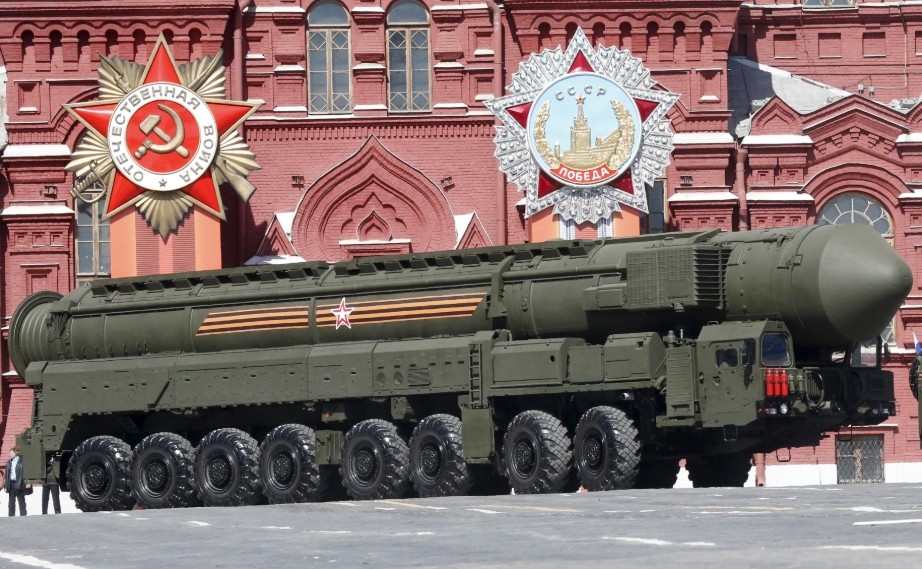
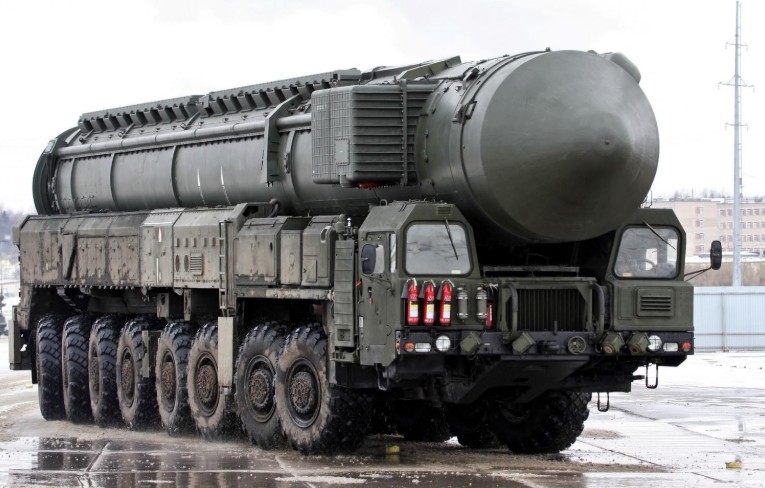
The SS-27 Topol is a giant missile. Its NATO code is the SS-27 Sickle missile and its Russian code is the RT-2PM2 Topol missile. The Topol is an intercontinental ballistic missile. The Topol has three rocket stages, uses solid fuel, and can be deployed in silos as well as in mobile launchers.
The Topol has a cold launched launch system, which means a booster is needed to fire the missile, before finally the missile’s rocket engine ignites after the booster lifts the missile into the air.
The Topol can be equipped with a single nuclear warhead with a strength of 800 kilotons. And it can also be equipped with MIRVs with smaller strength. This missile can carry 4 to 6 MIRVs along with their decoy warheads.
The minimum range of this Russian ballistic missile is 2,000 kilometers and its maximum range is around 11,000 kilometers. If launched from Vladivostok, the Russian region on the edge of the Pacific Ocean, this missile can reach the American mainland.
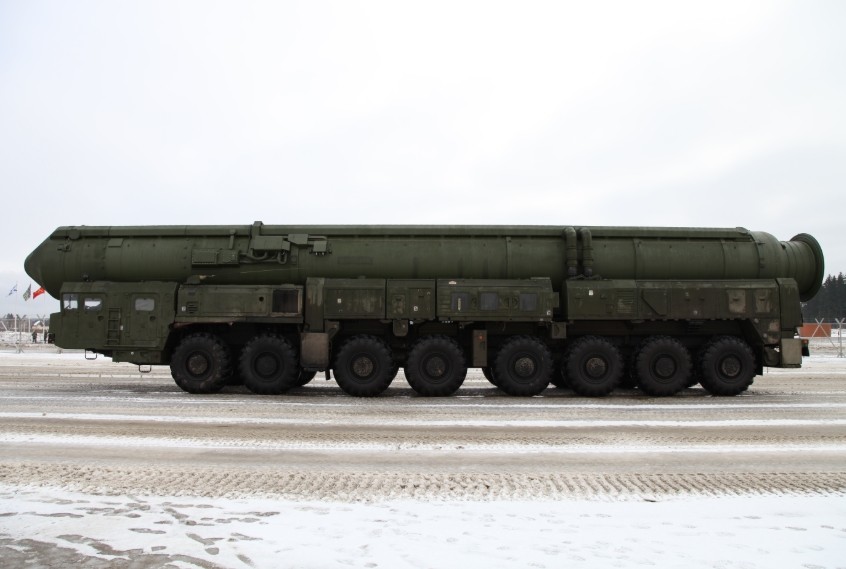
At present, around 70 Topol missiles have strengthened the Russian Strategic Rocket Forces. 60 of them are placed in secret silos spread across Russian territory and 18 are placed in mobile launchers that can carry out retaliatory attacks in secret from unexpected places.
This missile was first tested on 20 December 1994, in which a single warhead successfully fell on a target located 4,000 kilometers away. However, on the fifth test in 1998, the missile exploded when launched. Fortunately its load was a test warhead.
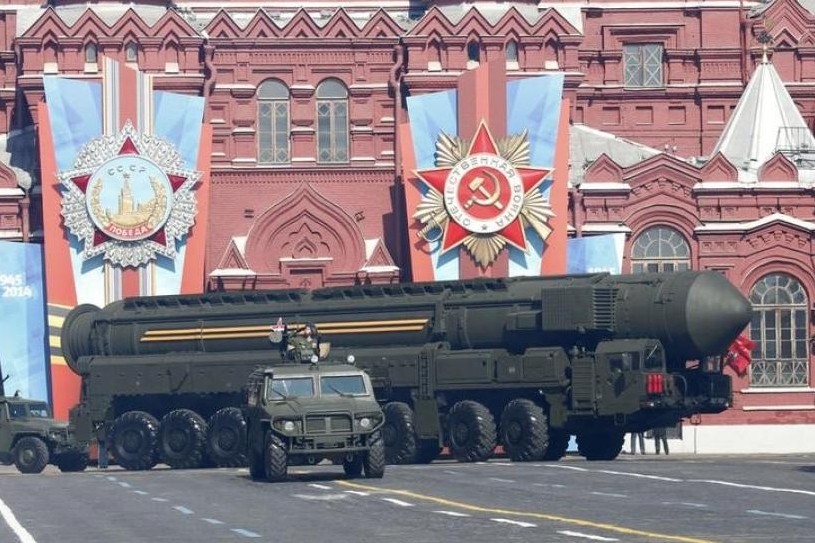
Since 2010, production of this Russian Topol ballistic missile has been stopped. Russia chose to give main priority of funds and resources to newer ballistic missiles to rejuvenate the Soviet legacy ballistic missiles that have begun to wear out and must be retired.
This missile is placed in regimental units, where each regiment is responsible for 10 missiles, whether in silos or mobile.
Topol Missile Specifications
Height: 21.5 meters
Diameter: 1.8 meters
Fuel: Solid Fuel, three stage rocket
Warhead: Single, nuclear (800 KT).
Range: 11,000 km
Note: Already modernized into the Topol-M.
SS-19 Stiletto Missile
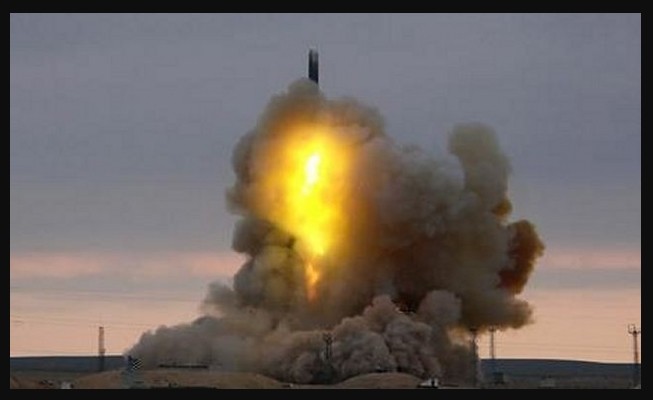
This SS-19 Stiletto ballistic missile was one of the mainstays of the Soviet Union when that country collapsed. The dissolution of the Soviet Union made Ukraine, which was formerly a constituent state of the Soviet Union, suddenly own around 130 of these death carrying missiles.
Russia, with the help of American diplomatic pressure, then pressed Ukraine to destroy and hand over its nuclear missile fleet along with its warheads to Russia. America pressed by threatening that all NATO members would withdraw recognition of Ukraine’s sovereignty if it did not hand over the nuclear weapons and sign the NPT treaty.
Conversely, if Ukraine was willing to hand over all the nuclear warheads it owned, America, together with other NATO members, would recognize Ukraine’s sovereignty. And America would also provide development credit for Ukraine. Furthermore, America and Russia together would guarantee the security and integrity of the Ukrainian state. That was set out in an international agreement signed together by America, Russia, Britain and Ukraine in Budapest, Hungary.
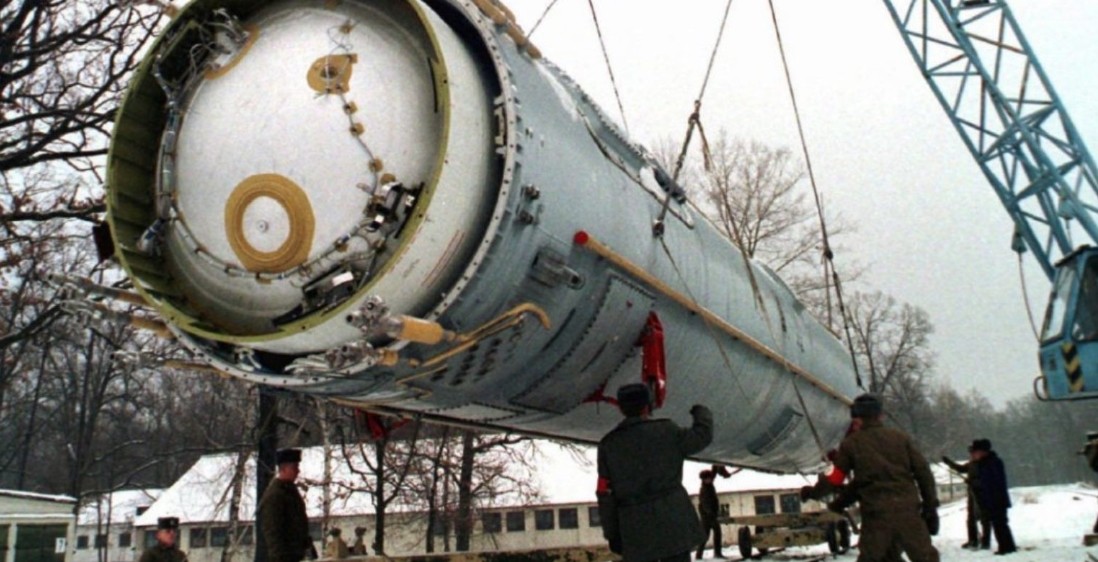
Because of that, Ukraine now accuses Russia of betraying it in the case of the takeover of Crimea and separatism in the Donetsk region. Russia is considered to not respect the Budapest agreement after Ukraine handed over around 1,300 of its nuclear warheads.
Stiletto Missile Specifications
Height: 27 meters
Diameter: 2.5 meters
Fuel: Liquid Fuel, two stage rocket
Warhead: 1-6 MIRV, nuclear (500 KT – 5 MT).
Range: 10,000 km
Russian SS-18 Satan Ballistic Missile
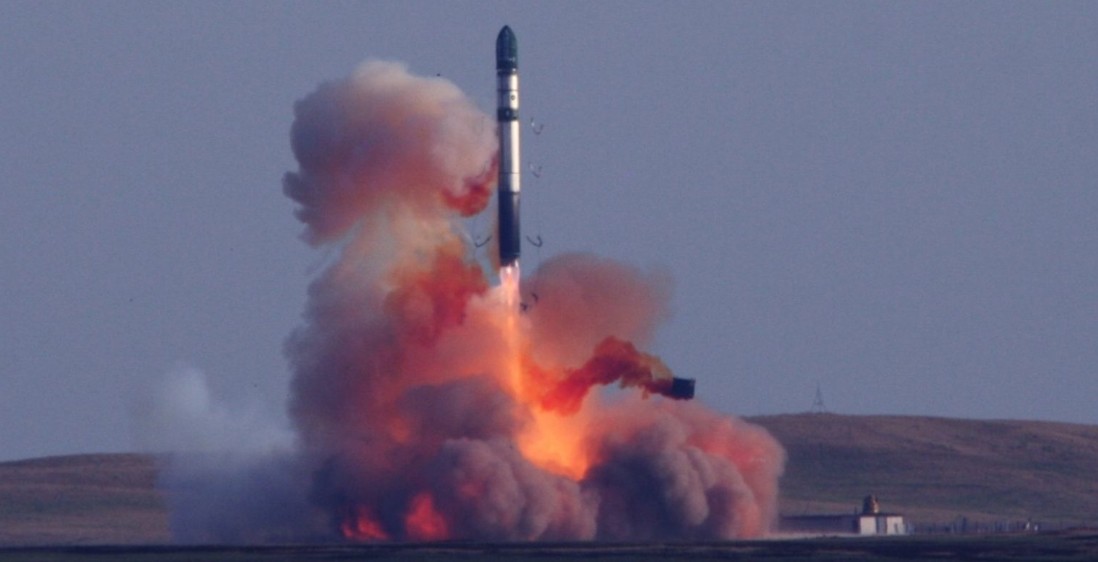
The SS-18 Satan is Russia’s mainstay intercontinental nuclear ballistic missile. This missile is comparable to the American Minuteman ballistic missile. The missile with the original code R-36 was developed while the cold war was still ongoing.
The Satan missile was developed starting at the end of the 1960s. Its early version was coded by NATO as the SS-9 Scarp. However, because the later versions developed by Russia became more advanced and practically had different capabilities, NATO gave a new code to this missile, SS-18 Satan.
The last generation Satan missile still strengthens Russian intercontinental missile units, and will slowly be replaced by the Sarmat missile. The Satan missile is capable of carrying up to 10 warheads and decoys. So it is capable of bringing doom to 10 different regions in its target country with a strength of around 20KT.
Missiles that have been retired, several were converted into satellite carrier rockets. As a satellite carrier, this rocket (no longer called a missile) is named Dnepr and is capable of carrying a load weighing 4.5 tons to Low Earth Orbit.
Satan Missile Specifications
Height: 32.2 meters
Diameter: 3.05 meters
Fuel: Liquid Fuel, two stage rocket
Warhead: 10 MIRV, nuclear (500 KT – 750 KT per MIRV).
Range: 16,000 km
Russian RS-28 Sarmat Ballistic Missile
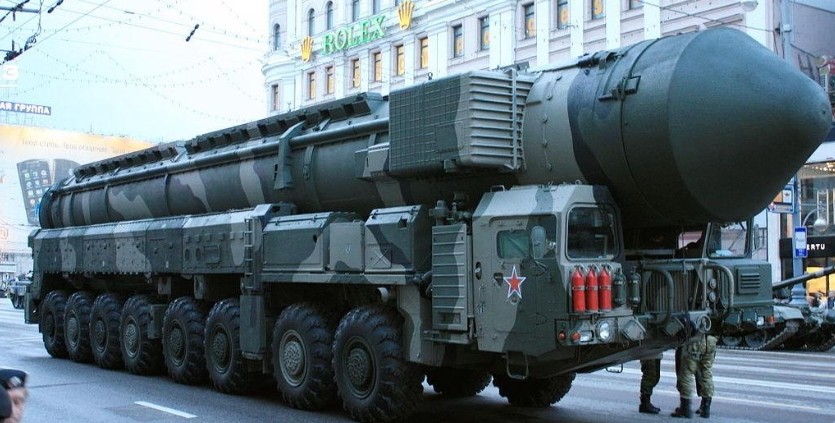
The Sarmat missile is the newest Russian ballistic missile. This missile is currently still in development and is estimated to only become operational after 2020. The Sarmat missile is one of 6 new Russian strategic weapons projects launched by President Vladimir Putin on 1 March 2018.
The decision to develop the Sarmat missile was based on several things. The first is the aging of the Satan missile, which has been the mainstay of Russian ballistic missile strength all this time. The second is the increasingly advanced American anti-ballistic missile defense system, whose development has been boosted since the era of the Obama administration. This system is estimated to be able to overcome Satan missile attacks quite easily.
The last is to eliminate dependence on rocket engine technology and ballistic missile system design from Ukrainian companies such as the Yuzhnoye Missile Design Bureau, which produces Russian ballistic missile engines, and PA Yuzhmash, which is the original factory of the Satan and Topol missiles.
The Satan missile can be loaded with the conventional Avangard warhead. This non-nuclear warhead can be controlled, has hypersonic speed and destroys targets with kinetic energy. If the Sarmat missile is already operational, with the Avangard warhead, Russia can target targets all over the world without triggering a nuclear war.
To work around the development of the American anti-ballistic missile defense system, the Sarmat missile is equipped with up to 24 MIRVs, among which decoys can be loaded. Apart from that, this missile is also estimated to be capable of traveling a ballistic trajectory via the south pole, where the United States to this day does not have an anti-ballistic missile system facing south.
The Sarmat missile is also designed to have a very short rocket engine burn time compared with other ICBM missiles. This is intended so that its launch becomes more difficult to detect by American early warning spy satellites, which work by detecting the hot infrared emission radiation of the rocket engine.
Sarmat Missile Specifications
Height: 36.3 meters
Diameter: 3 meters
Fuel: Liquid Fuel, two stage rocket
Warhead: 10-24 MIRV, nuclear (500 KT – 750 KT per MIRV).
Range: 10,900 km