Historical Documentary Photos Related to the PERMESTA Rebellion – HobbyMiliter.com – The PERMESTA rebellion is an episode of history in the life of the Indonesian nation. In the books by Alex Kawilarang and Ventje Sumual, as well as several other historical works on PERMESTA, it is acknowledged that the beginning of PERMESTA (and PRRI) was an expression of dissatisfaction by people in the regions with the central government’s management of the state, and dislike of the communist influence in the government at that time. With the help of weapons from outside parties (the United States, the Philippines and Taiwan), the armed rebellion then broke out.
The PRRI and PERMESTA rebellions were among the most difficult episodes in Indonesian history. The Indonesian National Armed Forces had to fight their own brothers, who in the struggle era had together been heroes of the independence struggle. But in the end, after the rebellion ended and a mass amnesty was granted, calm returned. History has happened, and may it be a lesson for us all. Here are historical documentary photos related to the Permesta rebellion.
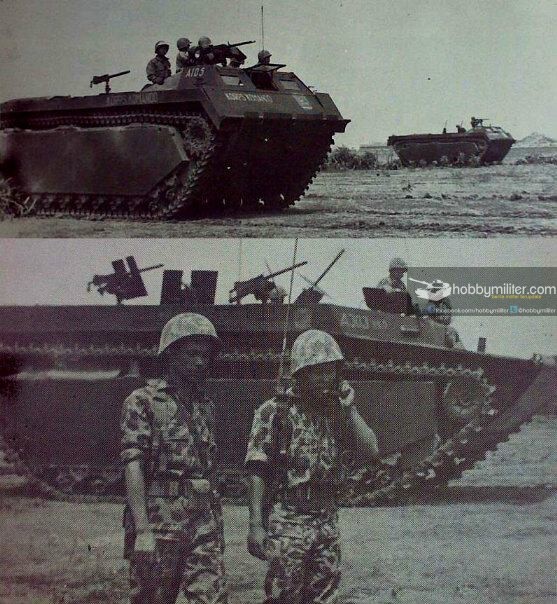
The landing of KKO-AL troops at Kema Beach, Manado, in crushing the Permesta rebellion. The KKO-AL troops (now the Indonesian Navy Marine Corps) used the US-made LVT-1 Alligator amphibious landing vehicle, formerly of the Dutch Marines, handed over together with the transfer of sovereignty in 1950. Note the 4 heavy M2 Browning machine guns mounted above the vehicle.
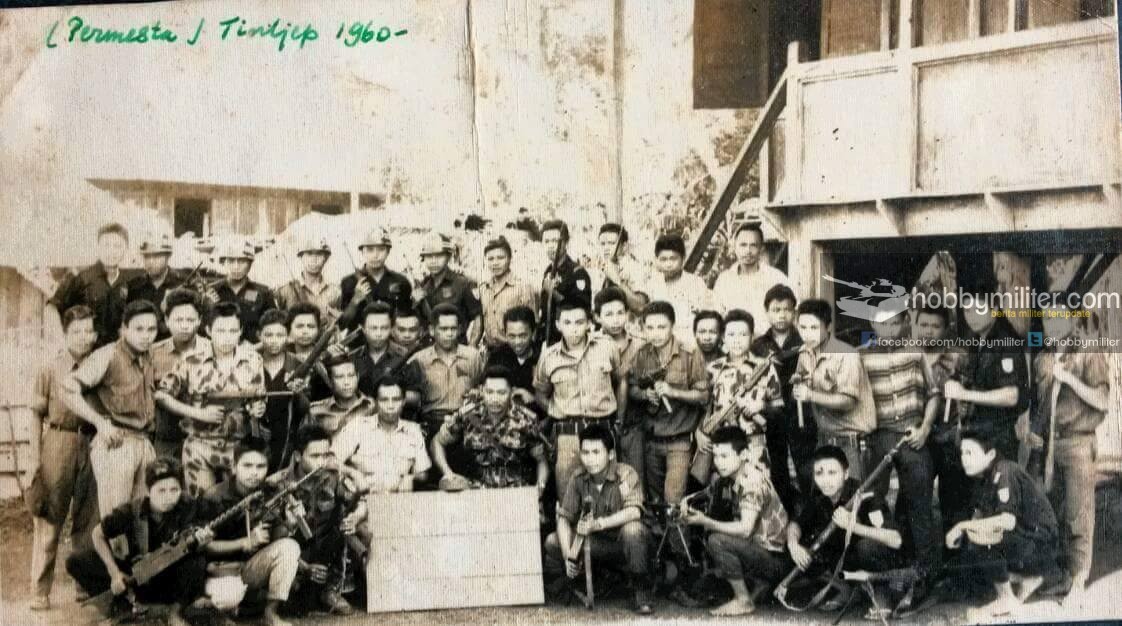
Permesta troops, Company D, Headquarters of Battalion K – Kala Hitam, in Tincep Village, Sonder, Minahasa. The Permesta Battalion K – Kala Hitam troops were led by F. Rampengan. The Permesta Kala Hitam Battalion is not related to the TNI Kala Hitam Battalion (Yonif 312 Subang), it just happens to share the same nickname. Besides Kala Hitam, Permesta also had the Tarantula Battalion and the Black Rhino Battalion.
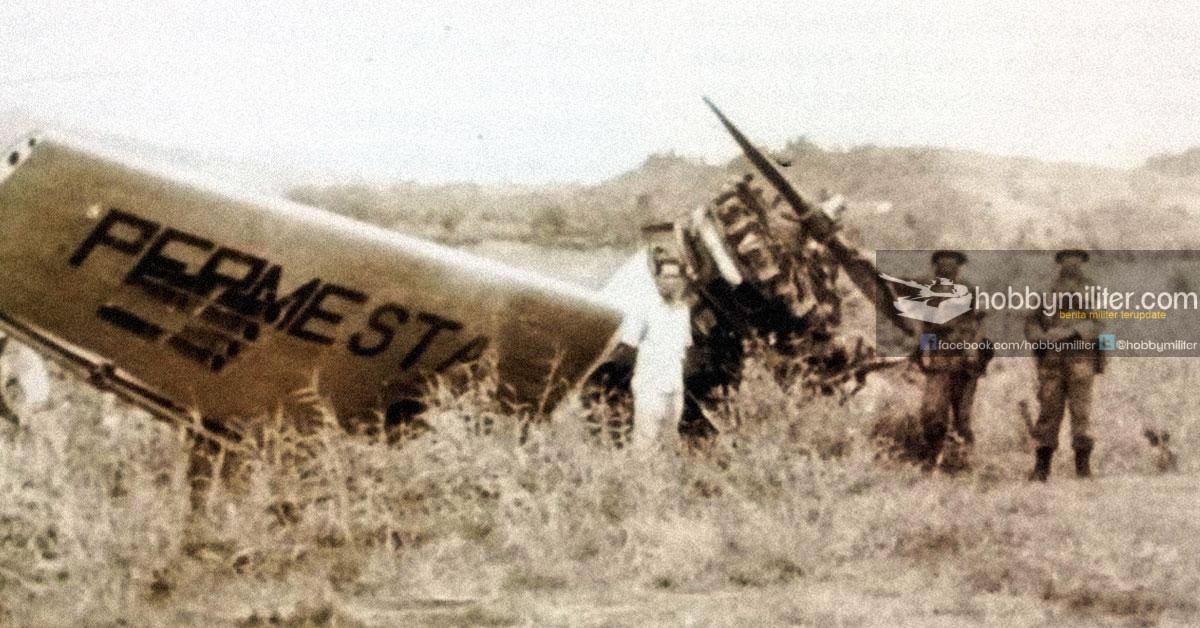
KKO-AL troops pose with a destroyed Permesta fighter aircraft in the background at Mapanget Airfield. Permesta was the only rebellion episode in Indonesia to have its own Air Force, complete with hired pilots from the United States, the Philippines and Taiwan.
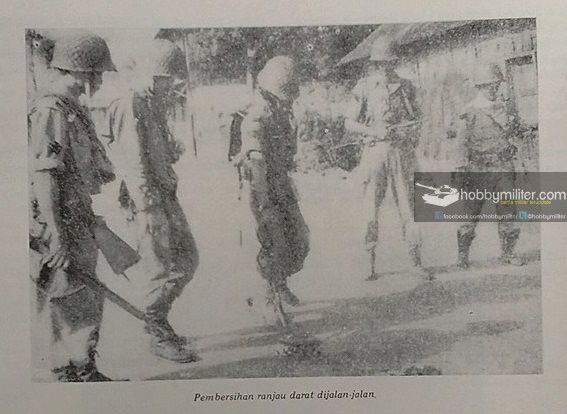
Clearing landmines planted by Permesta troops on the roads during the operation to crush the Permesta rebellion. The mines were planted to slow the movement of central government troops in crushing the rebellion. Besides obtaining weapons from abroad, Permesta troops’ weapons were also obtained from TNI inventory, as most Permesta troops originally came from organic TNI units.
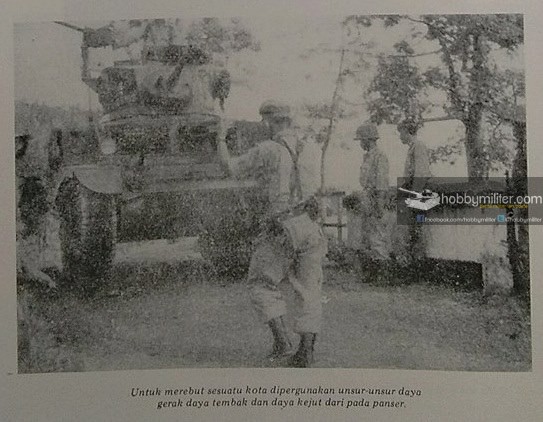
TNI also deployed M3A3 Stuart tanks in crushing the Permesta rebellion. The firepower, mobility and shock power of the TNI AD cavalry with M3A3 Stuart tanks were able to support the recapture of territory after territory held by the rebel forces. Although it had an Air Force (but practically no longer operating after Allen Pope was shot down), Permesta apparently had no cavalry troops. Almost all Permesta troops were infantry battalions.
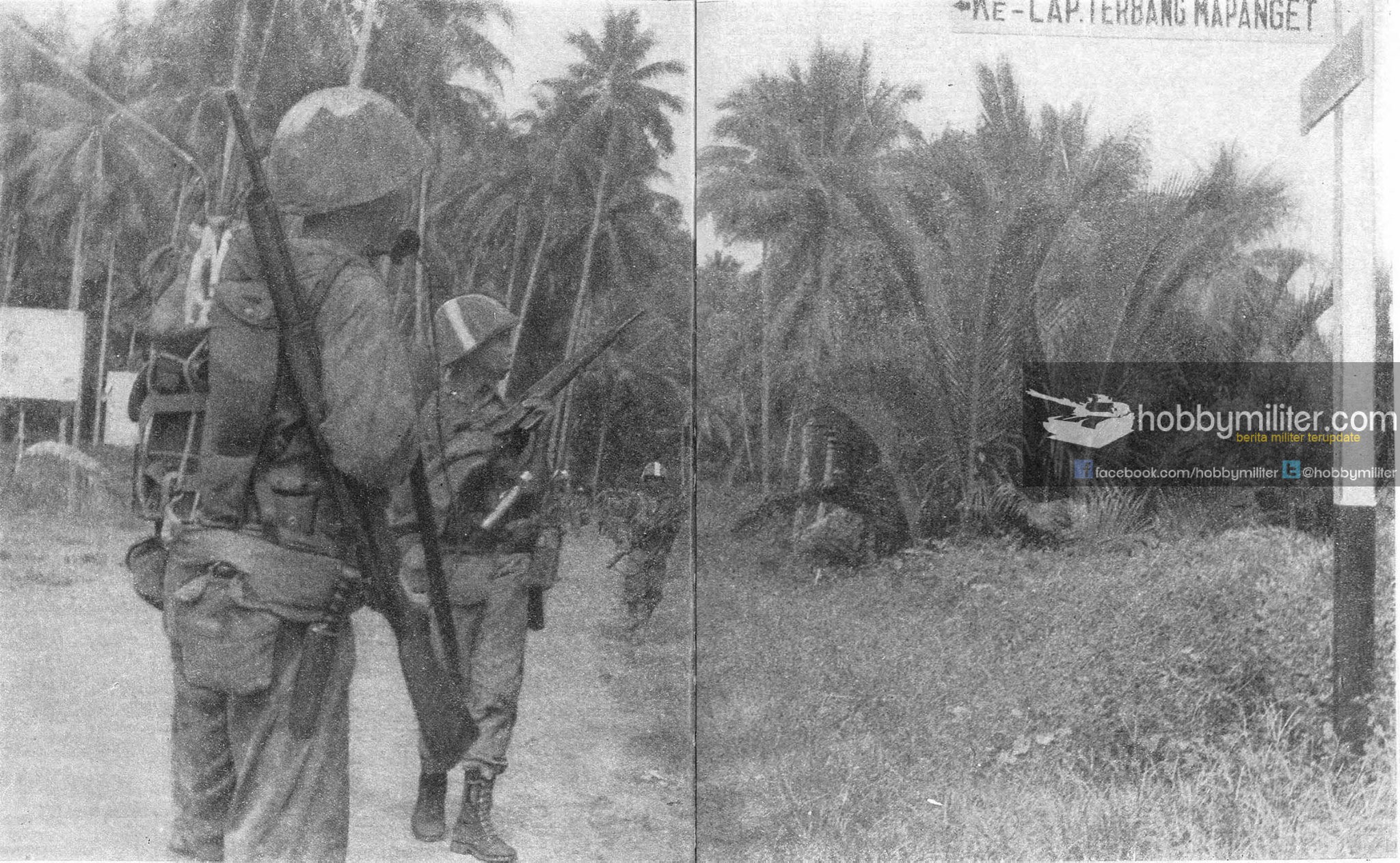
KKO-AL troops move to seize Mapanget airfield (now Sam Ratulangi Airport, Manado). Note the standard KKO rifle of the time, the Belgian-made FN49. Also note the dirt road infrastructure in the photo. Infrastructure in the regions at that time was very spartan, so access to the main airfield alone was still deplorable.
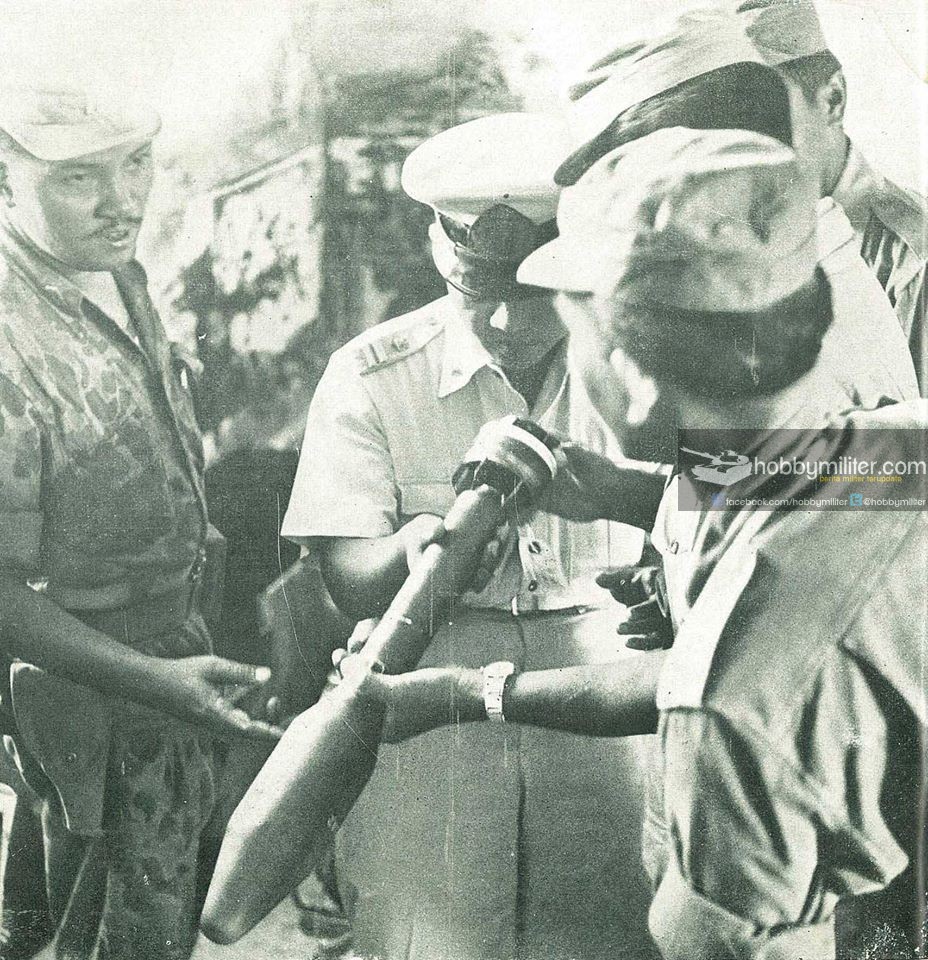
Photo of super bazooka ammunition seized by KKO-AL troops from Permesta troops. The presence of this weapon is proof that Permesta was assisted by foreign powers. TNI at that time did not have the M20 Super Bazooka in its arsenal. If fired, this weapon could penetrate the steel armour of TNI cavalry combat vehicles up to 28 cm thick.
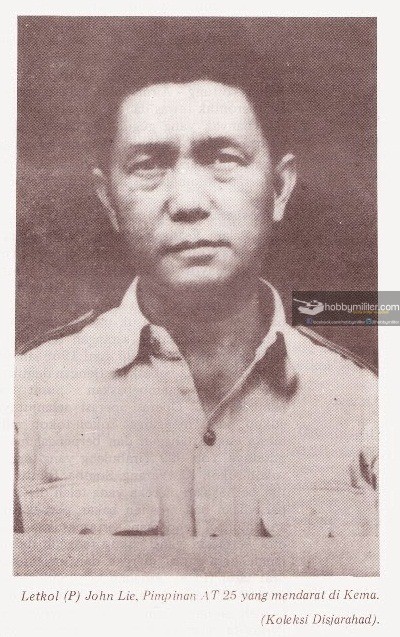
Photo of Lieutenant Colonel John Lie, leader of the TNI AL Task Force AT-25 that landed at Kema Beach. John Lie (Lie Tjeng Tjoan, alias Jahja Daniel Dharma, final rank Rear Admiral), who was born and raised in Manado, had to lead the landing troops to fight his own brothers from his homeland. At that time he commanded RI Gadjah Mada, an N Class destroyer formerly of the Royal Netherlands Navy.
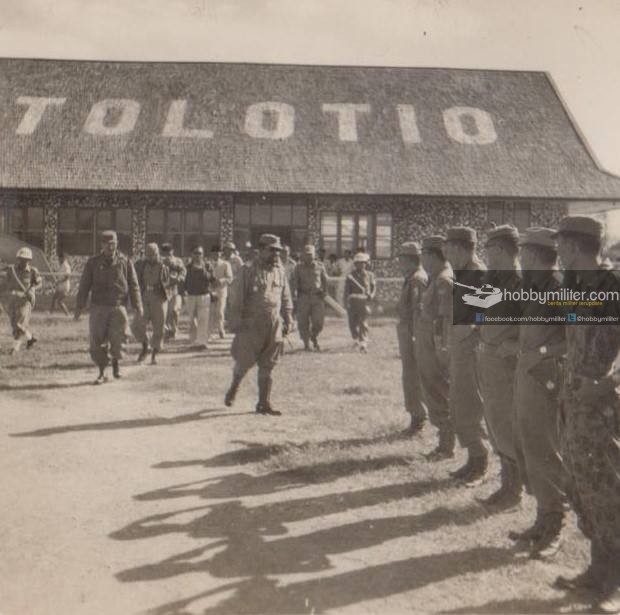
Photo of the arrival of Colonel Gatot Subroto at Tolotio airfield, Gorontalo, to inspect the operation to crush the Permesta rebellion. Note the writing on the roof of the building, a culture that to this day is hard to eradicate from civilian and military office buildings. Like an invitation letter on a JDAM. (Click below to go to the next page).
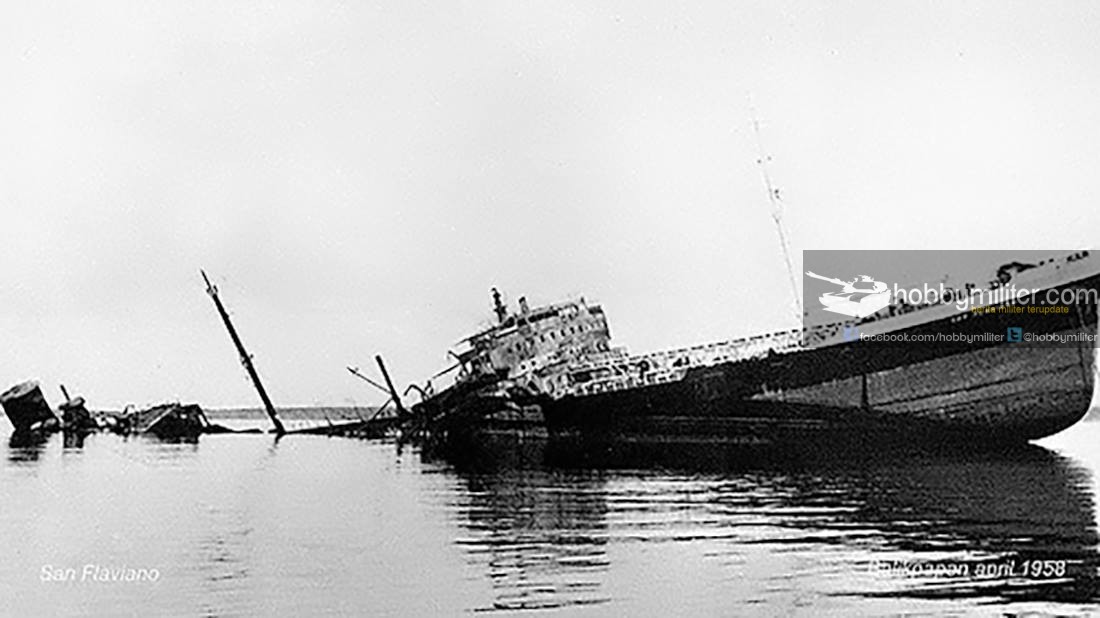
Photo of the wreck of a British-owned tanker sunk by a Permesta bomber. At that time, in Balikpapan there was an oil refinery owned by Shell/BPM. Shell/BPM had a concession from the government to process oil in Balikpapan and sell it. On 28 April 1958, a Permesta AUREV A-26 aircraft flown by William Beale attacked Balikpapan port and sank the tanker MV San Flaviano and the Indonesian Navy corvette RI Hang Tuah. The sinking of MV San Flaviano caused the British government to send a protest to the United States government, and in the end senior US government officials pressed the CIA to stop targeting non-military targets in its wild actions.
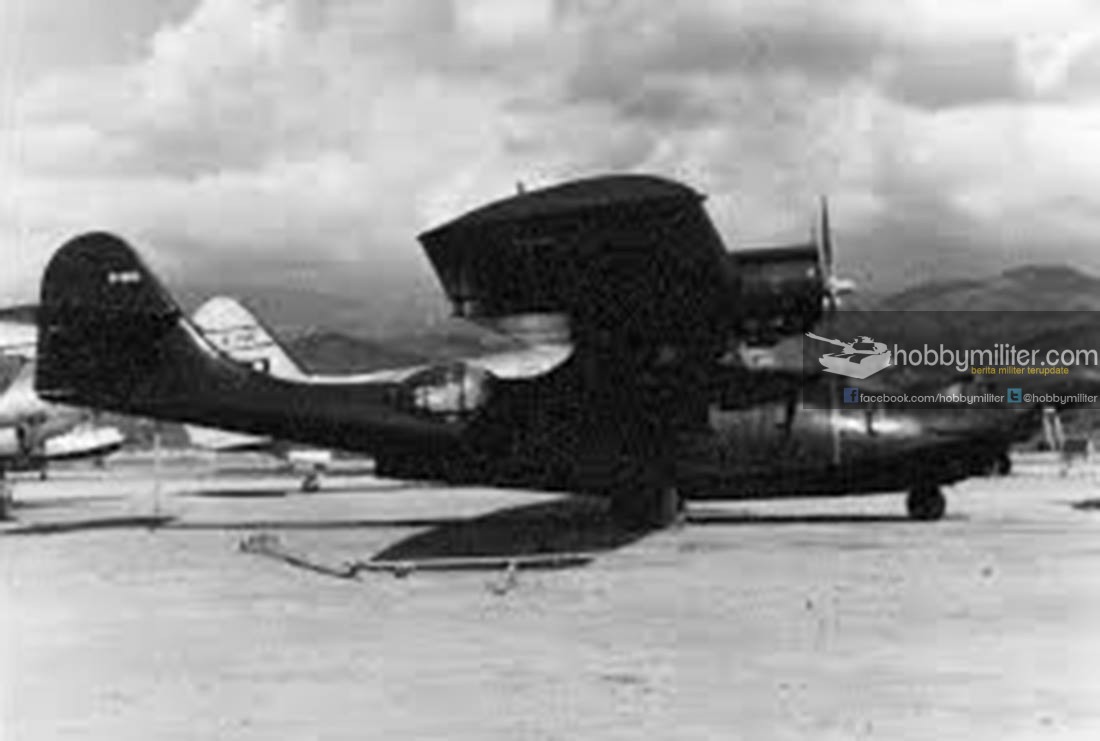
A jet-black PBY-5A belonging to the CAT airline at Clark Field, a United States base in the Philippines. This aircraft was active in its role as part of AUREV. CAT itself was an airline company conducting clandestine CIA operations in Southeast Asia. This Catalina served as an observation aircraft and logistics support aircraft. On 13 May 1958, this AUREV Permesta Catalina was destroyed by the Indonesian Air Force at Mapanget airfield, Manado. Note the background of the aircraft, where there are C-46 and C-47 transport aircraft.
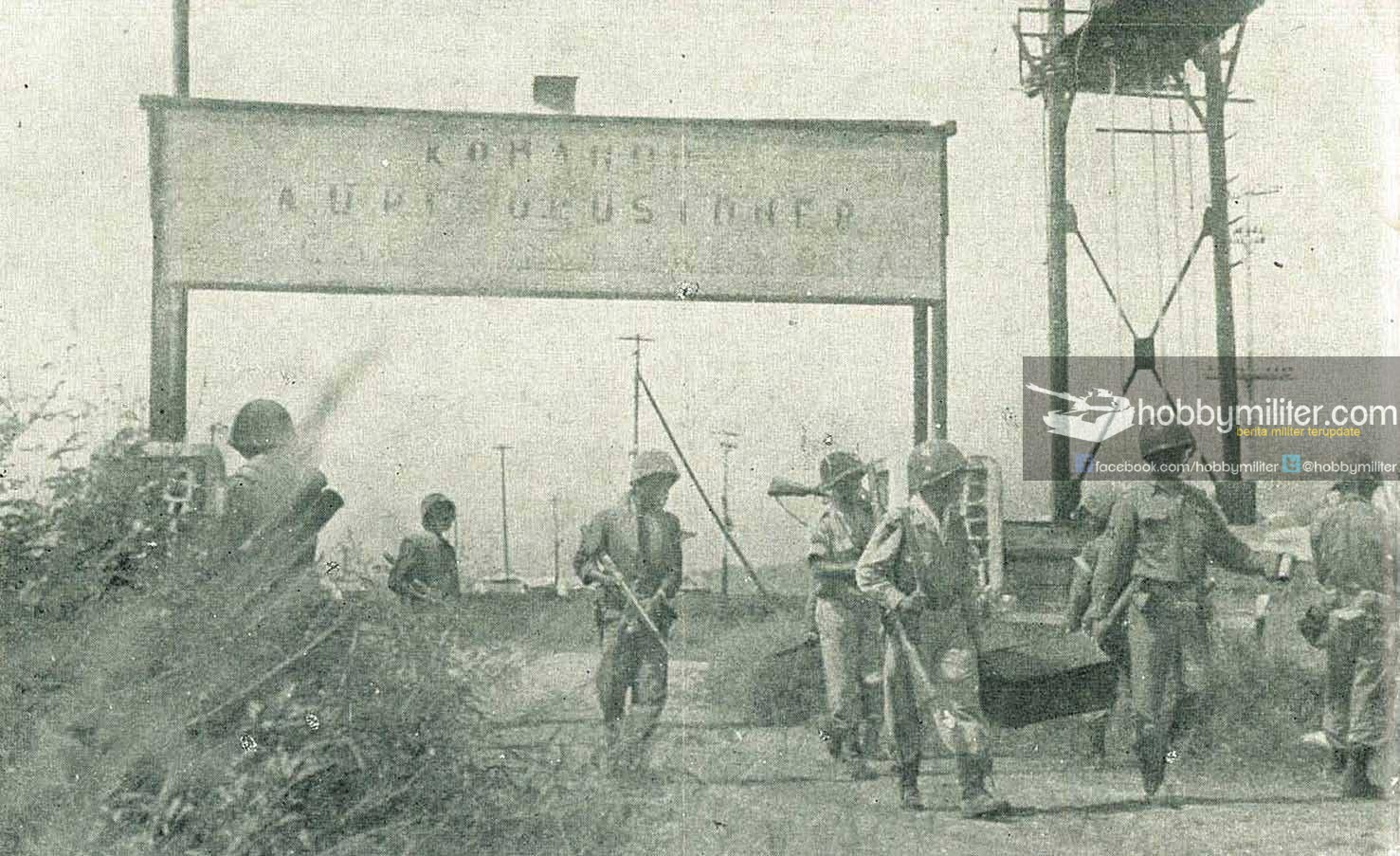 KKO troops enter Langowan airfield (Kalawiran?). A board reading Revolutionary Air Force Command can be seen. If Langowan airfield is indeed Kalawiran airfield, then this airfield is now located at the Kalawiran TNI AU post. AUREV used Mapanget Airfield, Langowan Airfield and Tasuka Airfield as its operating bases.
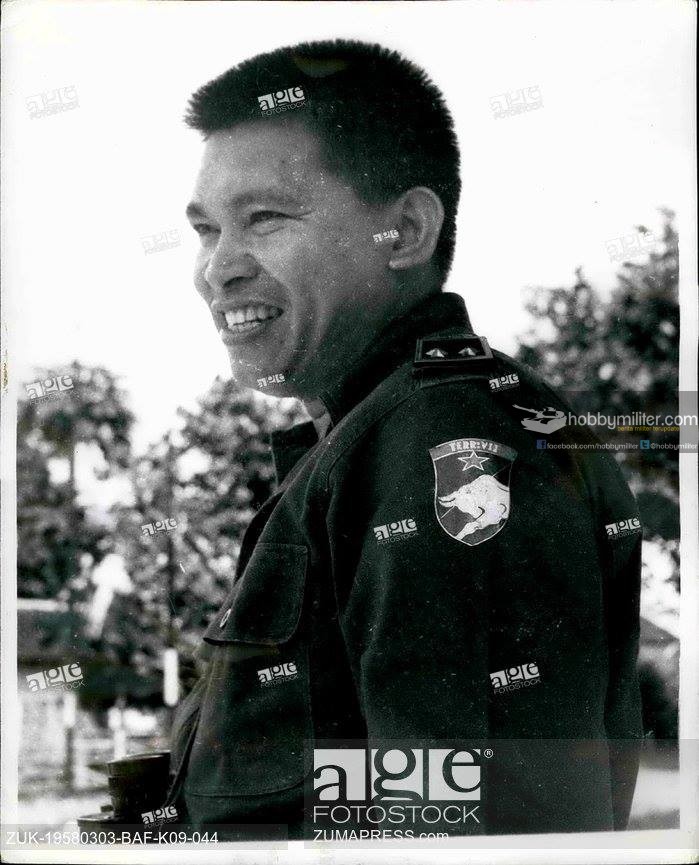
Photo of Ventje Sumual, 3 March 1958. Ventje Sumual was one of Pak Harto’s men in the General Offensive of 1 March in Yogyakarta. Ventje Sumual, then holding the rank of Major, led the attack from the western sector of Yogyakarta city. When the Permesta rebellion broke out, Lieutenant Colonel Ventje Sumual was Commander of Army and Territory VII (Wirabuana). He was the one who declared the Permesta Proclamation on 2 March 1957 in Makassar. After that, all government in the regions was taken over by the military. They also froze all activities of the Indonesian Communist Party and arrested PKI cadres.
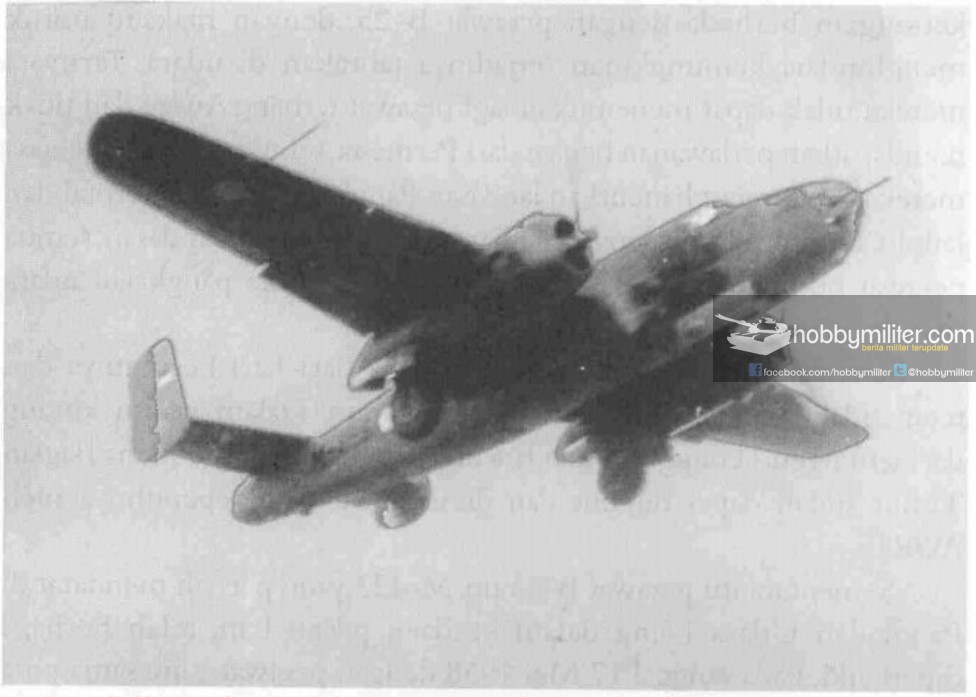 The B-25, a type of aircraft used by the Indonesian Air Force to destroy Mapanget airfield and the RRI Manado building. Indonesia received a large number of these light bombers from the Royal Netherlands Air Force at the transfer of sovereignty in early 1950. Over time, by the time of the PRRI/Permesta suppression, only a few remained airworthy.
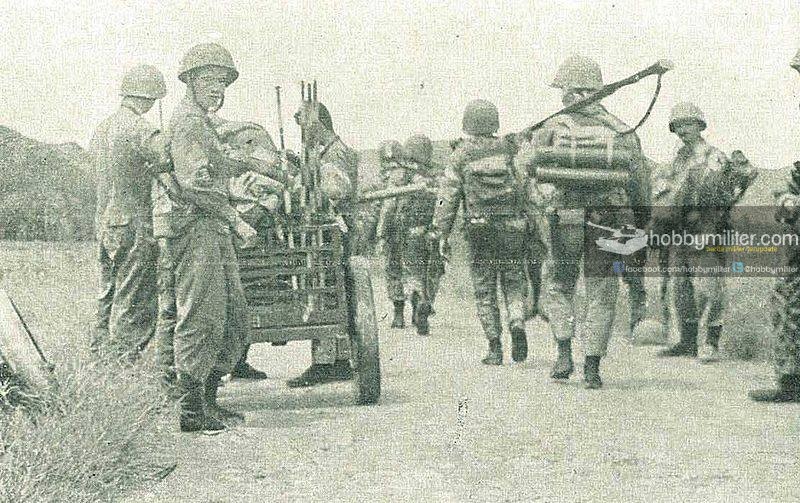 KKO troops on a long march towards Amurang in the operation to crush Permesta. Since landing from the LST, the KKO troops switched from landing troops to infantry troops in pursuing the remaining Permesta troops who had not yet surrendered.
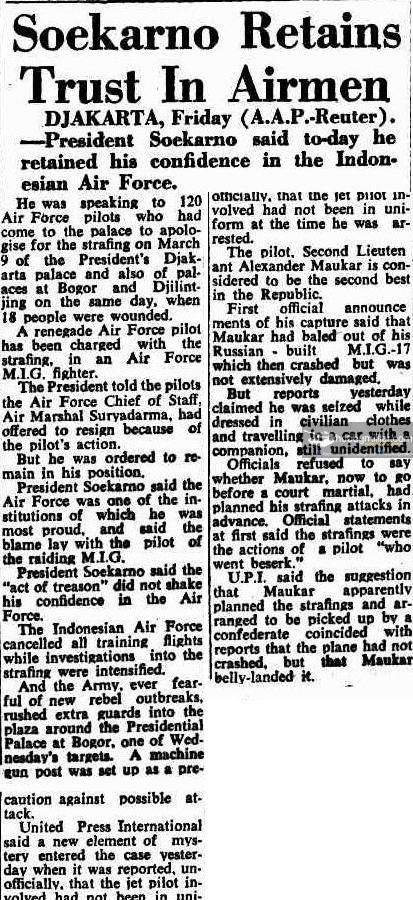 News in the Australian newspaper Canberra Times, Saturday 12 March 1960, page 3. This news contains a Canberra Times reporter’s report on how Bung Karno responded to Daniel Maukar shooting at the Palace with his MiG-17. At that time Daniel Maukar was suspected of being involved in Permesta.
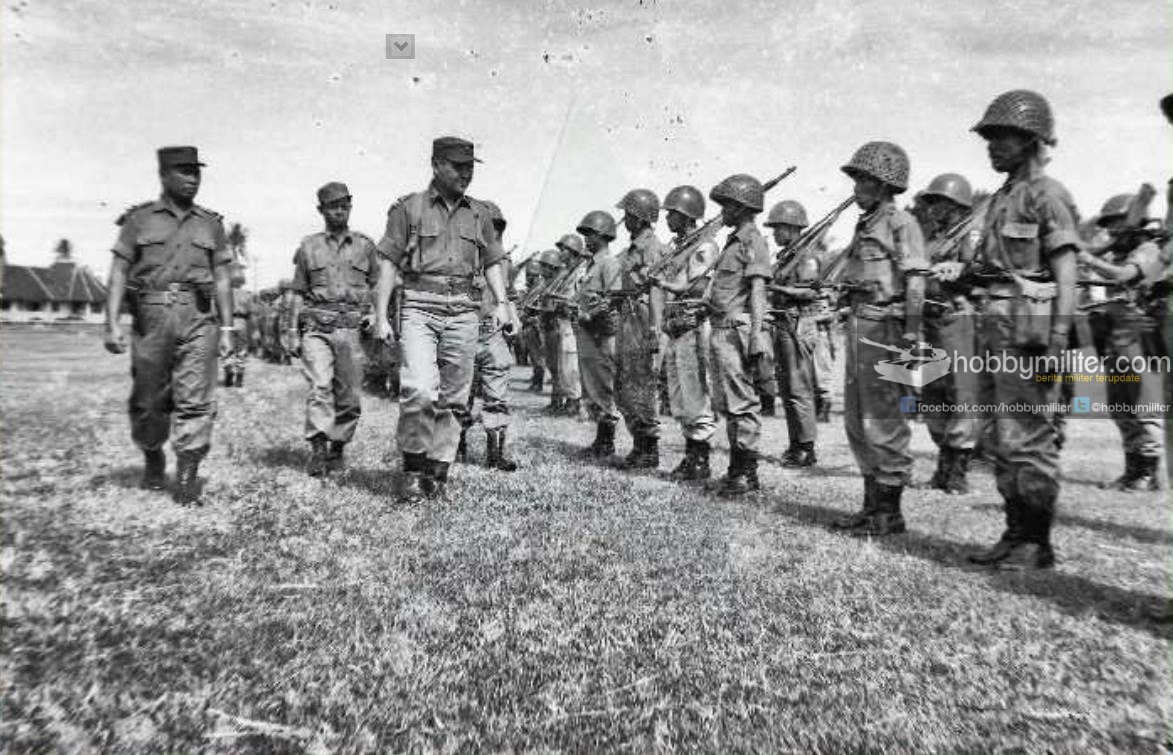 Inspection of troops involved in Operation Merdeka. Operation Merdeka was the operation to crush Permesta that lasted through 1958-1959.
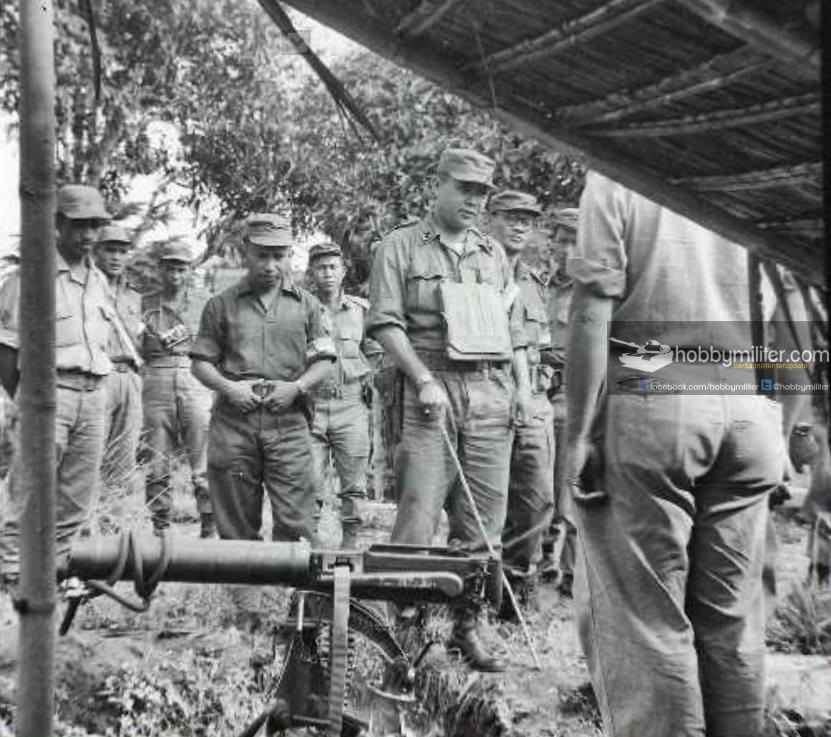 Inspecting the frontline posts of TNI troops. A Vickers .303 heavy machine gun can be seen placed to protect the post.
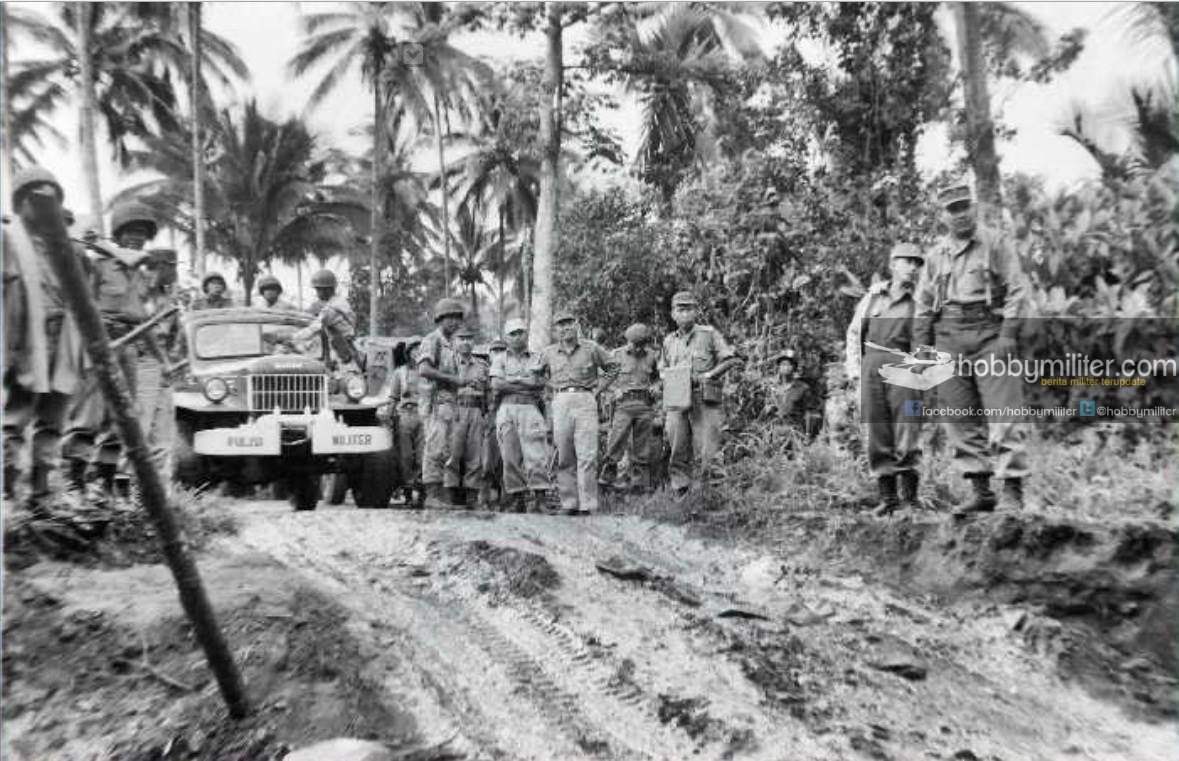
Inter-city road infrastructure in the Sulawesi region in that era. Its condition was still very deplorable. This condition hampered the movement of troops pursuing the remaining Permesta troops who were still waging guerrilla warfare.
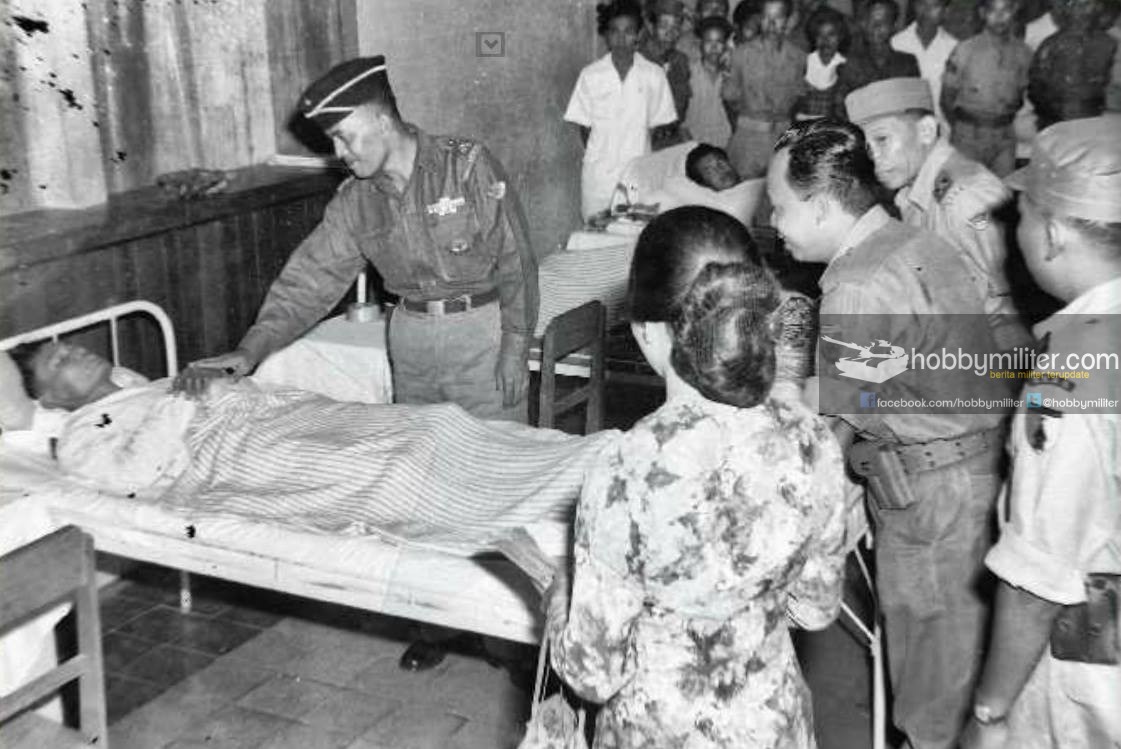 Treatment of battle casualties from fighting Permesta troops. There were quite a few Permesta suppression casualties. Several Mustang fighter aircraft were destroyed after being shot at by AUREV. Several other military aircraft were also lost, such as the PBY-5A Catalina. Even an ALRI corvette sank after being bombed by an AUREV bomber aircraft.