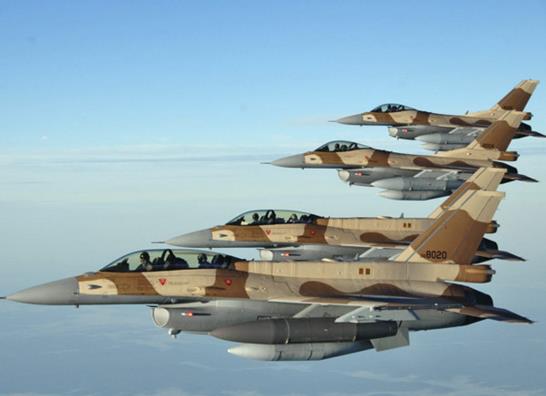
 For fighters, the US initially relied on the F-105 Thunderchief. But this aircraft also had great difficulty maneuvering. From these real facts, the US could be said to be furious. Meanwhile, the Soviet Union, its rival in the Cold War era, was increasingly triumphant with the production of the MiG-21, produced in such high numbers and used in many countries. Besides being very fast, that aircraft also had great reliability and very agile maneuverability. Driven to break the supremacy of the MiG-21, a program was made to build a lightweight fighter aircraft (LWF, Light Weight Fighter). John R. Boyd, a captain flying the F-105 and a Vietnam War veteran, formed a team called the Fighter Mafia. This team promoted a formula for aircraft maneuverability based on experience gained from the air war in Vietnam. Those concepts were poured out and eventually narrowed down to the specifications of the fighter aircraft hoped for.
Congress and the US Department of Defense were interested in the proposal submitted by Boyd and his colleagues. The aircraft did not need to be large. It only needed to weigh 20,000 pounds, or roughly half the weight of the F-15 Eagle. It needed high performance at Mach 1.6 or less, and its flying altitude did not need to exceed 40,000 feet. This aircraft would later replace the F-104 Starfighter. Five aerospace industries were immediately asked to submit designs: Boeing, General Dynamics, LTV, Northrop, and Rockwell.