
Documentary Photos of the Soviet Occupation in the Afghanistan War of the 80s – HobbyMiliter.com – The Soviet War in Afghanistan lasted more than nine years. It began with the Soviet attack in December 1979 and ended in February 1989 when the Soviets withdrew their troops from Afghan soil.

The Afghan guerrillas, more collectively known as the mujahideen, together with small resistance groups such as the Chinese-backed Maoist guerrillas, fought against the Soviet occupation army and the army of the Soviet puppet state, the Democratic Republic of Afghanistan, which the Soviets formed as soon as they took control of the capital.

These mujahideen received support from Saudi Arabia, Pakistan, and the United States. The funding, personnel, military training, and weapons for the Mujahideen guerrillas from the United States made this war a proxy war between America and the Soviets in the middle of the Cold War.

Experts estimate that around 500,000 to 2,000,000 civilians became victims of this war, and more than a million became refugees in foreign countries, mainly Pakistan and Iran.

This war began when the Afghan Communist Party carried out a coup in 1978. After taking power, the Afghan Communist Party carried out a radical, forced overhaul of almost every aspect of Afghan life.

This caused unrest and instability, especially in rural and remote areas that still held traditional values. The cruelty of the new regime, which harshly suppressed the opposition, including carrying out mass executions of thousands of political prisoners, gave rise to many armed anti-government groups, and in early 1979, it turned into a large-scale armed rebellion.

Within the Afghan Communist Party itself, there was also internal turmoil. In September 1979, Afghan President Nur Mohammad Taraki was killed on the orders of Vice President Hafizullah Amin, which enraged the Soviet Union as its protector state. As a result, the Soviet government under Leonid Brezhnev decided to send troops to Afghanistan on 24 December 1979. The Soviet 40th Army arrived in Kabul, killed President Hafizullah Amin, and installed Babrak Karmal as the new President of Afghanistan.

This Soviet maneuver into Afghanistan was called by Western countries and the mainstream media an invasion and drew strong protests from Afghanistan’s neighboring countries.

Soon after, in January 1980, the foreign ministers of 34 member countries of the Organisation of Islamic Cooperation (OIC) issued a resolution demanding the unconditional and immediate withdrawal of Soviet troops from Afghanistan, but the Soviets ignored it.

The Mujahideen guerrillas began to receive large amounts of aid in the form of food, money, weapons, and training in Pakistan and China, most of it funded by the United States and the Gulf states.

The American Intelligence Agency (CIA) played a role by funding military operations designed to frustrate the Soviets over their invasion of Afghanistan. Working together with the Pakistani intelligence agency, America supplied ammunition, equipment, communications gear, and even Stinger anti-aircraft missiles.

In the end, with the guerrilla war ongoing, Soviet forces only occupied the major cities and main connecting roads, while the mujahideen guerrillas controlled the rural and remote areas of Afghanistan.

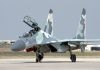
The Soviet Union relied heavily on air power to face the guerrillas. It was in Afghanistan that the Sukhoi Su-25 Frogfoot ground attack aircraft was tested directly on the battlefield. So was the Mil Mi-24 Hind attack helicopter. This helicopter became the backbone of the Soviet Union in deploying Spetsnaz special forces teams when hunting guerrillas in the villages.

And with the great firepower it possessed, the Soviet Union also used the Mil Mi-24 Hind effectively to destroy villages that sheltered the mujahideen, destroy irrigation and farming infrastructure, and lay millions of land mines with the aim of weakening the resistance of the Afghan mujahideen guerrillas.

Starting in 1986, the CIA sent a number of Stinger missiles to Pakistan, held operator training for the mujahideen guerrillas, and then, with the help of Pakistani intelligence, sent them into Afghanistan. With anti-aircraft missiles in the hands of the Afghan mujahideen guerrillas, the map of the battle changed.

The Soviet attack helicopters and ground attack aircraft that often devastated villages began to fall. Reportedly, there is data stating that the Stinger in the hands of the mujahideen guerrillas had an effectiveness of over 70 percent, and a kill score of around 350 aircraft of various types, mainly helicopters and ground attack aircraft flying at low altitude.

However, according to the official records of the Soviet government itself, there were only 35 aircraft and 63 helicopters that suffered total losses during the 1987-1988 period.

In Indonesia, President Suharto himself at the time ordered Benny Murdani to find a way to help the Afghan mujahideen as a form of solidarity. Benny Murdani ordered the Indonesian Army to collect old weapons bought in the 60s. Most of them were Soviet-made AK-47s.

After they were collected, sorted, repaired, and had their serial numbers removed, enough weapons were gathered to arm 2 battalions. To send them, Operation Babut Mabur was held using a Boeing 707 of the Indonesian Air Force.

At first, the Soviet Union planned a short attack, destroying the Afghan government and establishing a new government under Babrak Karmal. After stabilizing the situation, it was hoped that one month later, Soviet troops would be able to go home and leave only a small contingent in Afghanistan.

But as it turned out, this Afghanistan war lasted up to nine years and truly consumed all of the Soviet Union’s resources. When Mikhail Gorbachev became the leader of the Soviet Union, Soviet troops were withdrawn, leaving the government they had formed to fight alone against the mujahideen until the fall of the Afghan government in 1992.

The Afghanistan War is often considered the Soviet Union’s Vietnam War. These two great countries were considered defeated by small forces, even non-state actors (although they turned out to be proxies). But the difference is, the Soviet defeat in the Afghanistan War is considered by many researchers as the beginning that brought the Soviet Union into collapse and caused the Soviet Union to disband. On the other hand, although considered defeated in the Vietnam War, the United States still exists today, and is still happily waging wars in other countries.