

How Does the TNI Defense Equipment Procurement Process from America and Russia Work? – HobbyMiliter.com – Every time there is a TNI defense equipment procurement program, it seems there are always issues developing out there. Starting from matters of commissions and mark ups to procedural deviations. What is the actual procedure really like?
There are a number of related aspects in the implementation of the procurement of main military weapons system equipment (alutsista) and aircraft carried out by Civil Institutions or the Government.
Among them are financial administration, certification and the truth of airworthiness. Including aircraft documents. Covering the Certificate of Production, Certificate of Airworthiness, Certificate of Registration, End user and Export License. These last matters are sometimes what require research to determine the existence of acts of corruption, deviation and forgery. In other words, it can be known how far the truth of the procurement procedure goes.
It can be said that defense equipment in the TNI since long ago has mostly come from the US and Russia. Specifically for the procurement of defense equipment from the US, the procurement procedure is required to go through FMS (Foreign Military Sale). This is a standard provision, because the procurement procedure channel through FMS is in essence a Government to Government (G to G) procurement.
Examples of Indonesian Air Force defense equipment procurement through FMS include the T-34A Fuji Mentor aircraft (FMS Aid Program), the T-33 and OV-10F Bronco aircraft. Apart from that, there was also the procurement of the T-34C Mentor basic trainer aircraft, which went through the FMS Commercial channel with credit facilities from the FFB (Federal Financing Bank).
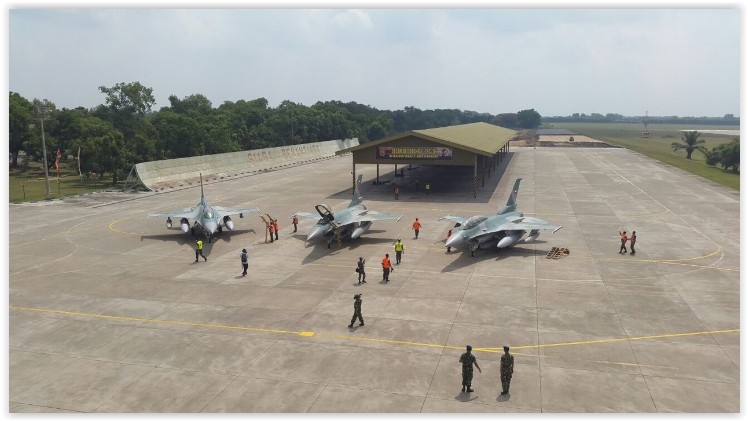
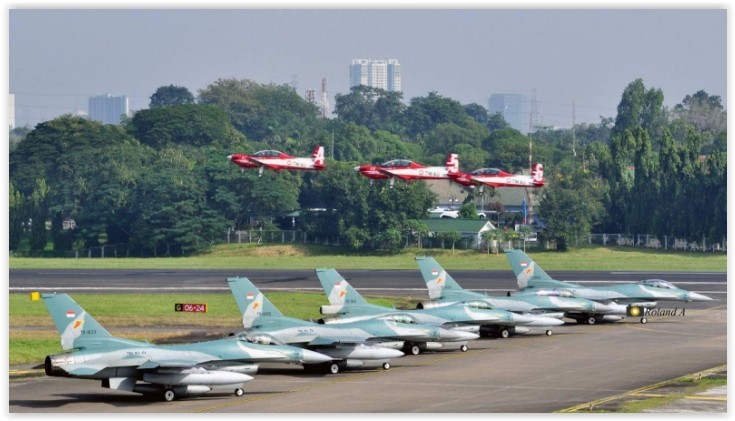
Procurement through FMS was also applied in the procurement of the F-5E Tiger, F-16A/B Fighting Falcon and the most recent procurement of the F-16C/D. Including weaponry and its supporting equipment. A number of support equipment items were also procured through FMS. Among them the engine test cell, liquid oxygen plant (Lox Plant), precision measurement equipment laboratory (PMEL) and spectrum oil analysis process (SOAP).
The intent and purpose of the US government requiring procurement through the FMS channel is to control the sale of defense equipment. So the purchasing country as well as the end user, or final operator, does not sell to a third country, because the defense equipment sold is classified as goods regulated by the Arms Export Control Act. Apart from that, to guarantee there is no price mark up or commission for the buyer. An agent commission (agent fee) is held if what is purchased is a factory product in the US and not from existing stock in the USAF logistics (AFCL at Robert Patterson AFB Dayton). For example aircraft.
Procurement of defense equipment through the FMS channel can be taken through two channels. Namely commercial or cash. The commercial channel uses FBB credit, FMS case. Meanwhile the cash method goes through the FFB Federal Financing Bank. To obtain loan credit, approval must be obtained from the DSAA (Defense Security Administration Agency).
Procurement through FMS is always accompanied by the administrative formality of a Letter of Intent and followed up with price and availability. Next, a Letter of Offer and Acceptance is issued. In the formality process of issuing the LOO and LOA, the US Embassy in Jakarta is always involved. In this case OMADP (Office Military Atachee Defense Program) and the FMS office under the coordination of the Defense Attaché of the Republic of Indonesia in Washington DC. This had been carried out before the 1991 embargo. Apart from that, FMS requires foreign agents and suppliers involved in the procurement process to be registered at OMADP/the US Embassy in Jakarta.
The FMS channel is believed to give almost no opportunity for the occurrence of “under the table settlements”, considering the strict supervision of the governments of both parties. The advantage is that there is no mark up and commission for the buyer. So it can prevent deviations in obtaining spare parts and replacement components, because they cannot be obtained outside the FMS channel. Negotiations with OMADP agents in the country also do not need to provide brown envelopes for the negotiation team from the services.
There may be partners who sell and supply materiel included in the regulation of The Arms Export Control Act but not through the FMS channel to one of the services in the TNI. If this happens, it means the partner obtained it from an unclear source, or even took it from the warehouse of the service concerned, or obtained the goods illegally. However, that will certainly be found out, because it is difficult to obtain an export license. Besides that, all Serial Numbers (S/N) of goods have their records in the US.
In addition, for the procurement of equipment included in the regulation of The Arms Export Control Act, the provision of its financing is with foreign exchange funds. Not rupiah funds or budgets.
Behind a series of advantages, the FMS channel has weaknesses that harm the buyer. Among them, defense equipment given to third countries to be purchased is prioritized on defense equipment whose technology has been used by the US Air Force for two years. Even though it counts as new, the technology of that defense equipment is clearly already behind what is used by the US Air Force.
Apart from that, the stages in the process to obtain the procurement decision for the defense equipment the TNI needs clearly take time. Plus the obstacle of the difference in the start of the US and Indonesian fiscal years. The fiscal year in the US starts on 1 October. From the personnel side, the obstacle is the potential reluctance of personnel to process G to G/FMS procurement. The reason, of course, is that there is no potential commission from partners like in procurement in general.
Apart from that, there is also a procurement system called Direct Commercial Sales, alias DCS. In the DCS system, the ordering country deals directly with the factory. However, in the purchasing system with this DCS scheme, usually many special military goods cannot be purchased other than through FMS.
The TNI Defense Equipment Procurement Process Is the Authority of the President
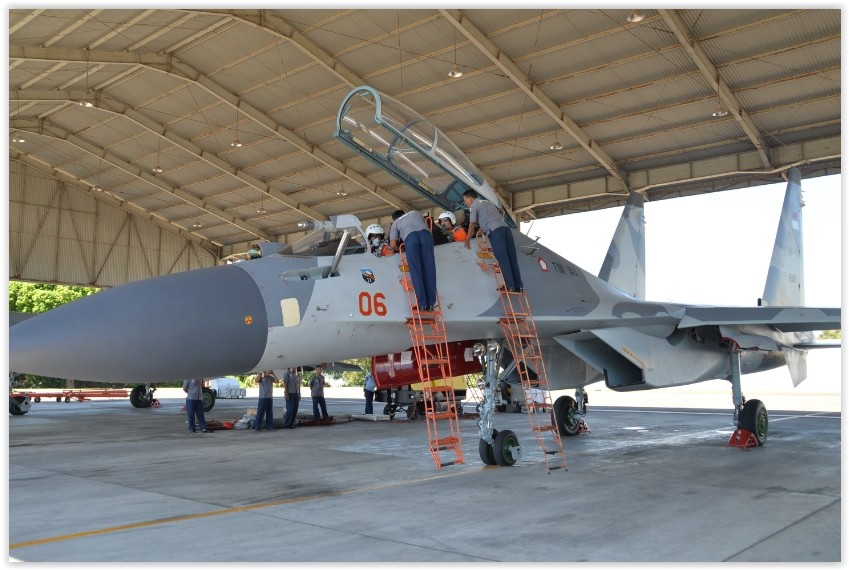
Apart from the US, Indonesia is also quite accustomed to making Russia a source country for defense equipment procurement. Including from the countries of Czechoslovakia and Poland. Indonesia’s experience of buying defense equipment from Russia began in the 1950s. For the Air Force, among them the procurement of the MiG-15 UTI, MiG-17 aircraft, Mi-4 helicopters, IL-14/AVIA, Bies TS-8 and Super Aero.
In 1960-1965, a number of defense equipment items entered again. Among them the MiG-19, MiG-21, Tu-16, Mi-6 helicopters and others. Plus the SA-75 guided missiles. Defense equipment procurement used loan facilities from Russia. Among them based on the mission of General A.H. Nasution, January 1962.
After the formation of the Russian Federation as the successor of the dissolved Soviet Union, the procedure for procuring materiel or equipment from the Russian Federation is distinguished between materiel for civilian and military purposes. Specifically for the procurement of civilian materiel, including civilian aircraft, the procurement procedure can go directly to the factory. Or through Prompt Export and Avia Export. Now Prompt Export and Avia Export have been liquidated and merged with the state-owned enterprise Rosvoorouzhenie into Rosoboronexport. This state-owned enterprise specifically handles the sale of military equipment.
Rosoboronexport has official representatives in several countries and generally has offices outside the Russian Federation Embassy building. Likewise in Indonesia. That way, the procurement of military equipment from Russia can go directly through that representative. Not through a representative in another country, because this step will only lengthen the process and enlarge the administration costs. Including intermediary administration costs.
The procedure for TNI defense equipment procurement from Russia depends on the President of Russia, because the highest authority is in his hands. Meanwhile, lobbying with prospective buyer countries is carried out by the Minister of Defense of Russia.
For its implementation, it is carried out by Rosoboronexport, which always coordinates directly with military equipment and aircraft factories. In other words, the sale of military equipment materiel in Russia is handled by a Three Level Structure. Namely the President, the Minister of Defense and Rosoboronexport.
As a result, in the Central Policy of the Russian Federation for military equipment procurement, there is no possibility of mark up. Except if the procurement chain is engineered through the addition of a long chain. As in the case of the purchase of Mi-17 helicopters several years ago, which went through Rosoboronexport and a private company in Singapore (a third party).