US Navy Awards $7.13 Billion Electronic Warfare Contract to 28 Companies – HobbyMiliter.com – The United States Navy has opened a major pipeline for its defense industry through a multibillion-dollar electronic warfare contract that will run for up to a decade.
On Thursday, November 19, 2026, the US Department of War announced 28 companies selected for a multiple-award contract with a combined ceiling of $7.13 billion. The contract supports the Surface Electronic Warfare Improvement Program, known by the acronym SEWIP. The contract uses an indefinite-delivery/indefinite-quantity scheme, so the winners will compete for individual task orders under a single maximum-value umbrella. Work may continue through November 2036 if all options are exercised.
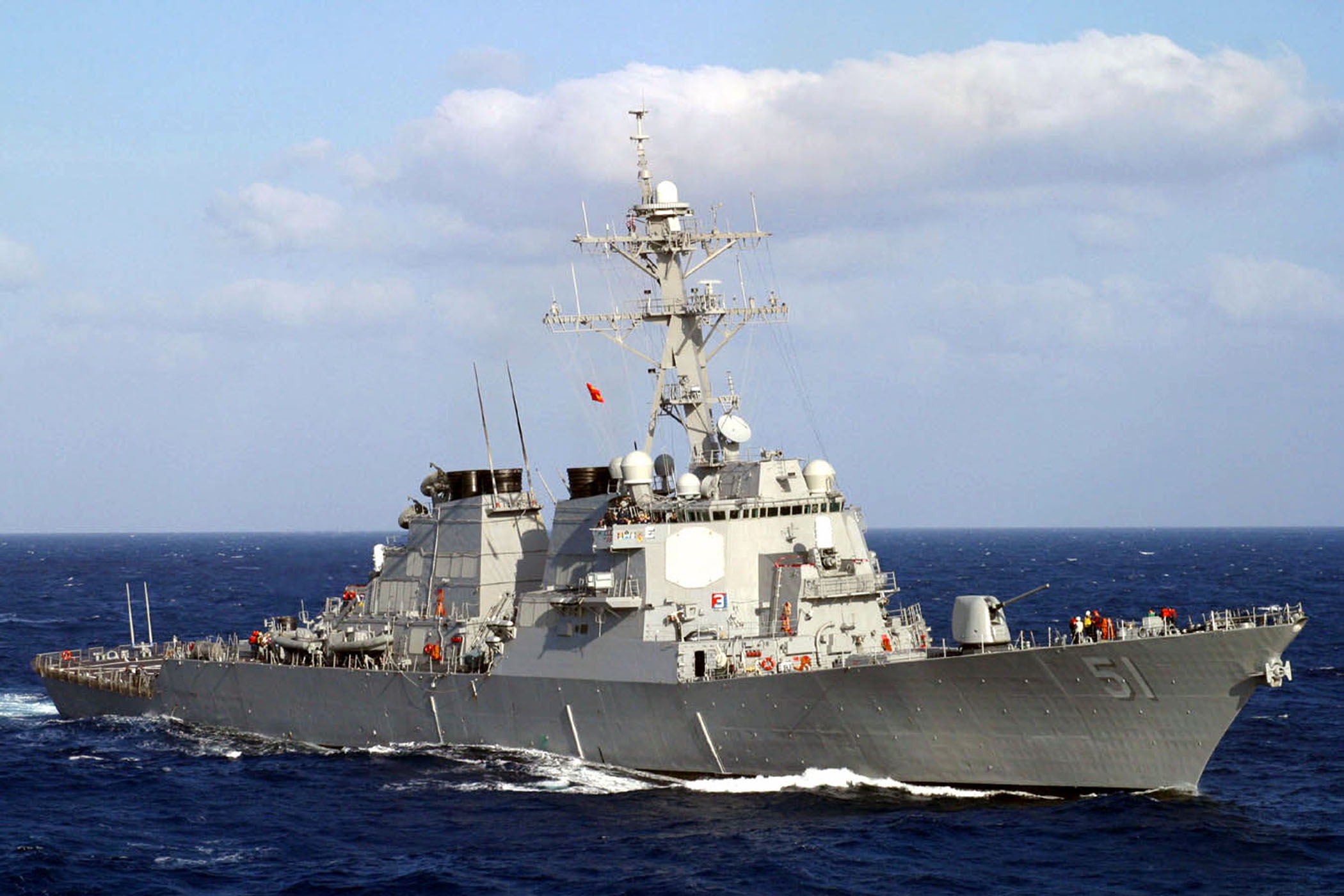
SEWIP is a phased modernization program for the AN/SLQ-32(V), the main electronic warfare system fitted to US surface ships since the late 1970s. Through successive block upgrades, the system helps warships detect threats earlier, analyze enemy radar signals, warn their crews of threats, and defend themselves against anti-ship missiles. The system is used aboard US Navy ships, Coast Guard cutters, and allied vessels. The program is now in the middle of Block 3, with Northrop Grumman as the prime builder of the electronic attack sets for up to 24 ships, according to Washington Technology.
The $7.13 billion figure needs to be read carefully. The value is a combined ceiling, not money already paid or equipment orders already guaranteed. The official announcement does not detail initial funding for each company and does not divide the potential value among the 28 winners. That means each company’s revenue will be determined by the task orders it wins during the contract, although the ten-year framework gives industry long planning certainty.
The list of winners covers nearly all the big names in the US defense industry, namely Lockheed Martin, Northrop Grumman, Raytheon, the defense segment of RTX, General Dynamics Mission Systems, BAE Systems, HII Mission Technologies, Leidos, CACI, and Amentum. They are joined by specialist firms such as Frequency Electronics, CAES Systems, and EWA Warrior Services. According to the Pentagon, the Navy received 31 offers for the contract, which was openly competed through SAM.gov. Lockheed Martin is the sole holder of the predecessor contract from 2020, with orders already paid reaching $783 million, according to GovTribe data cited by Washington Technology.
This SEWIP contract continues shipboard electronic warfare work already underway through 2026. In February, the Navy awarded Lockheed Martin a $249 million contract for SEWIP Block II spares, repairs, and engineering services, followed by a potential $1.7 billion contract modification to produce the AN/SLQ-32(V)6 system, a key component of SEWIP Block II. CACI also expanded its naval electronic warfare portfolio after its Spectral shipboard signals intelligence program reached Milestone C, clearing the way for low-rate initial production.
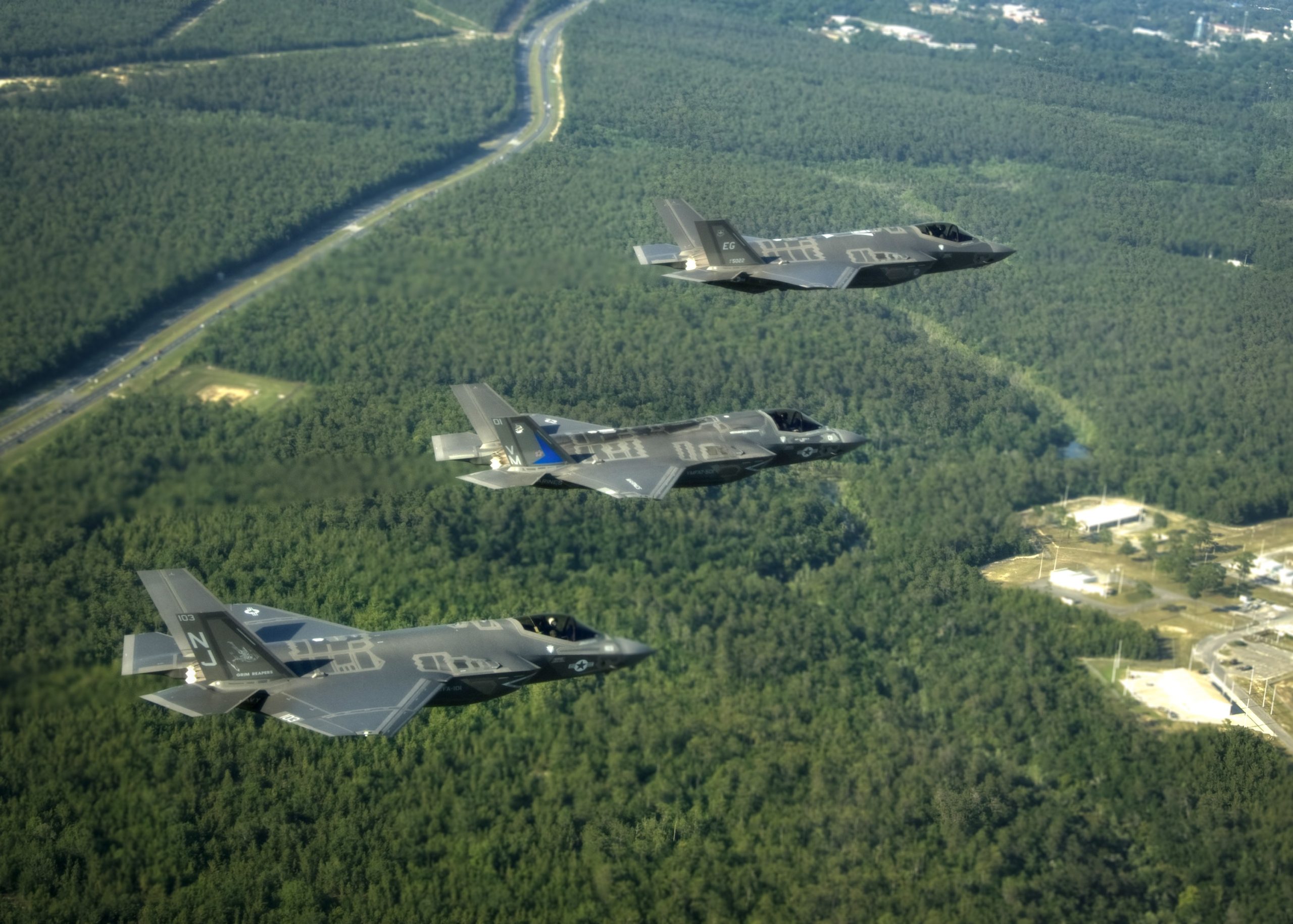
The same week was also a busy one for Lockheed Martin outside the SEWIP program. On Thursday, November 19, the company received a $330.6 million Navy contract modification for long-lead materials, parts, and components to support production of 75 Lot 22 F-35 Lightning II fighter jets for the US Air Force, Navy, and Marine Corps. The funding comes from the fiscal year 2027 aircraft procurement budget, with work continuing through December 2030. A day earlier, Lockheed won a $316.6 million Air Force contract for logistics and maintenance support for the C-5 Galaxy transport aircraft, and on Tuesday, November 17, it received a $93.2 million order for F-35 sustainment, including cybersecurity upgrades. The three deals total around $740 million.
General Dynamics and RTX also added to their contract wins in the same week. On Wednesday, November 18, General Dynamics won a $332.5 million Army contract for maintenance, training, and other support services for Stryker armored vehicles. The company’s Mission Systems unit also received a $20.5 million Navy contract modification for submarine combat system software. Meanwhile, RTX’s Raytheon unit received a $120.3 million Navy contract modification on Thursday, November 19, to produce the Rolling Airframe Missile, a close-in point defense system for warships, plus a separate $12.3 million contract for engineering support on the same missile system.
From outside the United States, Elbit Systems reported strong third-quarter 2026 results on Tuesday, November 17. Revenue at the Israeli defense company rose 17.2 percent from the same period last year to $2.25 billion, from $1.92 billion in the third quarter of 2025. GAAP net income reached $177.9 million, while non-GAAP earnings per share rose to $4.36 from $3.35. The company’s order backlog reached a record $33 billion as of September 30, 2026, up $7.8 billion over the year, with around 74 percent coming from orders outside Israel. Revenue in the ISTAR and electronic warfare segment surged 32 percent.
This string of announcements confirms that demand for electronic warfare capabilities and naval and air defense systems keeps rising amid great-power competition. The SEWIP contract gives industry ten years to plan production, while orders for the F-35, Stryker, and ship defense missiles show modernization proceeding simultaneously on land, at sea, and in the air. Notably, the good news did not immediately lift the contractors’ shares. Shares of Lockheed Martin, General Dynamics, RTX, and Elbit Systems instead weakened over the week, according to Stocktwits, falling 5.1 percent, 4.24 percent, 2.45 percent, and 1.45 percent respectively. What is worth watching now is the first task order under the SEWIP umbrella and who wins it.
Source: GovConWire, Washington Technology, Stocktwits, Elbit Systems, The Defense Watch.