
History of the Bawean Incident: Cowboy Antics of US Navy F/A-18s Over the Java Sea – HobbyMiliter.com – A bout of American aerial cowboy antics took place on 3 July 2003 over Bawean Island. The incident became quite a popular topic, given that the Indonesian Air Force F-16 fighters ordered to identify the US F/A-18 Hornet formation were instead locked on and driven away.
The Bawean Incident was an incident that took place on 3 July 2003 between Indonesian Air Force fighter aircraft and United States Navy fighter aircraft, involving a dogfight and electronic warfare over the Java Sea, to the north-west of Bawean Island, lasting three minutes.
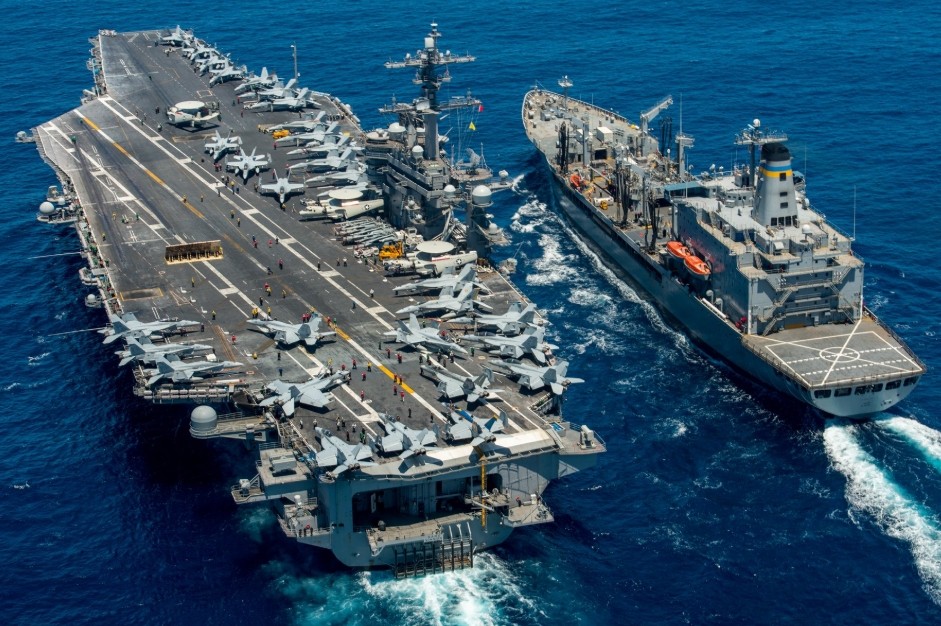
At the time, two Indonesian Air Force F-16s faced nine F/A-18 Hornet fighters belonging to the US Navy. The event began when the USS Carl Vinson (CVN-70) carrier battle group, together with two frigates and one destroyer of the United States Navy, sailed from Singapore towards Australia through the Karimata Strait (ALKI I) and then entered the Java Sea. It was while passing through the waters off Bawean that the F/A-18s, part of the CVN-70 carrier air wing, conducted their routine flight training and carried out manoeuvres dangerous to civilian air traffic in Indonesian airspace.
Detection of the unauthorised flights in this Bawean Incident was first reported at 11.41 Western Indonesian Time. The Sector Operations Centre (Posek) Hanudnas II in Makassar received information from the Military Civil Coordination (MCC) centre at Ngurah Rai, Bali, about the detection of unauthorised flights over Bawean Island. Five aircraft were detected at altitudes varying between FL 150-350 (15,000 feet to 35,000 feet). Their speed was around 450 knots and their Squawk Number (IFF mode 3/A) was 1200.
No communication was heard between the five unidentified aircraft and Bali or Surabaya ATC (Air Traffic Control). The Target Report (LaSa) X information was then forwarded for monitoring at the National Air Defence Operations Centre (Popunas) in Jakarta. Posek Hanudnas II then ordered MCC Ngurah Rai and MCC Juanda to keep monitoring the LaSa track and asked Popunas for confirmation of whether the aircraft involved in the Bawean Incident had a Security Clearance (SC).
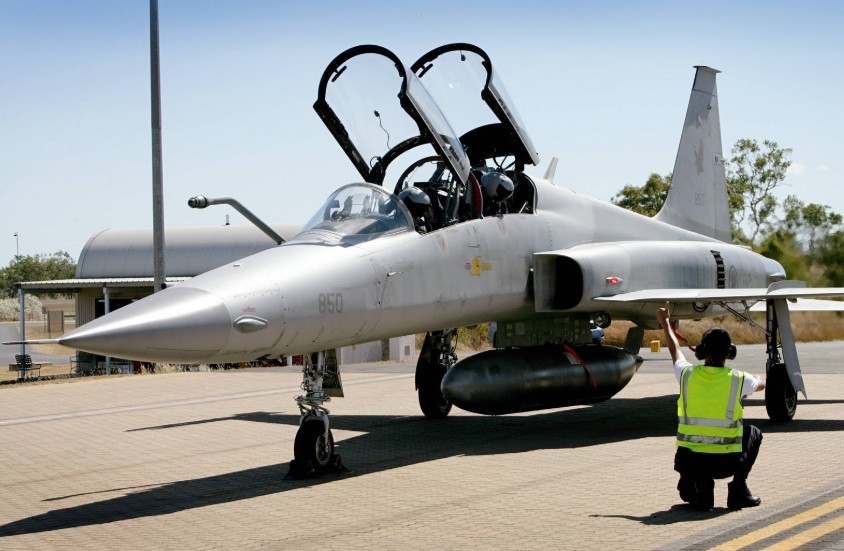
At 12.30 Western Indonesian Time, Popunas and the Kohanudnas Intelligence Staff took steps to search for LaSa X. Among other things, they checked all databases and SCs received by Kohanudnas and various relevant agencies. From this, the team found provisional data in the form of Flight Approval number DDS: 819/ UD/VI/03 dated 11/VI/2003.
It stated that five F-5 aircraft of the Republic of Singapore Air Force (RSAF) were conducting a licensed long-range flight exercise on the route Paya Lebar-Darwin-Amberley-Darwin-Paya Lebar, using four air refuelling points along the flight route. The flight permit was valid from 24 June to 23 July 2003. From this, the team provisionally concluded that the LaSa X in question was the RSAF aircraft conducting air refuelling over Bawean and holding because of bad weather or some other technical reason.
LaSa X Disappears and Reappears in the Bawean Incident
After manoeuvring for more than an hour, at 12.45 Western Indonesian Time LaSa X disappeared from radar. The team assumed they had gone on their way. Even so, the officers at Posek Hanudnas II and Popunas kept monitoring the area.
Two hours later, at 14.50 Western Indonesian Time, a number of unidentified aircraft suddenly appeared again around Bawean Island. The Commander of Hanudnas Sector II at the time, Air Commodore Panji Utama, immediately reported the event to the Commander of Kohanudnas, Air Vice Marshal Wresniwiro. The Kohanudnas Commander then ordered the Commander of Hanudnas Sector II to carry out a visual identification using interceptor fighter (TS) F-16s on standby at Iswahjudi Air Base, Madiun. This was the beginning of the event known as the Bawean Incident.
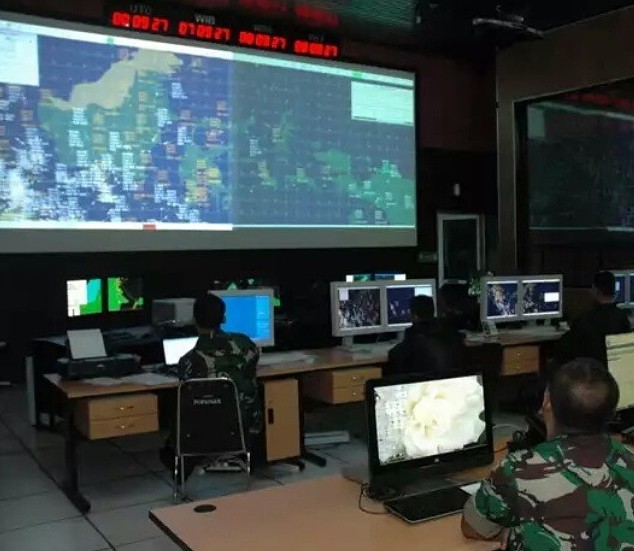
At the same time, Popunas received information from MCC Soekarno-Hatta that there was a complaint from the captain of a Bouraq aircraft passing along air route W-31, to the east of Bawean Island. The pilot reported sighting fighter aircraft near the flight route, with no explanation about it from Bali or Surabaya ATC.
At 15.10 Western Indonesian Time, the officers at Posek Hanudnas II and Popunas, who kept monitoring the aircraft movements, were startled again. This time the LaSa X detected had grown to nine aircraft. The Kohanudnas Commander immediately raised the “Hanudnas Alert” status to “Yellow Alert” and “Alert Two”.
Ten minutes later, the Kohanudnas Commander coordinated with the Commander of Air Force Operations Command II, Air Vice Marshal Teddy Sumarno, and the Assistant for Operations to the Air Force Chief of Staff, Air Vice Marshal Djoko Suyanto, about the plan to use F-16 aircraft. After discussion, ten minutes later the Kohanudnas Commander gave the order to the Commander of Hanudnas Sector II to prepare a visual identification of LaSa X using F-16s.
At 15.40 Western Indonesian Time, the Commander of Hanudnas Sector II ordered the Commander of the F-16 Interceptor Combat Post (Danskadron Udara 3), Lieutenant Colonel Tatang Harlyansyah, to prepare F-16 aircraft for visual identification of several LaSa X targets on radial 340 degrees – 015 degrees, FL 250-155 and 113-135 Nm from SBY (a position around Bawean Island, which is why this event is known as the Bawean Incident). At 15.53, the Kohanudnas Commander reported the plan to the Chief of the General Staff of the TNI and to the Air Force Chief of Staff, Air Chief Marshal Chappy Hakim.
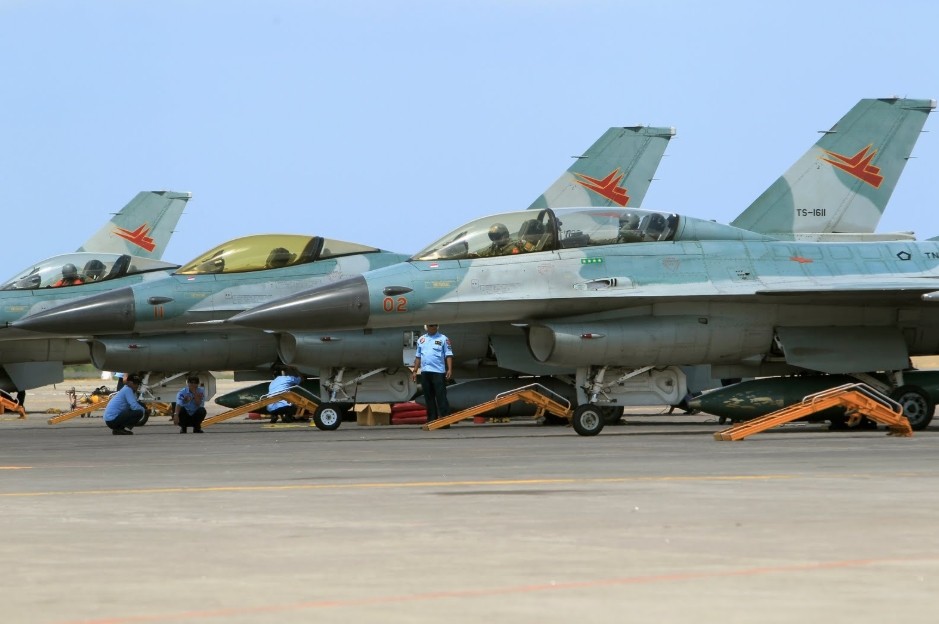
Meanwhile at Indonesia’s largest combat air base, Iswahjudi Air Base in Madiun, a moving scene had just been felt by the pilots of Air Squadron 3. They had only arrived home about 20 minutes earlier after a month taking part in the Integrated Operation in Nanggroe Aceh Darussalam, using F-16s to secure the airspace over Aceh as part of the operation to seal off GAM.
“Fajar, order all pilots back to the squadron right now. There are unauthorised flights over the Java Sea. The order from the Kohanudnas Commander is that we fly right now to intercept.” That was the order from the Commander of Air Squadron 3, Lieutenant Colonel Tatang Harlyansyah, received by Captain Fajar Adriyanto. Together with Captain Ian Fuadi, Captain Tonny Haryono and Captain Satriyo Utomo, they, who had been chatting with their families for less than an hour, were asked to return to the squadron.
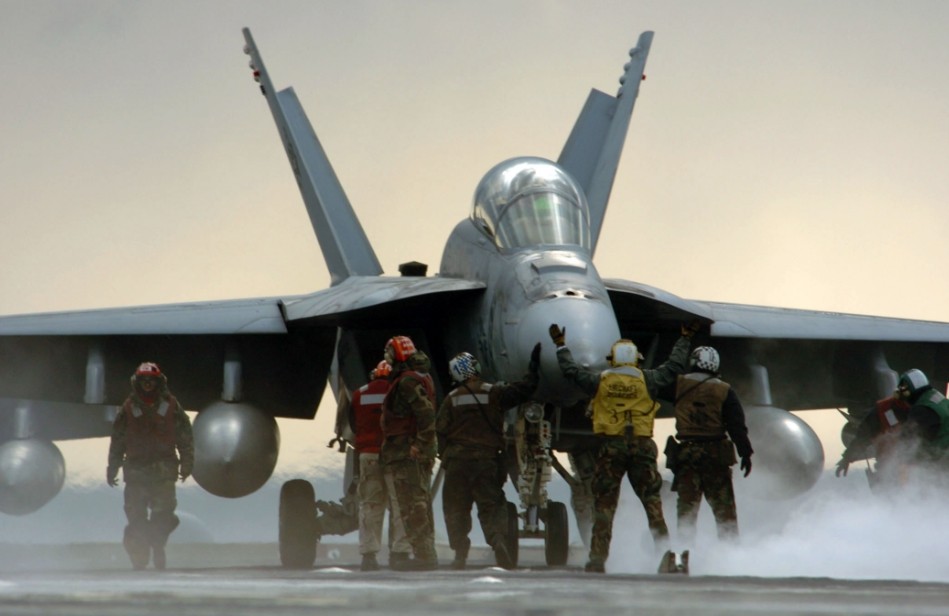
“I deliberately picked the four of you because you have the ability. Be careful in flight. Your task from the Kohanudnas Commander through the Commander of Hanudnas Sector II is only to identify, do not get emotional, do not fire unless ordered. I will act as Duty Officer as well as Controller in this operation. Ian, I appoint you as flight leader, accompanied by Fajar as Mission Commander in the back. Fajar, as the senior, I hope you can control this operation. Tony and Striyo will act as wingmen. Carry out the task well, is that clear…?!” That was how Lieutenant Colonel Tatang briefed and ordered the pilots who became the makers of history in this Bawean Incident.
At 16.10 Western Indonesian Time, the Commander of Hanudnas Sector II ordered the Commander of the Interceptor Combat Post to carry out the visual identification as soon as the aircraft were ready. Five minutes later, the Kohanudnas Commander also ordered the Head of Popunas, Major Agung Sasongkojati, to give the pilots the latest intelligence data and an analysis of the possible presence of other fighter aircraft.
A confrontational attitude was to be avoided, as this was only a visual identification mission. The pilots were asked not to lock on to targets with radar or missiles, so as not to be seen as threatening the enemy. Flight safety came first. The main mission was Visual Identification. The RoE had been set.
At 16.40 Western Indonesian Time, the pilots started the engines of the two two-seat F-16s. Falcon 1 (TS-1603) was crewed by Captain Ian Fuadi and Captain Fajar Adriyanto, and Falcon 2 (TS-1602) was crewed by Captain Tonny Haryono and Captain Satriyo Utomo. At 17.04, the two F-16s (Falcon Flight), each armed with two AIM-9P4 missiles and 450 rounds of 20 mm ammunition, took off.
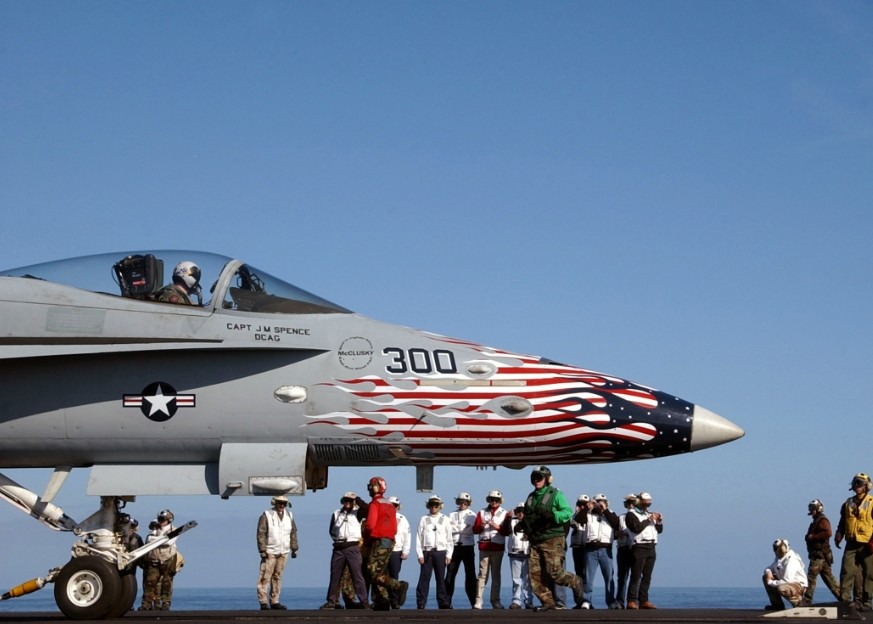
At 17.16 Western Indonesian Time, Falcon Flight was picked up by Surabaya radar and monitored by MCC Ngurah Rai. Two minutes later, Falcon Flight made contact on the SBY Director frequency as GCI and received information about the position and number of the unidentified aircraft. Falcon Flight headed for the targets. Four minutes later, SBY Director informed Falcon Flight that two other aircraft had appeared, rapidly heading towards them.
At 17.22 Western Indonesian Time, Falcon Flight acquired the targets (radar contact). What followed was that the ECCM (electronic counter-countermeasures) equipment of the radars on both sides began jamming each other. The electronic warfare equipment of each side emitted radio waves, each trying to overcome the other. The two F-16s activated their anti-jamming and set it to auto mode, so the jamming by the F/A-18s did not succeed. From the symbology and the tones of the RWR (radar warning receiver) of the F-16s at the time, it was known that Falcon 1 was locked on by the radar and missiles of an F/A-18.
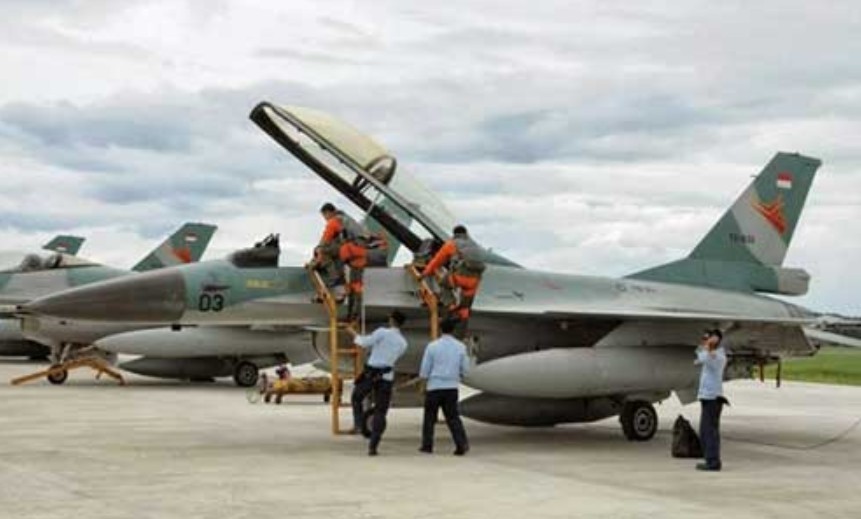
At 17.25 Western Indonesian Time, Falcon 1 saw an F/A-18 and became involved in a turning manoeuvre against each other. Falcon 1 was on the tail of that F/A-18 Hornet. Falcon 2 immediately took up position as the supporting fighter and was chased by another F/A-18. Falcon 2 took the initiative of rocking its wings, signalling that the two Indonesian F-16s had no intention of threatening.
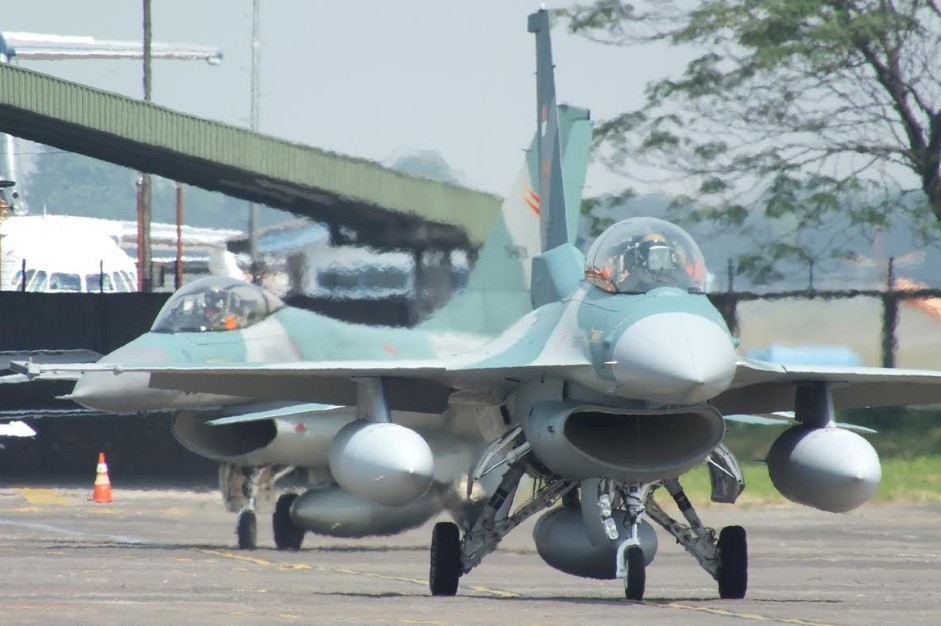
Falcon Flight Leader then explained that the Indonesian Air Force F-16s were conducting a patrol, tasked with carrying out visual identification, and informed them that the F/A-18s were in Indonesian airspace. The US Navy aircraft were then ordered to contact the local ATC, as Bali Control, which was responsible for air traffic in the area, did not know their status.
At 17.22 Western Indonesian Time, the Hornets moved away, while Falcon Flight return to base to Iswahjudi Air Base. At 18.15 Western Indonesian Time, Falcon Flight landed safely at Iswahjudi Air Base. Meanwhile, Posek Hanudnas II continued its observation, fully supervised by Popunas. MCC Ngurah Rai then reported to Popunas that, after the visual identification by the Indonesian Air Force F-16s, the F/A-18 aircraft then made contact with Ngurah Rai ATC as ordered by the Indonesian Air Force F-16 pilots.
At his headquarters in Makassar, the Commander of National Air Defence Sector Command II kept following the course of the visual identification operation by the two F-16s ordered to the Bawean location. The Indonesian Air Force estimated that the convoy of US ships, travelling at 20 knots, would reach the area around Madura Island and Kangean 12 hours later.
Just as suspected, on Friday morning, 4 July 2003, as a follow-up, the Indonesian Air Force sent a Boeing 737 Surveiller reconnaissance aircraft to the area. And sure enough, at seven in the morning the reconnaissance aircraft found the carrier escort, a destroyer and two frigates heading for the Lombok Strait (ALKI II).
When the Indonesian Air Force Boeing 737 Surveiller asked where they were from and where they were going, it received only the answer: “We are in international waters….” During this reconnaissance, the Indonesian Air Force Boeing 737 Surveiller managed to photograph the aircraft carrier USS Carl Vinson, the two frigates and the US destroyer escorted by Hornet aircraft.
Throughout the reconnaissance operation, the Indonesian Air Force Boeing 737 Surveiller aircraft was continuously shadowed by two US Navy F/A-18 Hornet aircraft. The material obtained from the mission was then used by the government to deliver a diplomatic note of “objection” to the US government.
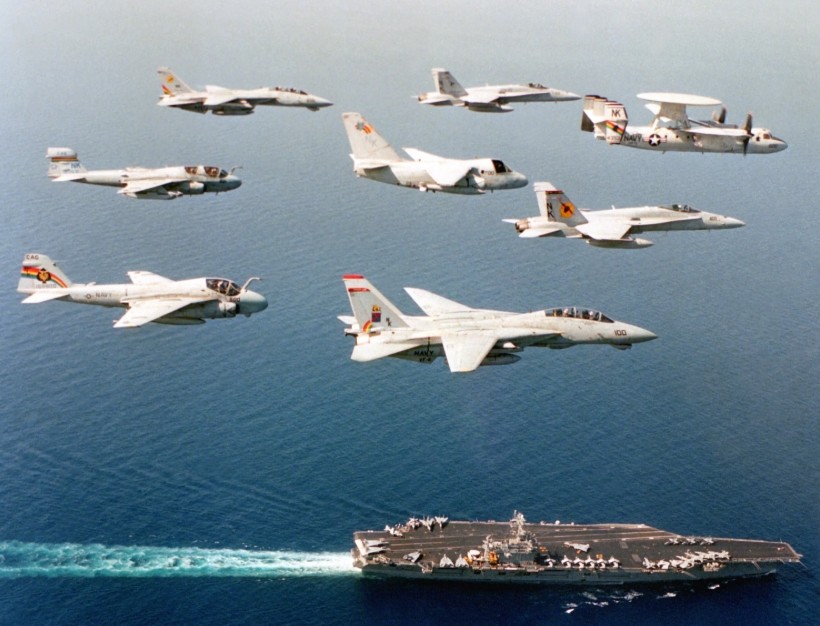
As an effect of the Bawean Incident, whenever an American aircraft carrier sailed in Indonesian territorial waters, it no longer flew its aircraft without permission and without contacting ATC as the air traffic regulator. For example, when the US Navy deployed 12 Seahawks to help handle the victims of the Aceh earthquake and tsunami.
Every morning, after the 12 Seahawks took off carrying aid from the carrier to land, the ship immediately moved 70-80 miles out to the open sea so that its fighter aircraft could carry out routine flight training without violating Indonesian territorial limits. It then returned to within 12 miles of Indonesian territorial waters in the afternoon to pick up the 12 helicopters. The two F-16s successfully completed their mission and had a major impact on the recognition of our sovereignty.