


Buying in Small Batches, How Singapore Grew Its RSAF F-16 Fleet – HobbyMiliter.com – In discussions on online military forums and in military groups on Facebook, quite a lot of people criticize the defense equipment purchases made by the government in limited quantities, often referred to by the term ngeteng (buying in small batches).
They are also often compared with several sultan countries that have defense equipment fleets in massive and abundant numbers. One of them is Singapore. The neighbor that is often called the red dot, because of how tiny the size of its country is, even though the number and quality of its defense equipment are maxi.

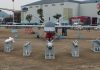
As one of the air forces said to be the strongest in ASEAN, Singapore currently has around 60 F-16s. Some are overseas as training detachments, some are at home as instruments of defense. Compare that with the number of F-16s Indonesia has, which stands in the 30s, and even that was after years of sitting at only 10 units from an original total of 12 units.
But did you know, those 60 F-16s (and most of Singapore’s other defense equipment) were actually bought ngeteng style, in small amounts at a time, in accordance with its economic capability. It is just that the planning and execution of the purchases were carried out continuously. Here is the story:

Singapore decided to buy the F-16 in 1985 to rejuvenate its Hawker Hunters. They signed the purchase of 8 F-16/79 units under the FMS (Foreign Military Sales) framework of the United States Armed Forces. This F-16/79 was an F-16 whose specifications were below USAF standard. However, midway through, Singapore changed its order to the F-16 A/B OCU, the same as the one bought by Indonesia.
This purchase of Singapore’s F-16 A/B was given the code name Peace Carvin I because it was carried out under the FMS scheme. These aircraft first landed in Singapore in January 1990, a month after the Indonesian Air Force received aircraft of the same type in December 1989. The Indonesian Air Force remains recorded as the F-16 operator that came first compared to the RSAF.

Three years later in 1993, Singapore announced the Peace Carvin II project. The purchase of 11 F-16 C/D units, consisting of 5 F-16C units and 6 F-16D units. Not long after, in 1994 the order was added by another 7 units to become a total of 18 F-16C/D, consisting of 8 F-16C and 10 F-16D. The first aircraft from this Peace Carvin II project landed in Singapore in August 1998.
Four years later in 1997, a year before the F-16C/D order from the Peace Carvin II project landed in Singapore, Singapore ordered another 12 F-16C/D through the Peace Carvin III project. These 12 aircraft were intended to complete the training detachment in America and were not to be brought home. The first aircraft from this order was handed over in the year 2000 and served at Cannon AFB, New Mexico.

The aircraft stationed at Cannon AFB, New Mexico served to train RSAF pilots in realistic mock combat. Something that is difficult to do in Singapore’s airspace because of the limited size of its airspace. By leasing training land in America and several other countries, the RSAF can guarantee the professionalism of its aviators and ground support.

In the 2000s, the world economic situation improved after being hit by the 1998 global monetary crisis. So did Singapore, after surviving the onslaught of the 1998 economic crisis, its economy then grew. As a result, in the year 2000 Singapore announced the purchase of new F-16s via the American FMS procedure.
This time the number was 20 units at once. All of them were F-16Ds that have two seats. And just like the F-16Ds from the previous Peace Carvin II project, these newly ordered F-16Ds were also equipped with a dorsal spine on the back that was specially made as a housing for advanced ECM devices for electronic warfare purposes.

Apart from purchases under the FMS (Foreign Military Sales) scheme of the United States Armed Forces, Singapore also bought a number of F-16C/D under a direct commercial purchase scheme to Lockheed Martin. The difference is, purchases under the FMS scheme have a cheaper price compared with direct commercial purchases to the factory.
Initially, a number of former Thunderbird aerobatic team F-16s were leased to the RSAF to be used as training aircraft, however with the Gulf War, the deployment of fleets for NFZ enforcement, and the Balkan wars, the USAF could not fulfill that lease contract. The 12 aircraft were withdrawn and reactivated by the USAF.
As a result, Singapore was forced to lease 12 brand new aircraft from Lockheed Martin for 2.5 years starting from 1997. Apparently, because they were already a good fit, in the end the 12 aircraft were bought from the factory under a commercial purchase scheme and stationed at Luke AFB, Arizona as a training detachment. Of course the price was more expensive than the ones that used the FMS scheme.

In the end, for the sake of savings, because operating two types of F-16 (A/B and C/D) was felt to cause a logistical nightmare, the remaining 7 F-16A/B units were handed over to Thailand. Reportedly in return for the use of air bases and an Aerial Weapon Range in Thailand as RSAF training facilities.

Apart from in America and Thailand, the RSAF also has training areas in France and Taiwan. Meanwhile, its Army has training grounds in Germany, France, Taiwan, Australia and America. Every year, personnel from the operational units are rotated to the training centers in turn, while the defense equipment stays at the training locations.

It can be seen that Singapore is not a Sultan that buys dozens of fighter aircraft in a single order. Rather, they are split up into many orders over a span of more than 10 years. This F-16 aircraft procurement was also, in Singapore’s planning, in line with the gradual retirement plan for its Hawker Hunters and A-4 Skyhawks. Mature planning became one of the sources of its success.

Currently, these F-16C/D fighter aircraft have also entered gradual retirement planning starting from 2030++, when the first batch of F-35s enters operation. The first F-16C/D that will be retired are the ones from the Peace Carvin II project, which arrived in 1998, or around 32 years of age by the time the F-35 arrives.
So, the F-35 procurement is not an arms race, but is indeed a rejuvenation plan for its F-16s that have entered the retirement preparation age, at the normal retirement age of a fighter aircraft, 30 years.