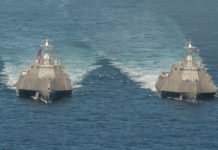
Operating the Phalanx CIWS on US Navy Warships

The Phalanx block installation is designed with a model embedded in the superstructure of the warship. Below the surface of the Phalanx, there is a mounting weighing 211 kg that keeps the Phalanx from shifting from its place. This mount only requires an area of 5.5 m2, so Phalanx is ideal as one of the weapon systems on medium-sized combat ships. The Phalanx system is operated with 440 VAC, 3 phase, 60 Hz electricity connected to the ship’s generator and equipped with a seawater-based cooling unit. The Phalanx control system is driven by the Mk. 340 Fire Control System, which is usually operated from the CIC (Combat Information Center) bridge and manned by one weapons officer. If needed, an independent control system is available, the Mk.339, located in a steel panel near the gun. The Phalanx control system can be integrated into the AEGIS weapon control system used by the US Navy.
The eyes of the Phalanx lie in its two antennas mounted one above the other. The upper antenna is the search radar, which rotates 90 times per minute and is on the digital Ku band spectrum. The antenna below it, which is orange in color, is the tracking radar that receives input from the search radar with Doppler capability. How it works: the search radar begins to detect moving objects in the air at a distance of 10 nautical miles from the ship. This function is carried out in full automation by software. Each object caught is then compared with the stored threat database, to then determine which priority will be intercepted first.