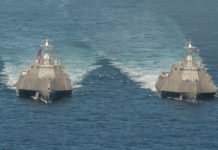
Phalanx CIWS in action

There is an anecdote in the US Navy that says, “If the Phalanx starts to act, immediately put on a life jacket and move away from the deck.” It is only natural, considering that when the CIWS starts to act, it means only the Phalanx separates the life and death of the ship and its crew. Often, with all its potential, the Phalanx as a CIWS system has proven less successful in protecting ships from enemy missile threats. Take the example of the incident on 17 March 1987. In the heat of the First Gulf War between Iran and Iraq, two Iraqi Air Force Mirage F1 fighter jets managed to embarrass the US Navy by firing two AM39 Exocet anti-ship missiles at USS Stark (FFG-31).
One missile penetrated the left side of the bridge but fortunately did not explode. A total of 37 sailors died in the line of duty and 21 were seriously injured. This was despite the fact that the Stark was guarded by Phalanx, which in this unlucky moment unfortunately turned out to be in standby mode. Likewise, the Mk 36 SRBOC (Super Rapid Bloom off-Board Chaff) system was also turned off. The SM-1 Standard missile defense system could not intercept because the direction of the missile’s arrival fell within the blind spot of its radar. This fatal incident could actually have been countered by Phalanx if it had been activated in automatic mode.