


Independence Photos: Photos of the Struggle of the War of Independence 1945–1949 – HobbyMiliter.com – This time, HobbyMiliter presents several photos of the Indonesian independence struggle taken during the War of Independence 1945–1949. In this period the fighters struggled to defend an independence that was still in its infancy, against the colonizers who wanted to retake their former colony, and even against rebels from our own nation. Some of these independence photos may be rather too cruel, so they could fall into the Not Safe For Work category.
From the following photos of the Indonesian independence struggle we can take the lesson that the independence we enjoy today was seized and defended with blood, and not obtained for free. So let us honor the service of our heroes by building this nation!
 Photo of the signing of the handover of the cities of Solo and Pacitan from the Dutch to the Republic forces at Solo Stadium on 12 November 1949. The Dutch were represented by Colonel van Ohl and the Republic of Indonesia by Lieutenant Colonel Slamet Rijadi. Major General Mollinger can be seen behind the two of them. Lt. Col. Slamet Rijadi had previously led the Indonesian independence struggle in the General Offensive of Surakarta against the forces of Col. Van Ohl, 7–10 August 1949.
 Photo of TNI military training in Subang, 1947. After independence, to continue the struggle the TNI carried out reorganization as well as military training. At the end of the road can be seen the sugar factory that is now RNI, and the sugarcane lorry rails beside the road.
 Photo of fighters, members of the Laskar Kemerdekaan, Cirebon 1947. All across Indonesia, the people formed people’s militias, known as laskar, to carry on the struggle, and they then obtained weapons in various ways, buying them on the black market, seizing former Japanese weapons, and even building their own. These people’s militias were later merged with the BKR to become the TNI.
Photo of TNI fighters doing military training in Subang, 1949. The TNI uniforms at that time still did not use standard issue, and neither did their weapons, which were still not uniform. Amid the limitations, only the spirit of struggle made them carry on the fight to defend independence.
 Photo of TNI fighters doing military training in Subang, 1949. As members of the military, various tactics of armed attack were still studied. TNI members can be seen practicing ambush techniques.
 Photo of Republic of Indonesia troops with a Vickers Carden-Loyd tank, 29 January 1946. This tank was seized by Republic soldiers from Japanese forces, who had previously captured this mini tank from the KNIL several years earlier.
 Photo of the interrogation of those involved in the PKI rebellion in Madiun, around late 1948. In the middle of the Dutch army’s attacks on Republic territory, the Republic of Indonesia was stabbed in the back by the PKI rebellion of 1948. A cleansing operation was carried out, and it succeeded in crushing the rebellion.
 Photo of the struggle of a laskar armed with bambu runcing, around 1946. The newly proclaimed independence called on many people to join the fight to defend it. But because the weapons available were not enough, the people’s militias armed themselves with bambu runcing and carried out military training.
 Photo of self-defense training by students of a military school using wooden klewang, Yogyakarta, December 1947. The Republic Army began recruiting young men who were interested in joining the military and defending the country in the War of Independence.
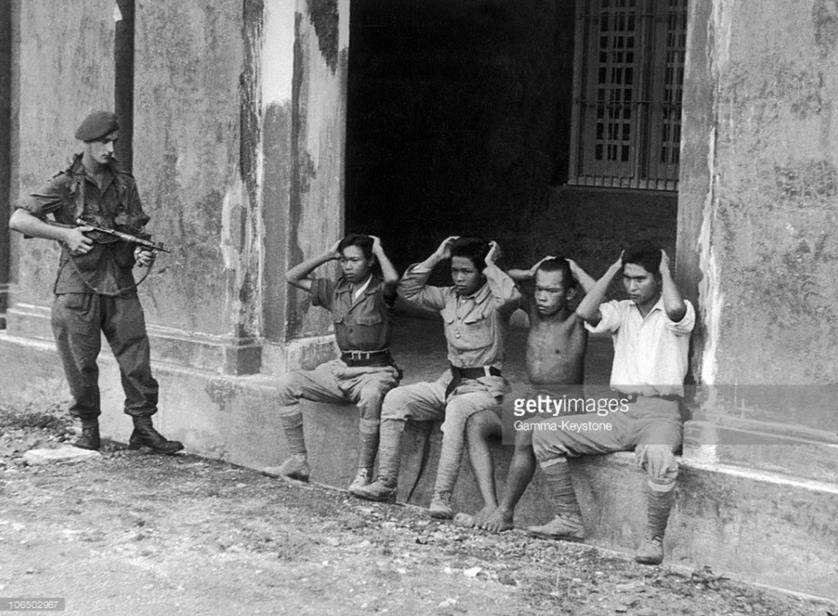 Photo of a British soldier capturing several fighters, 1946.
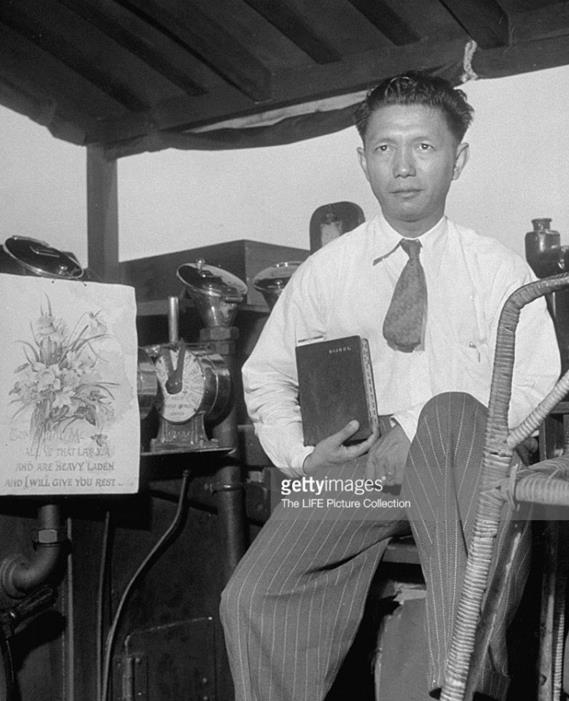 Photo of John Lie, a fighter and member of the Indonesian Navy whose name has been given to one of the Indonesian Navy’s newest Multi Role Light Frigates, August 1949. The Outlaw, his ship, was tasked with smuggling agricultural produce and buying weapons, sailing back and forth between Sumatra and Singapore. John Lie can be seen with a Bible and the captain’s chair of his ship The Outlaw.
 Photo of three Republic fighters captured by the Dutch for carrying out an attack after the ceasefire following the First Dutch Military Aggression, Tangerang 1947. The fighter in the middle was a former KNIL soldier who later joined the TNI and held the rank of Lieutenant in the TNI. His eyes can be seen burning with the fire of struggle.
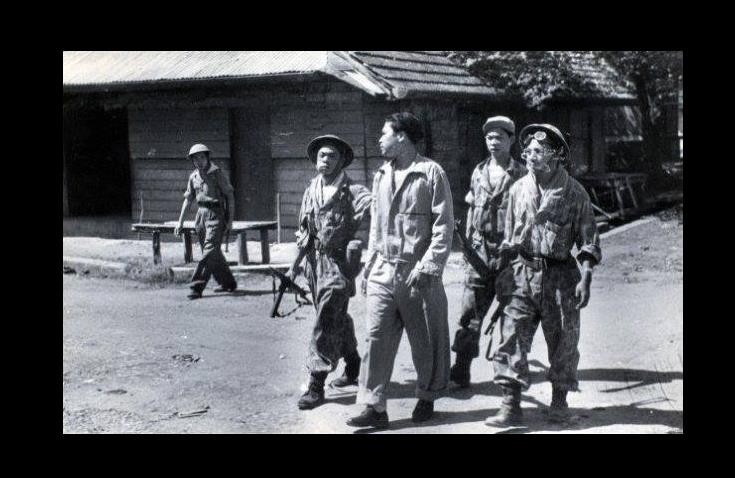 Photo of a fighter held prisoner by several Dutch soldiers, Medan 1947. This TNI fighter was captured when the Dutch carried out their first Military Aggression.
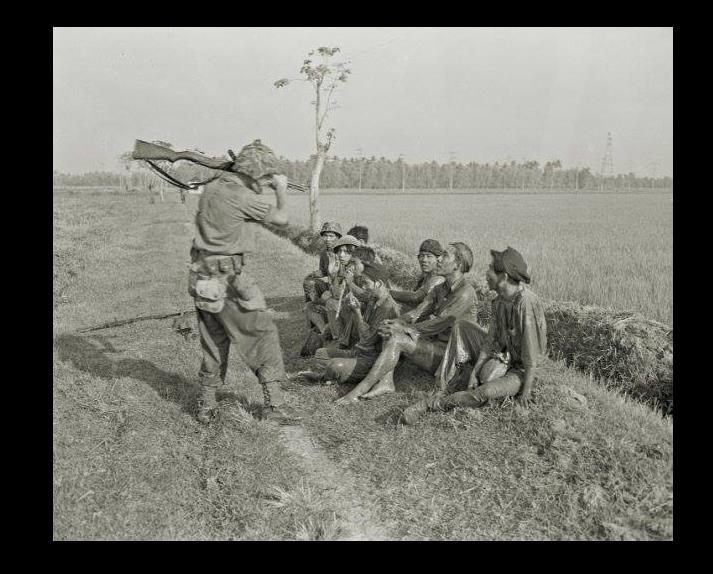 Photo of a Dutch marine swinging his rifle butt during the interrogation of several captured TNI fighters in a raid. One of the fighters can be seen praying devoutly, and one of the fighters was of Chinese descent. During interrogations, cruel punishments were very often applied by the Dutch to obtain information.
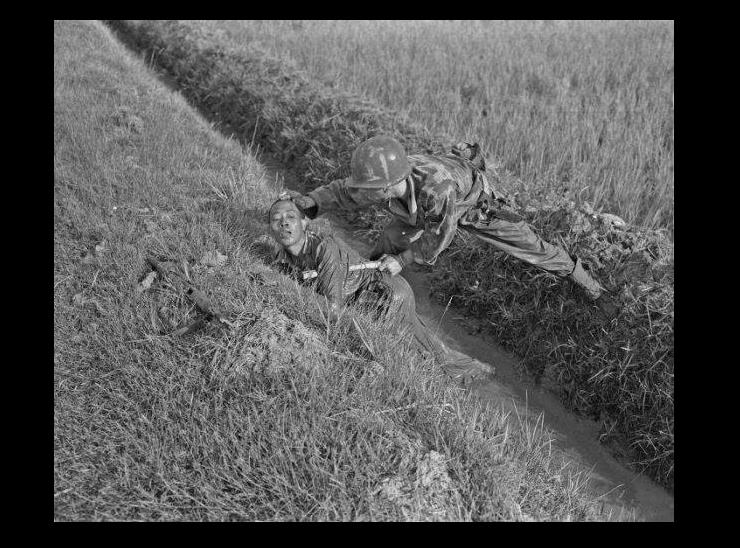 Photo of a fighter who was killed after being shot by Dutch Marines from Company B. This fighter had been firing at the Dutch troops’ position from this trench, before finally falling, pierced by an enemy bullet.
 Fighters captured in a battle in Malang, around July 1947, were interrogated first before finally being executed.
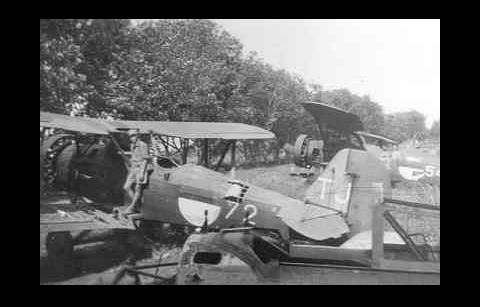 Nakajima A4N at Maguwo air base, 1947. The Indonesian Air Force in the days of the struggle had many leftover Japanese aircraft. There were about 75 aircraft in total, spread across Cibereum in Tasikmalaya, Maguwo in Jogjakarta, Maospati in Madiun, Singosari in Malang, and Morokrembangan in Surabaya. But there were fewer than 10 pilots available.
The same went for the ground crew (technicians, armament crew, navigation crew, and so on), who numbered only a handful. In the end, nearly all of those aircraft were destroyed when attacked by the Dutch during the Second Military Aggression. Even so, the Indonesian Air Force once carried out an air attack on Dutch headquarters in Semarang, Salatiga, and Ambarawa, with 3 aircraft, all of them piloted by student pilots.
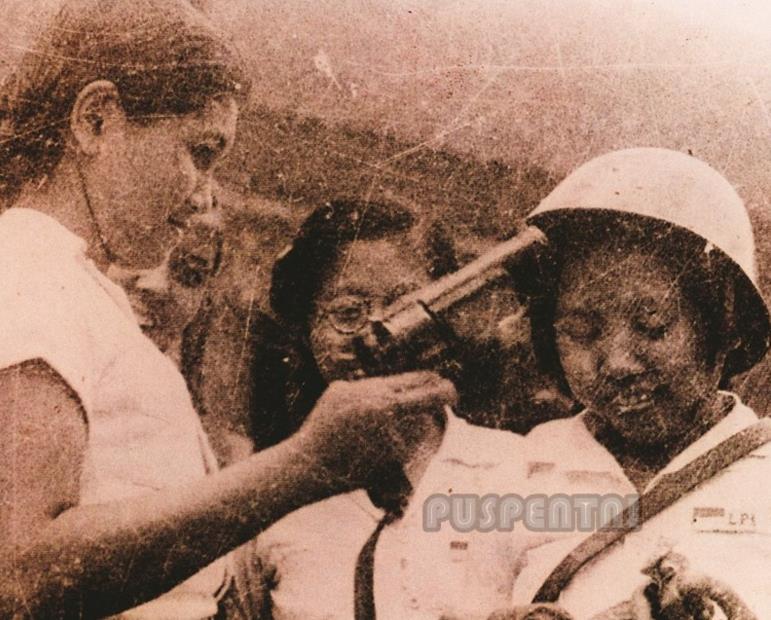 TKR Women, around 1947. Not only men, women too were called to the struggle to defend independence. Several TKR women can be seen studying the use of a revolver pistol.

