
Profile of Denjaka TNI AL, Indonesia’s Mysterious Elite Force – HobbyMiliter.com – Denjaka is short for Detasemen Jala Mangkara, a special maritime counterterror unit of the Indonesian Navy. Its personnel are not the product of open recruitment. They are selected soldiers from the Amphibious Reconnaissance Battalion (Yontaifib) of the Marine Corps and the Frogman Command (Kopaska) who have passed the Maritime Counterterror Course (PTAL).
Denjaka’s main duty is to develop and carry out maritime counterterror, antisabotage, and clandestine operations, including hostage rescue aboard ships and offshore installations. The unit, whose motto is Satya Wira Dharma, is based in Cilandak, South Jakarta, and traces its history to the Navy Special Forces (Pasusla), formed on 4 November 1982.
Denjaka is one of Indonesia’s most feared forces. Understandably so, given its duty as a special counterterror unit. As a counterterror unit, Detasemen Jala Mangkara is built around a core of tough selected personnel from the Marine Amphibious Reconnaissance unit and the Frogman Command who have passed the PTAL (Maritime Counterterror) course. Its existence to this day is almost unacknowledged, black. Denjaka assignments are also black, often not officially recorded.
Denjaka at a Glance
| Official name | Detasemen Jala Mangkara |
| Service | Indonesian Navy (Marine Corps) |
| Headquarters | Cilandak, South Jakarta |
| Origin | Navy Special Forces (Pasusla), 4 November 1982 |
| Personnel drawn from | Yontaifib Marines and Kopaska |
| Special training | Maritime Counterterror Course (PTAL) |
| Main duties | Counterterror, antisabotage, and maritime clandestine operations |
| Motto | Satya Wira Dharma |
| Anniversary | 4 November |
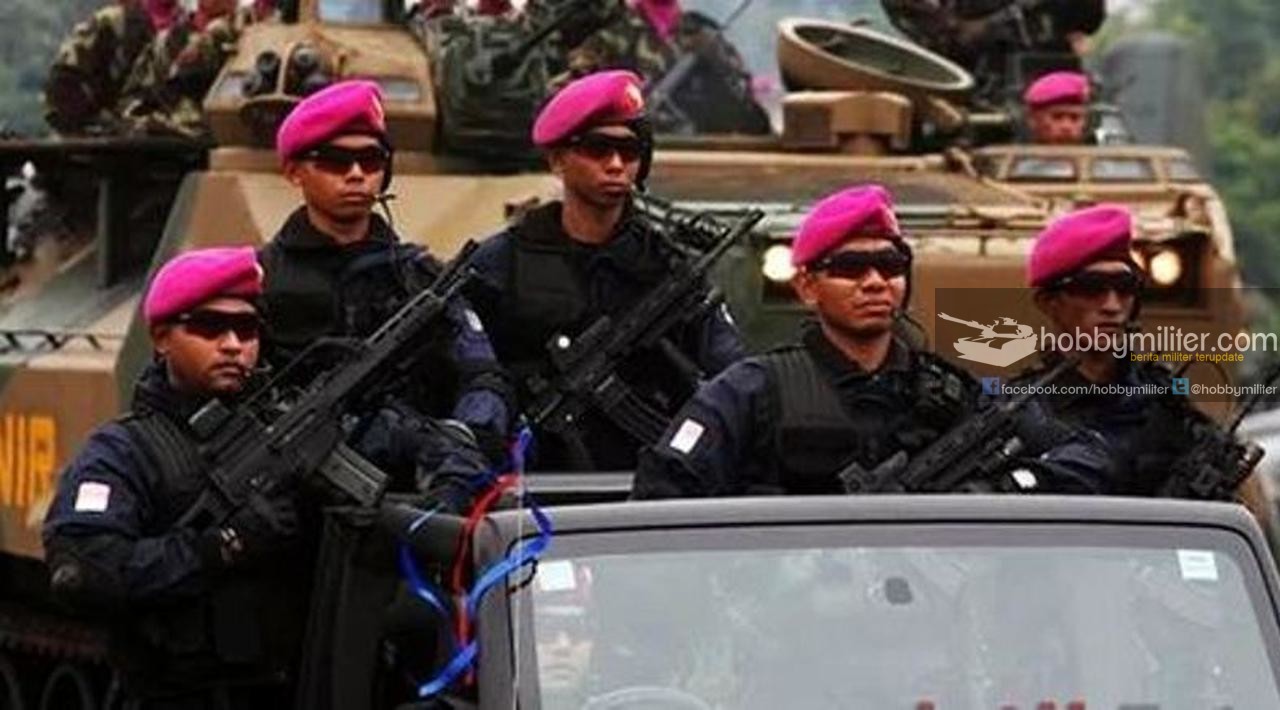
It cannot be denied that the burden of the Indonesian Navy as guardian of the sovereignty of the Republic of Indonesia’s waters cannot be taken lightly. It is not only about facing the strength of foreign naval fleets that try to intrude into Indonesian waters, with the risk of open armed clashes breaking out.
But the institution that carries the motto Jalesveva Jayamahe apparently also has to handle security disturbances caused by some Indonesian citizens or foreign nationals who have lost their way and tend to take shortcuts to achieve what they want.
In order to handle a task that is actually more fitting for law enforcement officers, the Indonesian Navy leadership decided to form an elite unit able to deal with the perpetrators of criminal acts (especially terrorism) at sea.
But the condition was that this unit must always be able to act covertly and with minimal publicity. That is why you should never dream that a unit officially named Detasemen Jala Mangkara can be dissected in detail. Denjaka is black.
Denjaka Duties
In broad terms, Denjaka’s duties cover countering terror aboard passenger ships, warships, and strategic industrial installations on the coast and offshore, antisabotage of vital maritime objects, maritime clandestine operations, and hostage rescue. To reach their targets, Denjaka personnel master three methods of silent approach: across the water surface, under water (commando diving), and through the air. The details of the unit’s history, training, and capabilities are described in the sections below.
History of Denjaka TNI AL
The existence of the Denjaka TNI AL Forces, or Detasemen Jala Mangkara, as the Indonesian Navy’s maritime counterterror unit began with the issuance of the KSAL Decree No. Skep/2848/XI/1982 dated 4 November 1982.
Its contents set out the formation of the Navy Special Forces (Pasusla), tasked with countering various forms of security threats occurring on civilian sea transport, Indonesian Navy warships, and various strategic industrial installations, whether on the coast or in the middle of the sea. Such threats could take the form of clandestine action, sabotage, hostage taking, or conventional hijacking.
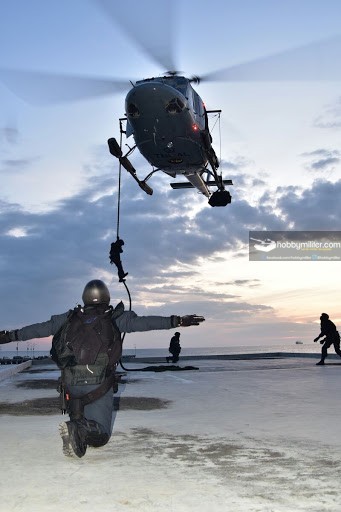
When first formed, the Navy Special Forces numbered 70 selected men drawn from the Marine Amphibious Reconnaissance Battalion (Yontaifib) and the Frogman Unit (Satpaska) of the Indonesian Navy. The peak of its development command (so that it was ready to operate at any time) was entirely the responsibility of the Commander of the Western Fleet (Pangarmabar), assisted by the Commander of the Marine Corps (Dankormar). Meanwhile the authority to assign the unit (operational control) lay in the hands of the Chief of Staff of the Navy (KSAL). The Pasusla base was initially at the Western Fleet Command Headquarters.
In later developments, on the proposal of the KSAL (13/11/84), the Commander of ABRI (Pangab), through his letter No. R/ 39/08/9/2/SPN, approved the change of Pasusla into a terror unit whose development was specifically under Dankormar. Pangab even confirmed this through an official instruction letter to Dankormar entitled Ins/01/P/IV/1984. Officially, the name Detasemen Jala Mangkara, or Denjaka TNI AL, began to be used when the KSAL Decree No. Kep/42/VII/1997 dated 31 July 1997 was issued. But to this day it is actually 4 November that is set as the anniversary of this elite unit, which carries the motto Satya Wira Dharma.
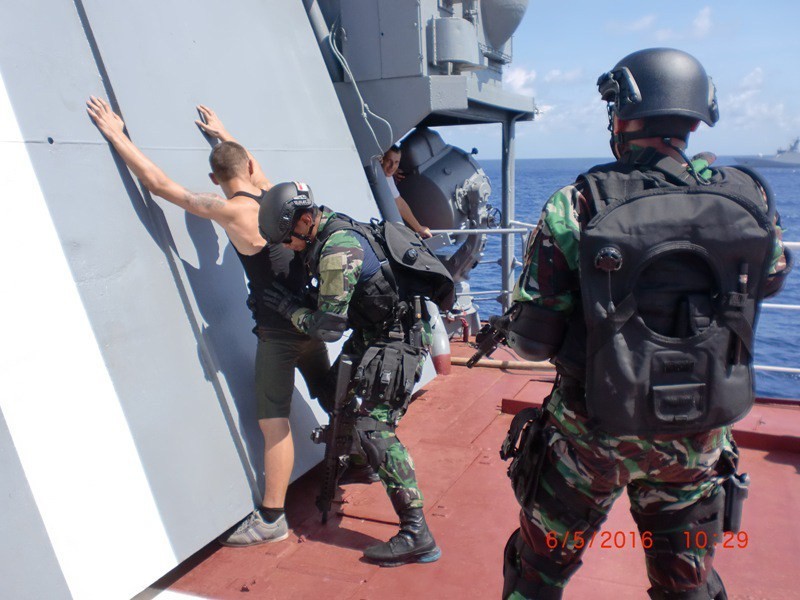
After officially becoming the Indonesian Navy’s maritime counterterror unit, the position of this elite force, based in one secret corner of the Bhumi Marinir Cilandak area, came directly under the control of the Pangab (now the Commander of the Indonesian Armed Forces). Meanwhile the authority to develop the Denjaka force was handed to the Head of the Strategic Intelligence Agency (KaBais) of the Indonesian Armed Forces.
In broad terms, the organizational structure of the Denjaka TNI AL force consists of one headquarters detachment, one headquarters team, one technical team, and three combat teams bearing the code names Team Alfa (A), Team Bravo (B), and Team Charlie (C) Denjaka as the implementing elements in the field.
Denjaka Training and Education
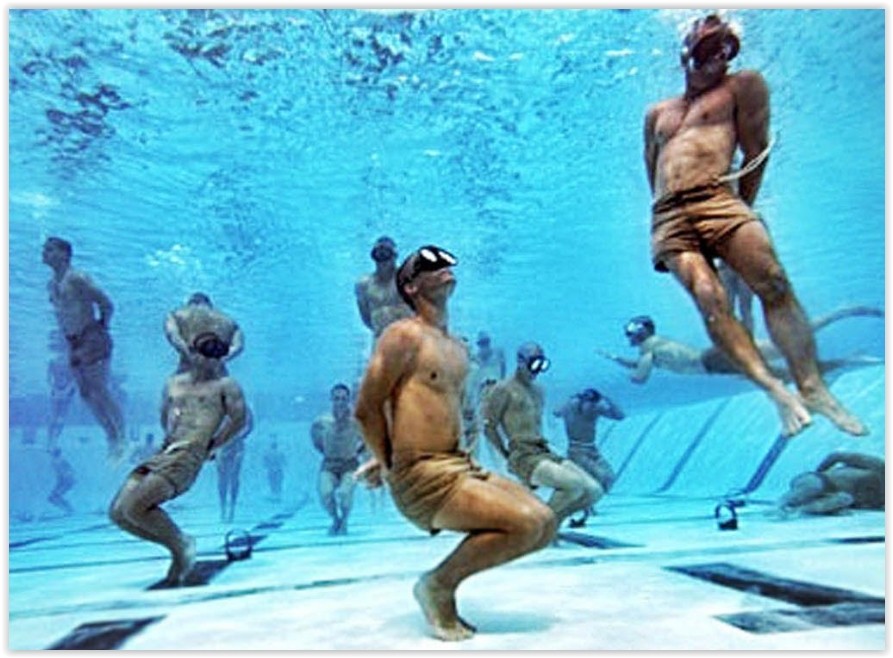
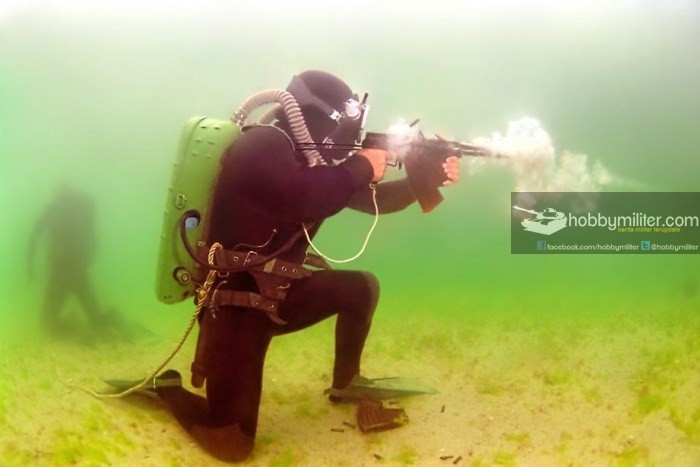
Basically, the counterterror education material received by a prospective member of Denjaka TNI AL does not differ much from what is given to most similar units in the Indonesian Armed Forces and Police. Only, given that the scope of operations is mostly at sea, the Denjaka training syllabus, besides the method of reaching targets by airborne technique, also includes the application of the underwater method (commando diving) and the silent water-surface method.
The latter method in particular can be done either by combat swimming or by riding a motorized rubber boat. Training that is continuous and truly serious is the foundation of this Denjaka force’s greatness.
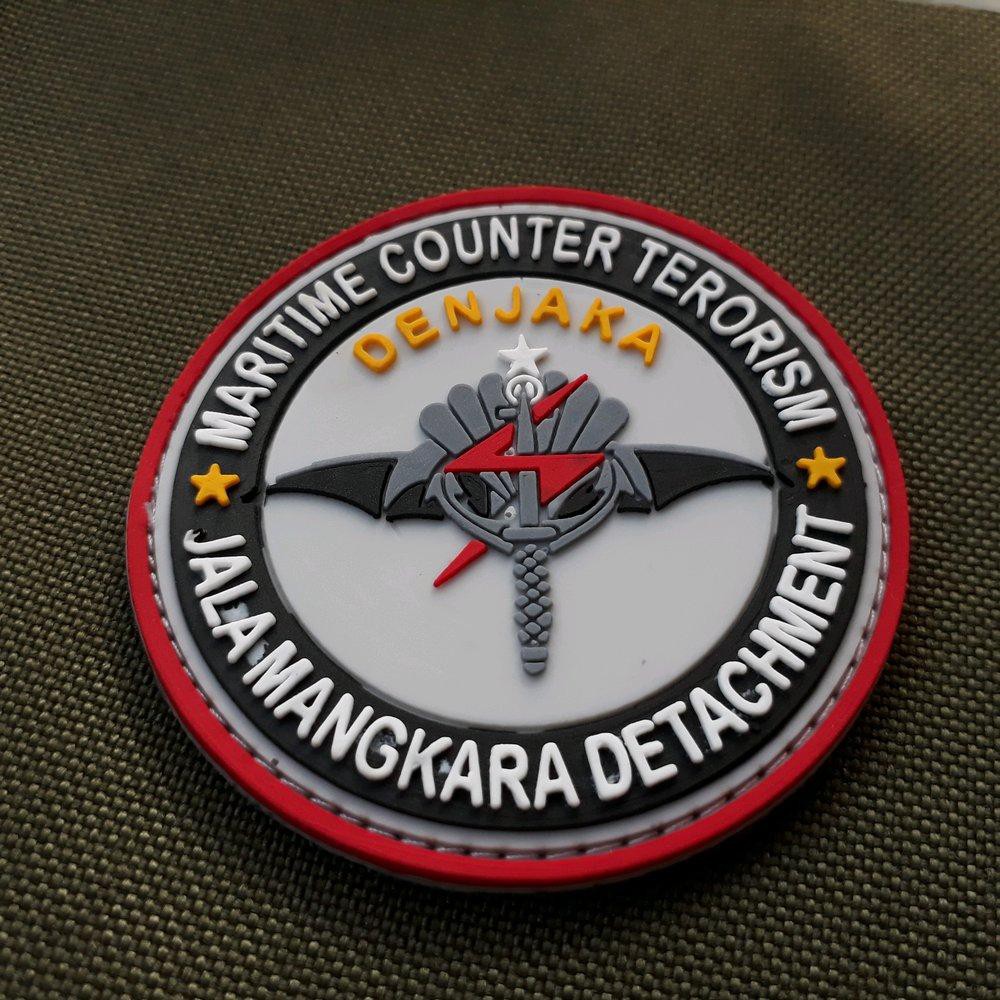
In practice, the Denjaka TNI AL Force always combines all three kinds of silent crossing techniques to reach a target in the middle of the sea toward midnight or even in the early hours. Whether it is a passenger ship at sea (or at anchor), an oil drilling platform (rig), a giant tanker (super tanker), or even a remote island used as a vital installation or a place of recreation in the middle of the sea.
To obtain human resources ready to act with these three crossing methods, there is no choice but to recruit them from Yontaifib Marines and Kopaska personnel. A number of the best personnel from these two Indonesian Navy special units are then drilled in a training program called the Maritime Counterterror Course (PTAL).
For 165 days, the PTAL Course participants are drilled relentlessly, from intelligence, counterterror and countersabotage tactics and techniques, to maritime commando techniques and advanced parachuting. The theory stage is undertaken by the course students at the Denjaka Headquarters in Cilandak. Meanwhile the field practice stage is held at a number of secret training locations in the urban areas of Jakarta, Bogor, Tangerang, the Thousand Islands, and Lampung.
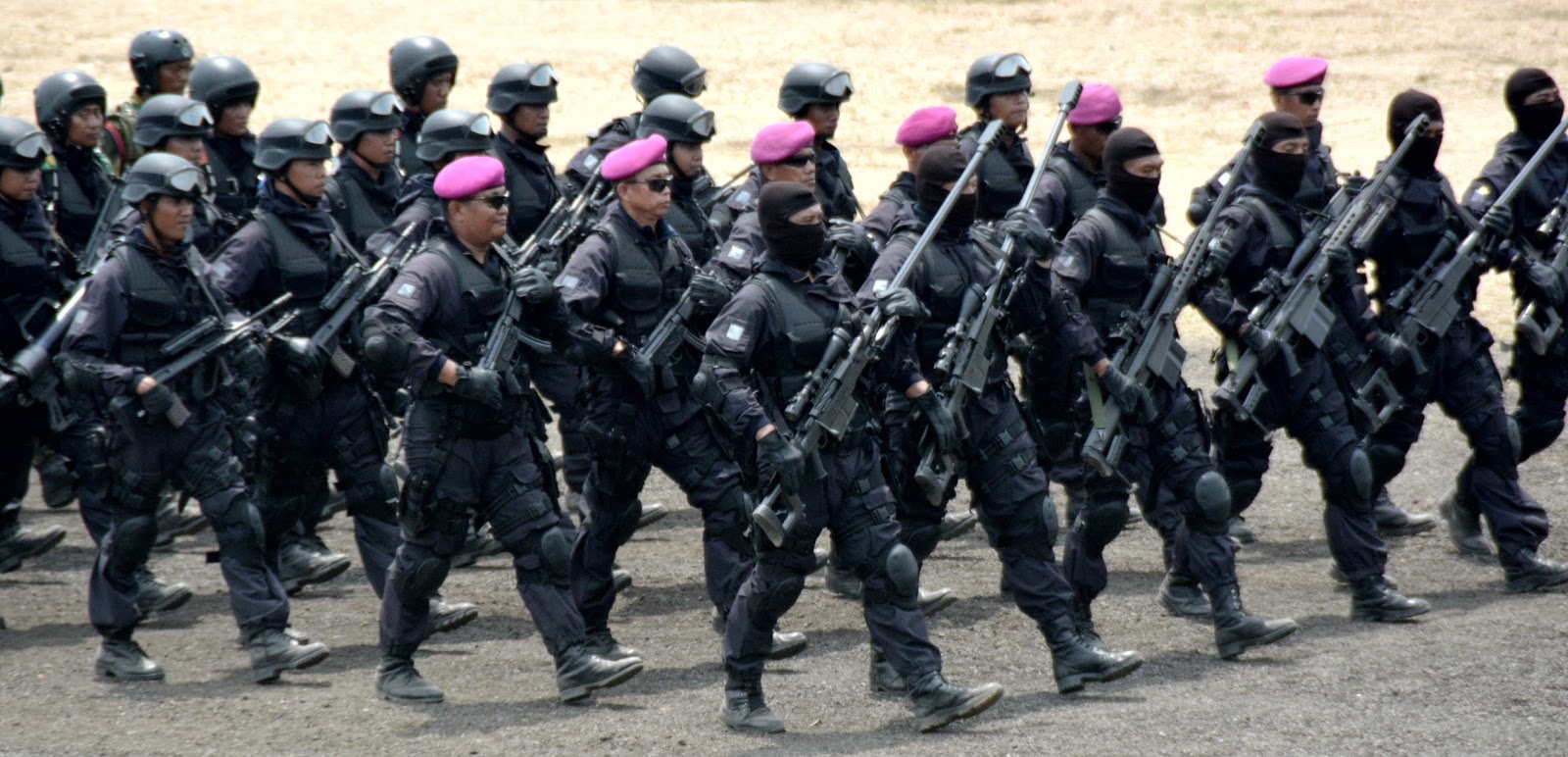
The Denjaka PTAL Course is divided into four stages. Namely, a seven-day pre-service stage, a 90-day classroom theory stage, a 65-day field practice stage, and ending with a three-day consolidation stage. The education material that is the students’ daily fare is quite abundant. It covers improving basic physical ability, maintaining and improving special amphibious reconnaissance skills, self-defense, and mastering various infiltration tactics and techniques from the three services (land, sea, and air).
Denjaka Entry Requirements and How to Join
There is no Denjaka recruitment open to the public. Candidates are Indonesian Navy soldiers already serving in the Yontaifib Marines or Kopaska, selected from the best personnel of their units, who must then take and pass the Maritime Counterterror Course (PTAL). This course lasts 165 days in four stages: 7 days of pre-service, 90 days of theory, 65 days of field practice, and 3 days of consolidation. So the road into Denjaka starts much earlier: becoming an Indonesian Navy soldier, entering one of its two feeder units, and proving yourself the best there.
The Prowess of Denjaka TNI AL
After all of that is passed, PTAL course participants must still master various tactics and techniques for seizing and controlling various ships and vital installations in the middle of the sea. It does not matter whether they are occupied or not. Next they are also trained to defuse various kinds of explosive devices, survive in a harsh natural environment with minimal equipment, and endure torture if captured by the enemy. But if indeed captured, they must of course try to escape without being noticed.
The main goal of the PTAL Course is for every Denjaka Force member to reach the Personnel Qualification Standard (SKP) as a member of a special maritime counterterror force that within 1 x 24 hours can be deployed to every corner of the archipelago to face two different cases in different places at the same time.
Besides various military sciences, Denjaka members are also equipped with basic knowledge of psychology and various special analysis techniques that sometimes have nothing at all to do with military affairs. Mastery of this non-combat science is needed when a Denjaka advance team must negotiate with terrorists. Besides learning what the terrorists demand, the negotiation effort is also useful to buy as much time as possible. That way the assault unit can prepare itself as well as possible. Until, at the moment considered right, they move.
Not only that. The negotiators are also tasked with reading the terrorists’ abilities, strengths, tricks, and weaknesses. If the negotiation effort ends in deadlock and the terrorists remain stubborn, only then is the assault unit deployed, accompanied by the negotiator.
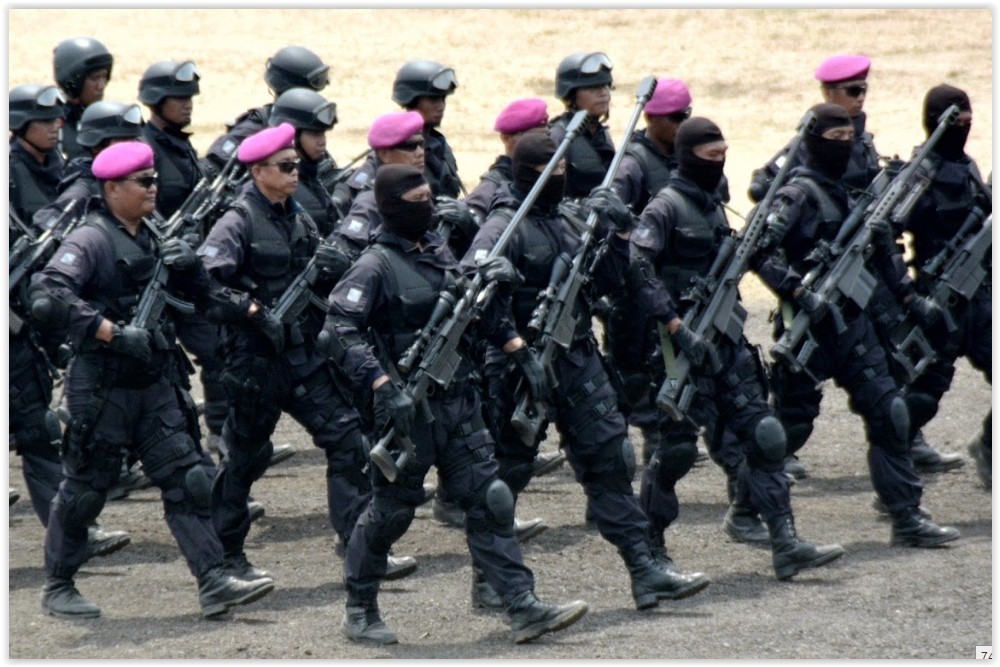
The assault unit itself is divided into three teams, namely the water-surface team, the underwater team, and the airborne team, which is usually dropped from a transport aircraft. Each team consists of 12 to 14 selected soldiers with various kinds of expertise as needed in the field. Starting from explosive disposal, combat medic, electronic communications, to information technology. These three teams enter the target location and immediately launch a surprise attack until the target is fully secured.
There are many codes used in every Denjaka operation. For example, when an operation starts it is coded ‘KILAT’, a delay is coded ‘MENDUNG’, and if it is continued it is coded ‘PETIR’, and if it is canceled its code is ‘HUJAN’. If the operation has run successfully, the assault team commander must send the word ‘CERAH’ to the operations leader. From the moment the Denjaka assault team enters the target location, launches a lightning attack, and evacuates personnel plus hostages (especially in a hostage incident), it usually takes no more than 15 minutes.
Denjaka TNI AL Weapons
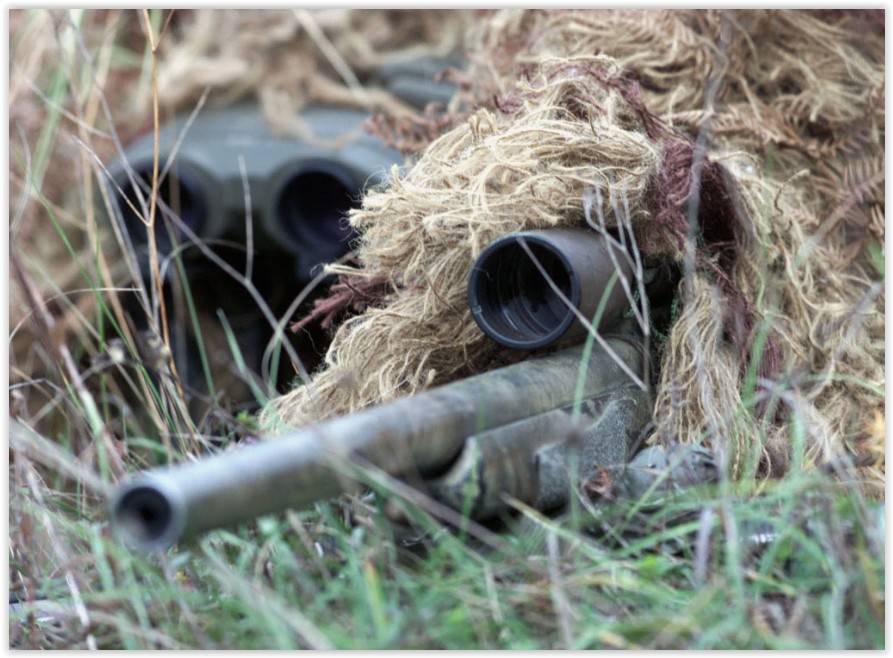
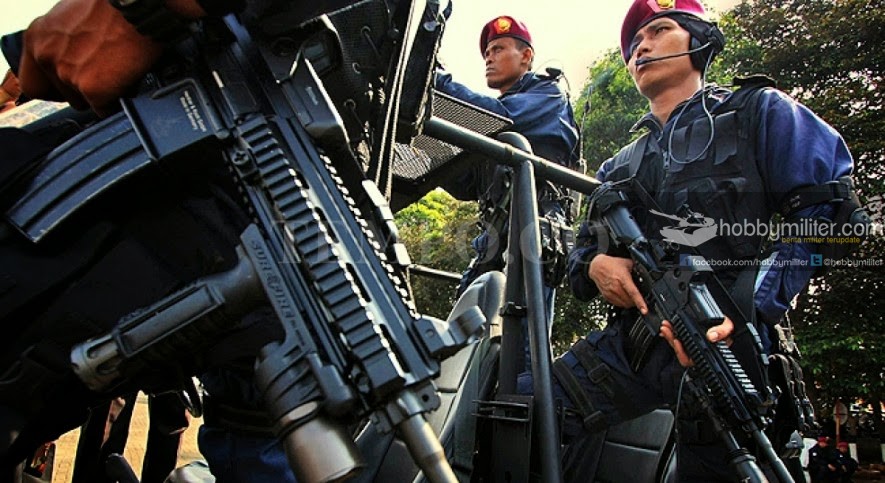
As a unit that often deals with various high-risk tasks, the Denjaka assault team relies on various advanced weapons in close combat. Various automatic pistols, smoke grenades, stun grenades, light machine guns, and sniper rifles are in its arsenal inventory.
For weapons, take as examples the P226 pistol (made by Sig Sauer, Swiss-German), the HK416 and SiG516 assault rifles. There are also assault rifles made by Heckler and Koch, the G36C and G36V.
Besides weapons, the Denjaka assault team also relies on a host of supporting equipment. From conventional rubber boats fitted with outboard motors (the Silinger type), high-speed fiberglass boats with greater capacity (the Sea Rider type), complete diving equipment (including closed-circuit breathing apparatus), complete parachute equipment, wireless communication tools of a jamming-resistant type, waterproof flashlights, to Global Positioning System (GPS) navigation aids, and Night Vision Goggles (NVG).
Not only terror and sabotage operations, the Denjaka unit can also be involved in other kinds of secret operations on the direct orders of the Commander of the Indonesian Armed Forces. To this day, the existence of this unit is considered secret. Even Denjaka assignments are black, often unacknowledged or officially recorded at the Indonesian Armed Forces Headquarters in Cilangkap.
Differences Between Denjaka, Kopaska, and Yontaifib
| Denjaka | A special joint maritime counterterror unit. Its personnel come from Yontaifib and Kopaska who have passed the PTAL Course. |
| Kopaska | The Indonesian Navy Frogman Command. It specializes in special naval warfare, combat diving, and underwater sabotage. |
| Yontaifib | The Marine Corps Amphibious Reconnaissance Battalion. It specializes in amphibious reconnaissance and raids from sea to land. |
In short, Kopaska and Yontaifib are the units of origin, while Denjaka is the destination unit for selected personnel from both who take the maritime counterterror specialization.