
The Harrier Engine, Bristol Orpheus and Rolls-Royce Pegasus

The Harrier’s engine, which at first was a problem because it had to be able to carry the aircraft in vertical flight and also fly horizontally at high speed without waste, was finally solved. Before Rolls-Royce found the Pegasus engine used by the Harrier today, the Bristol Engine Company offered the Bristol Orpheus engine.
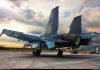
But Hawker preferred the Pegasus, which was more practical and efficient. The Pegasus engine, placed exactly at the centre of gravity (CG) under the Harrier’s wings, meant that just this one engine was needed to lift and push the aircraft. It was fitted with four exhausts whose direction could be changed, pointing downward for vertical take-off and hovering (flying still in the air) for control.
By slowly changing the direction of the exhaust to the rear up to a maximum of 98.5 degrees, the Harrier would move from a hovering position to horizontal flight like a normal aircraft. With this Pegasus turbofan engine a Harrier could act like a helicopter. Harrier pilots in both Britain and the US believed that the Harrier could hover better than a helicopter and could operate from almost any open place anywhere, as long as it was no smaller than 72 x 72 m.
The British Armed Forces, at the start of the Harrier’s existence in August 1966, immediately ordered 60 aircraft to be operated in air squadrons and on aircraft carriers. For operations on a small carrier of the Invincible class, a take-off aid in the form of a ski-jump fitted at the end of the ship was created.
This runway shape, angled upward (ski-jump), made it easier for the early Harrier to operate from an aircraft carrier. After the VTOL Sea Harrier was created in August 1978, the role of the land-based Harrier used by the British Air Force (RAF) was distinguished from the Sea Harrier used by the British Navy.