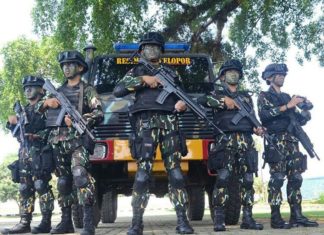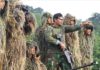
The main tasks of the T Ronggolawe Troops were to infiltrate territory controlled by the enemy and observe the presence of enemy spies in the area of Division V Ronggolawe (combat intelligence and counter combat intelligence tasks), to carry out territorial development, preparing the strength and defence of the region together with the people, including preparing a scorched earth policy if it became necessary, and to be a combat force in the field.
The assignments given to the T Ronggolawe Troops from mid 1947 to April 1948 were on the Ronggolawe I Front, which covered the western and northern areas of Surabaya and Gresik. They were also later assigned to the Ronggolawe II Front, which covered East Semarang and Demak. Some members of the T Troops also served as liaison officers when observer officers from the KTN (Komisi Tiga Negara, Three Nations Commission) came to Surabaya. These observer officers were impressed by the orderliness, discipline and ability of the members of the T Ronggolawe Troops, for example in communicating in foreign languages and in the way the weapons they used were always neat and clean. One of the reasons the leadership assigned the T Troops was to show the outside world through the KTN commissioners that those fighting in Indonesia were not bandits and terrorists as the Dutch and NICA claimed, but a professional military body.
THE T RONGGOLAWE TROOPS BECOME THE T-SAD TROOPS
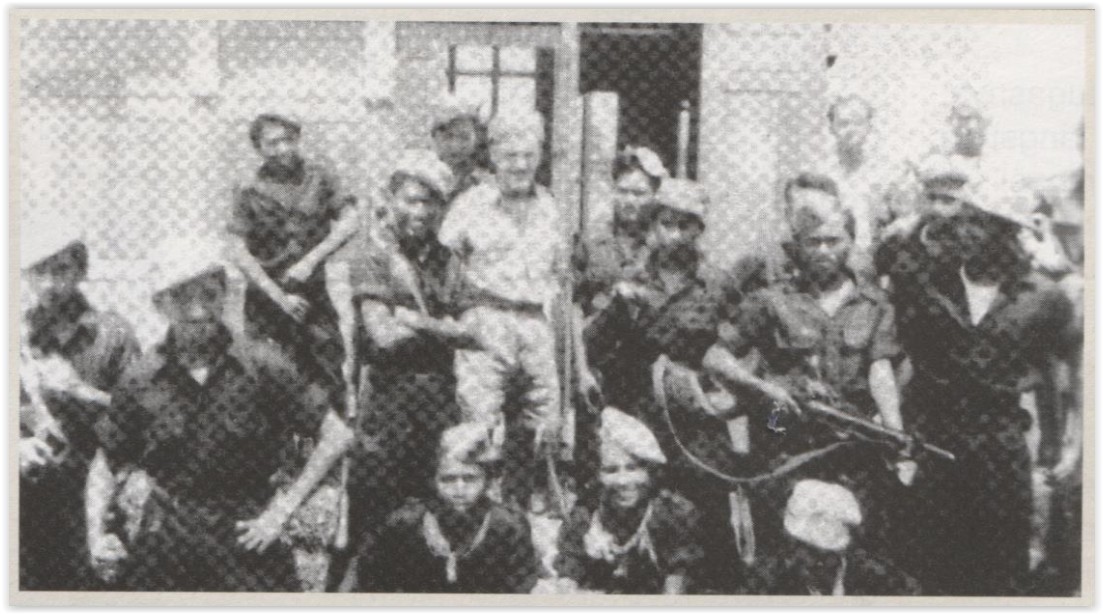
Further organisational changes and streamlining turned Division V Ronggolawe into Mobile Brigade I/Ronggolawe on 1 April 1948. Colonel GPH Djatikusumo took up his new post as Army Chief of Staff (Kepala Staf Angkatan Darat, KSAD), and the T Ronggolawe Troops became an organic unit directly under the command of the KSAD, officially bearing the name Reserve Troops of the Army Staff (Pasukan Tjadangan Staf Angkatan Darat, T-SAD Troops, better known as the T Troops), even though at that time all existing student soldier units were merged into Brigade XVII/TP.
After the ceasefire under the Renville Agreement, the KSAD gave a policy for the members of the T Troops to continue their schooling. Some of them continued to public schools (to senior high school and university) and some continued their military service, either staying in the army or choosing to become pilot cadets, while others chose to continue to police school.