

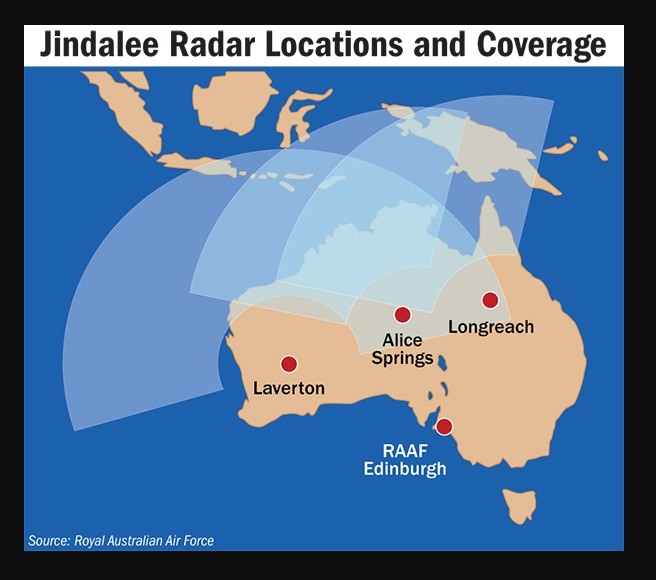
How Australia’s Jindalee Over The Horizon Radar (OTHR) Works – HobbyMiliter.com – Even though it has enveloped the Earth for millions of years, not all parts of the atmosphere can be understood. Beyond its role as the Earth’s mantle, it can apparently be used as a medium for an advanced radar named Over The Horizon Radar. A uniqueness of the ionosphere.
This is what is called the greatness of God. That, even though it is directly related to an environment within the solar system that we do not yet fully know, the Earth still has a shield capable of holding back all destructive external influences. Cosmic ray strikes and meteor bombardments that could cause mass damage, for example, can be held back or at least reduced.
Uniquely, this shield named the atmosphere has no clear form and is colorless. It is only like plasma that sometimes glows, blanketed by clouds that tightly cover the Earth with such a vast surface. It is completely unimaginable that this friendly layer is able to hold back the various attacks mentioned earlier.
Through a series of careful studies, although not yet completely finished, it is known that within this layer it can still be sorted again according to altitude (vertical), temperature, and its nature. As far as is believed, the atmosphere is divided into five layers, namely (starting from the lowest) the troposphere, stratosphere, mesosphere, ionosphere, and thermosphere.
From its strata it is easy to understand that the troposphere is the one most related to life on Earth. This layer consists of fundamental gases, oxygen, nitrogen, hydrogen, and others. This layer also determines where the direction of weather phenomena and atmospheric turbulence will go today, tomorrow, or in days past.
This layer can also be likened to a temperature retaining mantle, where every one kilometer of increase, its temperature will decrease by 6.5 degrees Celsius. This layer has a height that tends to vary downward, where above the equator it reaches 16 kilometers and decreases to become eight kilometers above the poles.
Right above the troposphere is the stratosphere layer, the layer with ozone that has long been known as a filter of ultraviolet rays, the cause of skin cancer. Above the stratosphere, scientists originally thought not much more positive impact could be expected because its composition was already so unstable.
This belief at least lasted until around the 1970s, when the Luxembourg Case that occurred in 1933 was solved. The case, which occurred when radio wave transmission was newly being utilized for various information delivery purposes, was none other than the foothold of people’s understanding of the benefits of the ionosphere. In this case, precisely, physicists were astonished when listening to a broadcast transmitted from a radio station in Luxembourg being heard as far as Beromunster, Switzerland, on a different frequency.
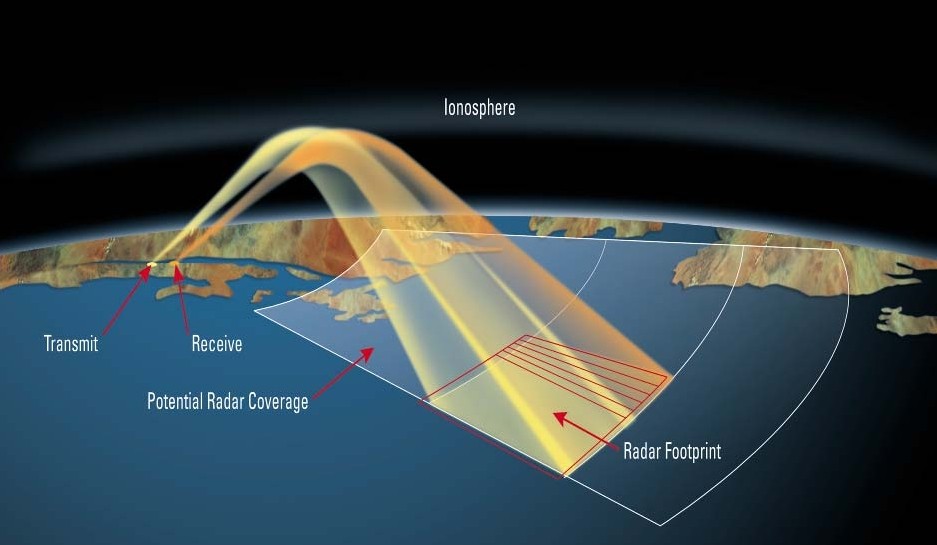
After investigation, this phenomenon apparently resulted from the actions of a stretch of unstable electrons in the ionosphere. In this case, an onslaught of energy from high power electromagnetic waves can apparently activate the electrons in the ionosphere to become a reflecting layer for the waves themselves.
The ionosphere itself is still divided again into four layers, but what is clear is that from this layer scientists can use it as a reflector of radar waves, a finding that only became effective in the 90s, or precisely at the time when many countries were confused about how to track the presence of secret weapons (stealth) capable of infiltrating without being tracked by conventional radar. This radar is what later became known as Over the Horizon Radar.
Australia’s Jindalee OTHR Radar
First tinkered with by German physicist Heinrich Hertz and Scottish physicist James Clerk Maxwell in the 1880s, radar, which stands for radio detecting and ranging, began to undergo serious development since the 1930s. Maxwell succeeded in concluding that radio waves could be reflected by a medium in the form of metal, while Hertz himself for the first time succeeded in completing this finding through experiments with a wavelength of 66 centimeters or a frequency of 455 Megahertz. Hertz was then immortalized as the unit for one cycle per second.
Subsequent experiments were continued by a number of scientists from a number of countries but never achieved satisfactory results, except the one carried out by German physicist Christian Hulsmeyer, who felt spurred on by the interests of war (during World War II). Not long after the various experiments carried out during this period, a number of scientists then succeeded in utilizing their findings to track aircraft. Also for military purposes and interests.
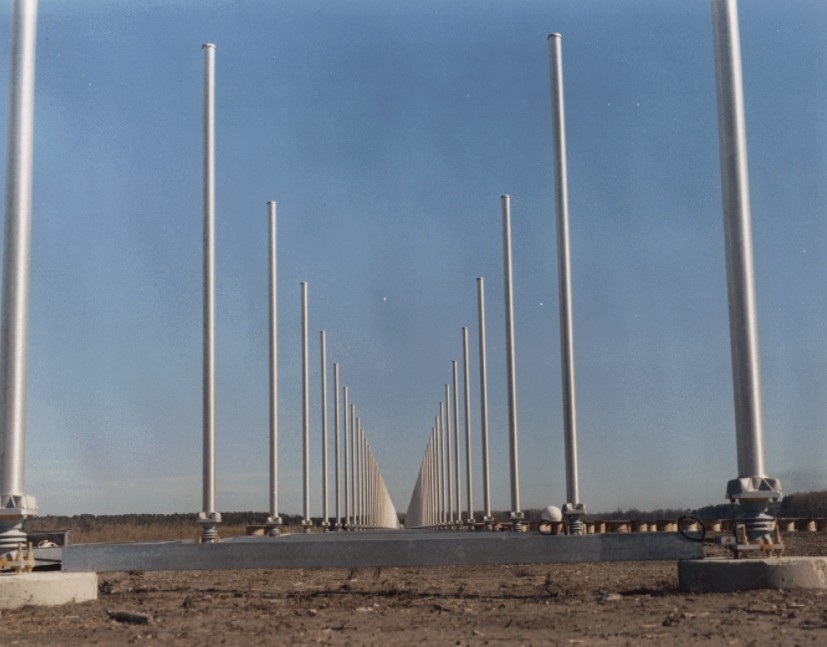
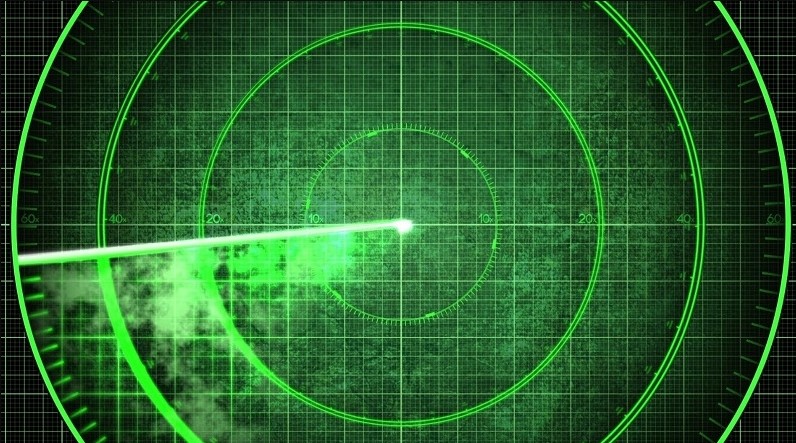
In its later development it was then discovered that its utilization was very effective if using microwave spectrum waves, namely between 400 MHz to 40 GHz. In principle, radar works by sending waves from this frequency range to an airspace area. Tracking will run effectively if the receiving equipment receives back the signal that was sent earlier. By calculating the return time and the antenna angle, the tracked object will be known. Later this equipment grew more advanced with the creation of additional systems that could calculate the size and shape of the tracked object.
Even though it developed rapidly, towards the 90s conventional radar seemed to hit a wall. With the completeness of the engineering techniques for making stealth aircraft with materials capable of absorbing radar signals, such as those applied on the F-117 Nighthawk and the B-1A Spirit, naturally many air defense radar systems were made mute by it. Combined with the trick of placing the exhaust outlet on top of its body, heat trackers were also made blunt.
So, at one time, the military world was wary of the presence of aircraft that seemed set to become the mainstay of a handful of advanced countries. Because they were able to break through all forms of radar fences so easily. Also, the radar detection distance was very limited because of the influence of the Earth’s curvature and antenna height. Therefore, most active radars are placed at height, whether on mountains or on top of towers. With the limitation of detection distance to an average of 200–300 km effective, the early warning system for threatening air danger also had a very narrow time window.
However, this is the greatness of scientists, through hard work that drained their minds, they finally succeeded in creating its tracker. The principle is simple, namely by utilizing the ionosphere layer as a reflector. Starting from the nature of its electron layer, which is able to reflect back radio waves from the High Frequency range [3–30 MHz), they then adopted it as a tracker of the flying stealth aircraft that indeed have a weakness if targeted from above.
From one of Australia’s military radar centers, this kind of trick several times succeeded in tracking B-1A flight operations. Its utilization, in an integrated system named the over the horizon radar, apparently also provided another horizon in the aspect of identifying flying objects (air surveillance).
That is because its range is 10 times that of ordinary radar (reaching 2,000 nautical miles) and its early warning capability is extraordinary. Because it is also able to detect ballistic missile launches earlier. Australia has several OTHR radar sites, among them is at Jindalee.
This radar that utilizes ionosphere reflection is said to be able to detect aircraft traffic in the Denpasar Bali area, even Hasanudin Air Base in Makassar where our Sukhoi 27/30 are based. Indeed, the accuracy of its detection may initially still be lacking, however with the development of science, who can predict the development of this technology.
In its development, what other positive impacts can be exploited from this layer that wraps the Earth? To a certain extent, the atmosphere is indeed still phenomenal.