
Photos of Martial Law in Aceh 2003-2004, Military Operation Against GAM – HobbyMiliter.com – In 2003, the government decided to carry out an integrated military operation against the Free Aceh Movement (GAM) after negotiations reached a deadlock. Various units were deployed in this integrated operation, and besides Army elements, Navy, Air Force, and Police elements were also involved in this operation. This era is known as the period of Martial Law in Aceh.
At that time, Indonesia was still in a state of recovery from the economic crisis that hit Southeast Asia in the 1998-1999 period. Indonesia had also just finished undergoing a military embargo from Britain that lasted for 6 months, from 1999 to 2000. It was also still under a limited military embargo from the United States from 1999 to 2005.
Although under embargo, in fact all kinds of weapons could still be obtained through third parties, it was just that our spending budget in the early 2000s era was indeed very, very tight. Paying the salaries of civil servants alone was actually starting to become difficult, and finally regional autonomy began to be introduced. And most central civil servants were transferred to the regions to reduce the burden on state budget spending.
Today, peace has happened. Both sides held peace negotiations after the Aceh tsunami. With both sides carrying out give-and-take in order to work towards comprehensive peace in the land of Aceh, finally on 15 August 2005 a peace agreement was reached between the Government of the Republic of Indonesia and GAM in Helsinki, Finland. Aceh became peaceful until today.
This article contains several documentary photos of Martial Law in Aceh 2003-2004, the Military Operation Against GAM. The photos were taken from Reuters, Associated Press, and AFP documentation. This article is intended to remember history and to show documentation of what happened in that period, without reopening old wounds.
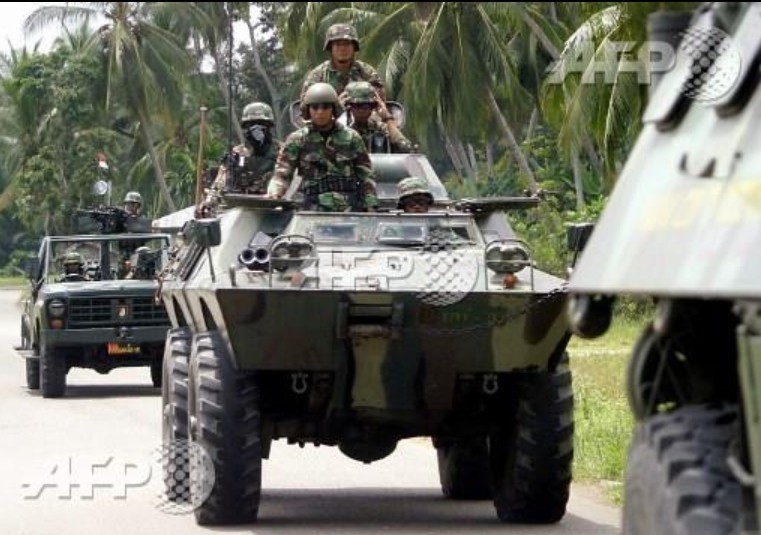
The first photo shows the American-made Cadillac V150 Commando armoured vehicle, the mainstay of the cavalry troops in Aceh. This armoured vehicle was quite resistant to GAM-made IEDs, which were widely planted in Aceh to ambush TNI convoys.
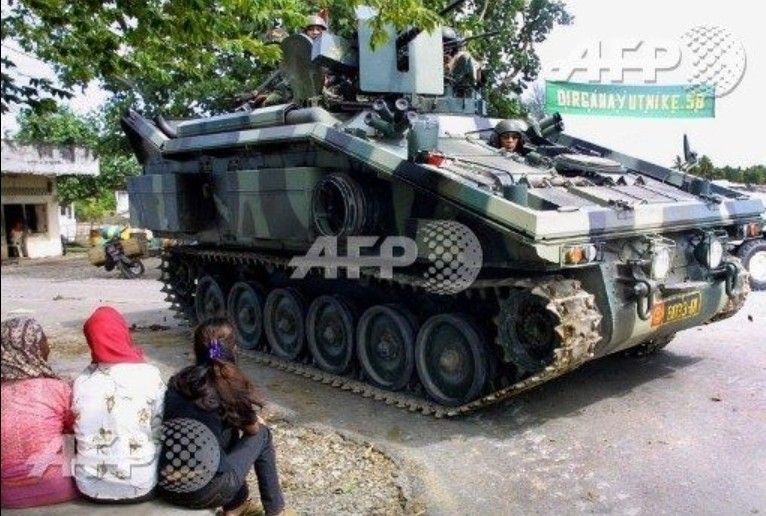
Although it was said to have been complained about by Britain because it was considered to violate the purchase contract agreement, the Stormer armoured vehicle was still used in the Military Operation in Aceh against GAM. Its movements were indeed kept away from the press, especially the foreign press. But still, some were caught on camera.
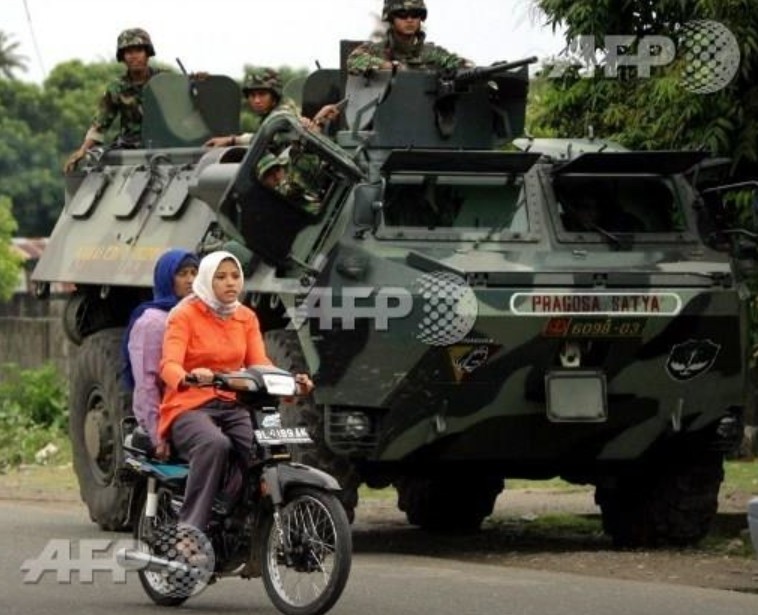
This French-made armoured vehicle played a very large role in protecting TNI troops from ambush attacks carried out by GAM troops. So impressed was the TNI with this VAB armoured vehicle that Pindad carried out reverse engineering and produced the Anoa.
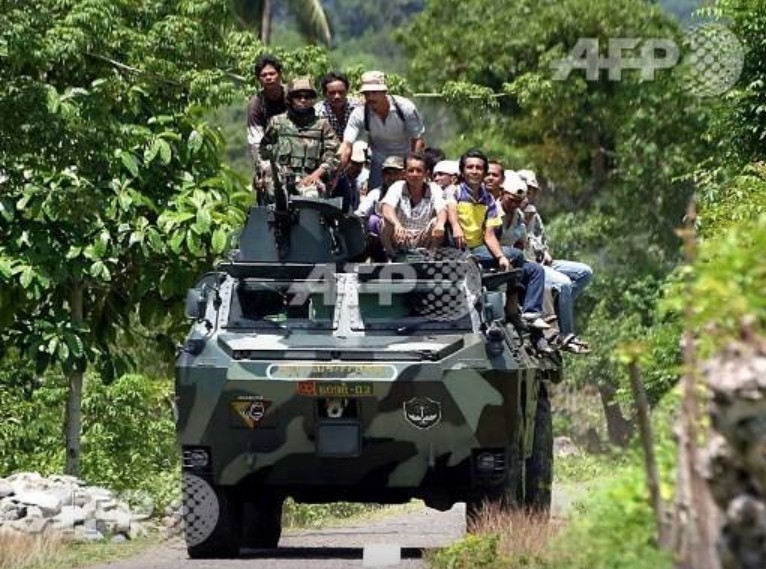
The VAB armoured vehicle was also often used just for joy rides for residents of areas visited by TNI troops. These joy rides could bring residents closer to TNI troops. Residents felt their safety was guaranteed by the presence of TNI troops in their area.
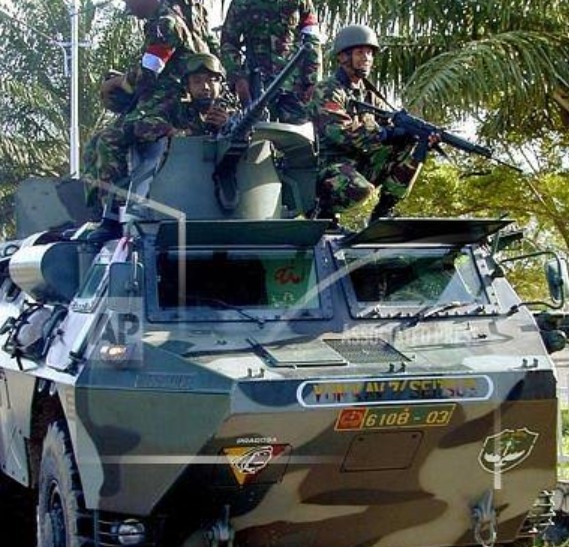
The role of the cavalry troops, both Indonesian Army cavalry and Marine cavalry, was very large in protecting TNI troops from ambushes by GAM guerrillas. GAM troops were only equipped with light rifles, although there were also a small number of GAM troops carrying RPGs. Armoured vehicles like this can protect troops from small-calibre rifle attacks.
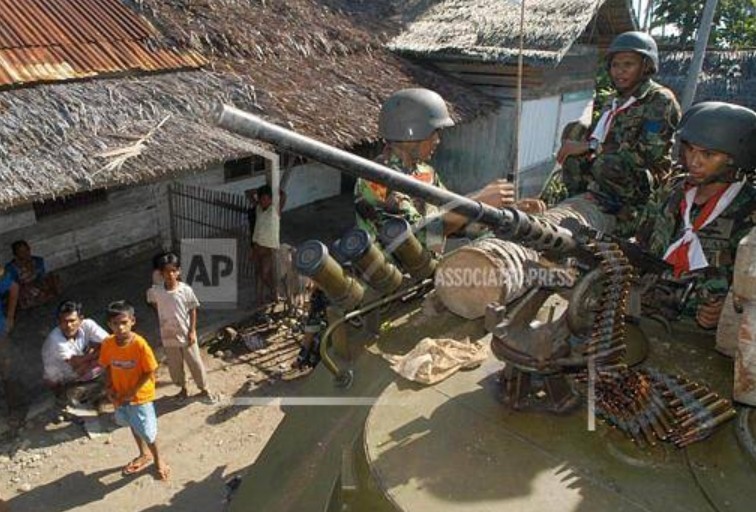
In every troop movement, small children were usually very happy to be able to meet the dashing TNI troops. Marines can be seen aboard an armoured vehicle moving through a village, with children looking enthusiastic as they watch the armoured vehicles passing by.
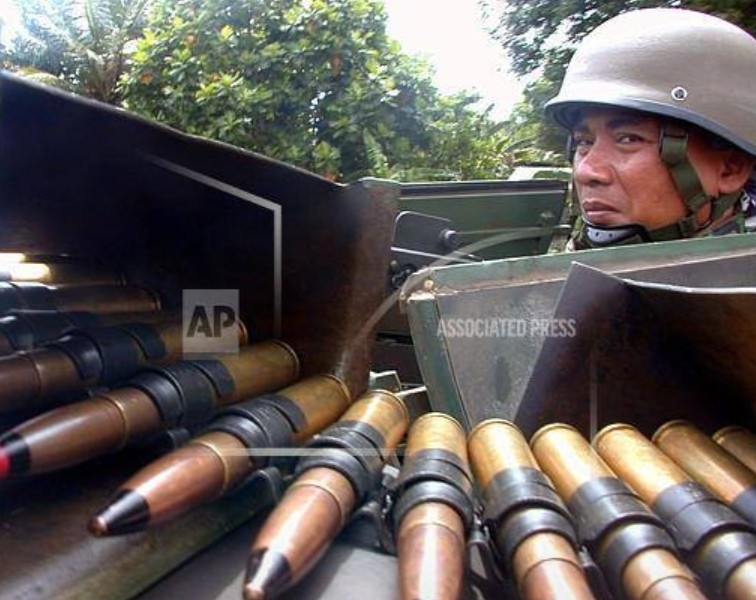
Cavalry armoured vehicles in the Aceh martial law operation were usually equipped with 12.7mm guns, which have greater firepower than 5.56mm-calibre assault rifles. GAM guerrillas, meanwhile, usually equipped themselves only with 7.62mm and 5.56mm-calibre rifles. Having a larger calibre means being able to hit the enemy from further away and with heavier damage.
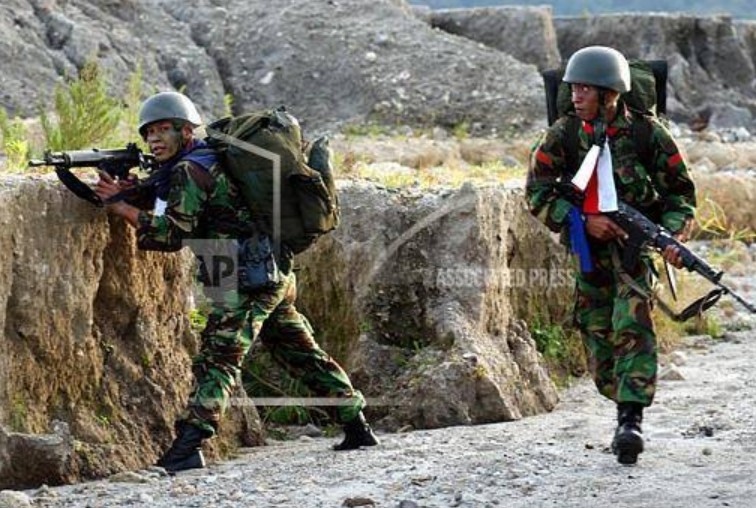
TNI troops usually operated under the buddy system doctrine. They worked in pairs, each protecting the other. A soldier can be seen protecting another soldier.
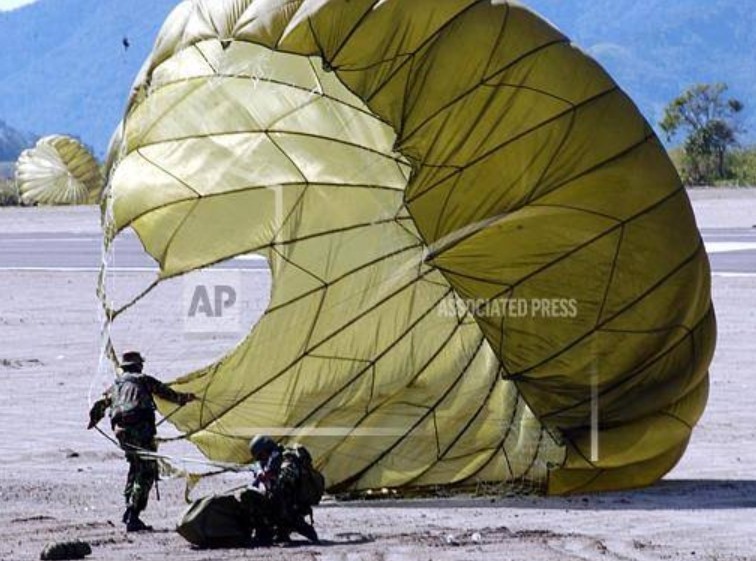
On the first day of the martial law operation in Aceh in 2003, TNI troops were dropped from the air by C-130 Hercules aircraft protected by Hawk 209 fighter jets. Meanwhile, a group of OV-10 Broncos carried out ground attacks on selected targets, and then carried out Combat Air Support missions to protect the paratroops being dropped.
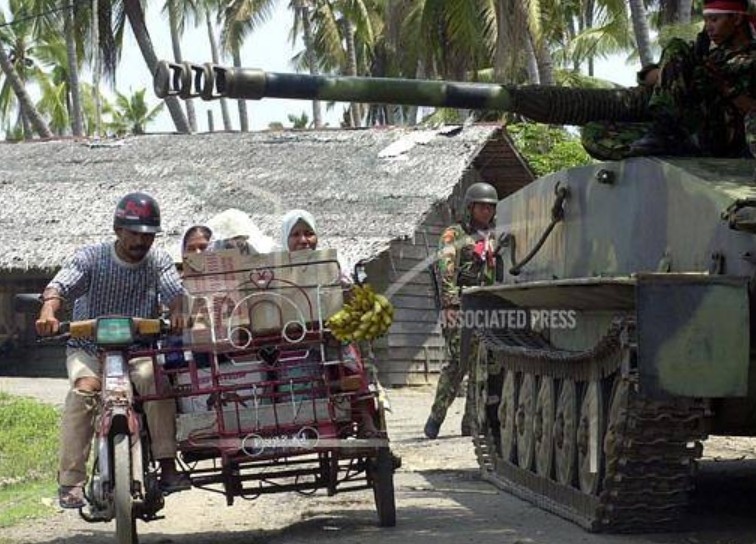
Marine cavalry troops were resting with their PT-76 amphibious tanks. Residents can be seen continuing their activities as usual. With Marines in their village, they could feel safer from the security disturbances often carried out by GAM troops.

TNI troops at that time were still equipped with the standard SS-1 rifle made by PT Pindad Bandung. The SS-1 at this time was reportedly often complained about by its users, with complaints that its barrel heated up quickly and often jammed. From the experience in Aceh, PT Pindad finally designed a completely new assault rifle, the SS-2, which is now the TNI standard.
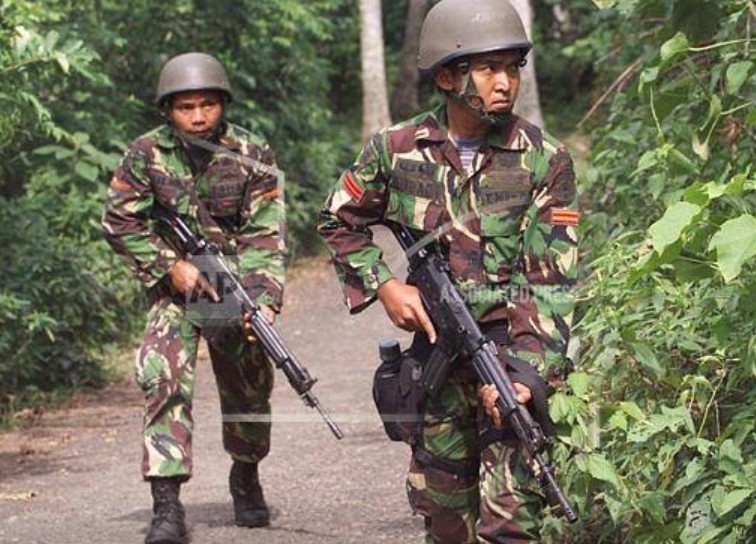
TNI troops at that time were also not all equipped with personal safety equipment such as bulletproof vests. But not long after the operation began, vests with front and back steel bulletproof plates began to be distributed to front-line troops. Of course, their weight was still far heavier than the ceramic and Kevlar vests of today, which are “light”.
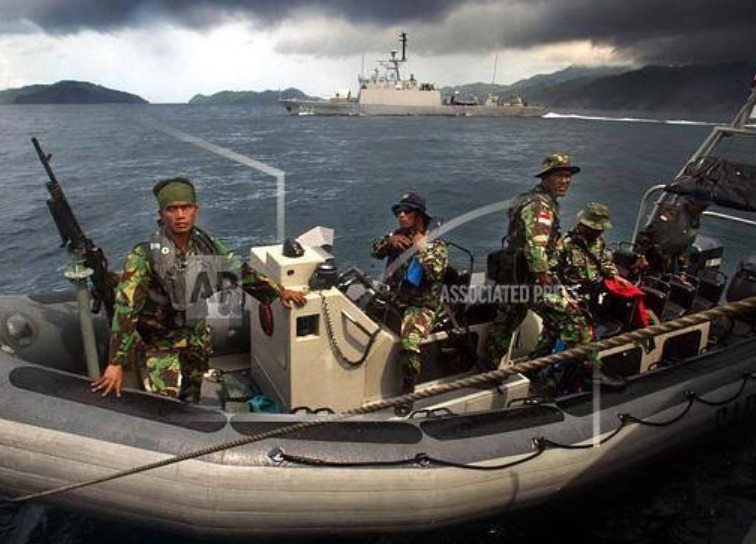
The Indonesian Navy and the Marine Corps enforced a sea blockade throughout the waters of Aceh to prevent illegal weapons from entering from Thailand and Malaysia. Sea patrols were run continuously so they could prevent the smuggling of weapons and other illegal goods. A Marine RHIB and a KRI FPB-57 of the Indonesian Navy can be seen securing the waters of Aceh.
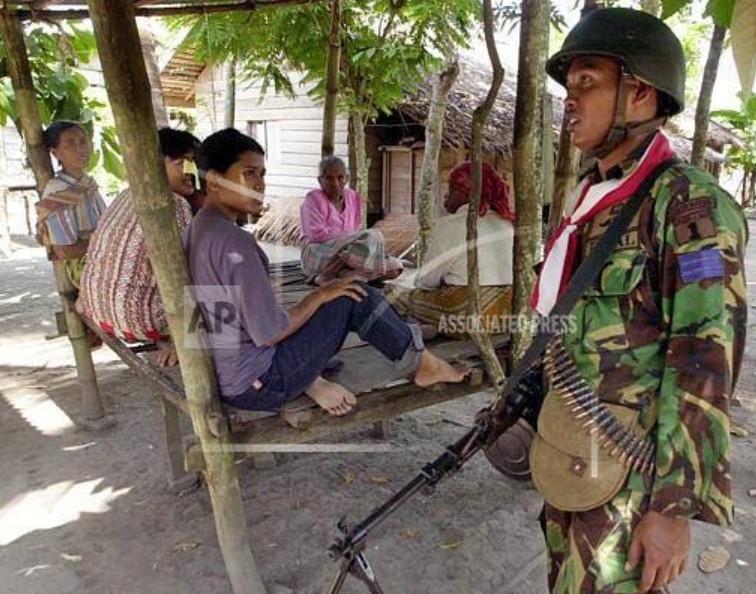
Besides carrying out military operations, the TNI also carried out territorial operations. Every TNI soldier was expected to win the hearts of the people of Aceh and give a sense of security to every person in Aceh. A soldier can be seen among residents in a village during this operation against GAM in Aceh.
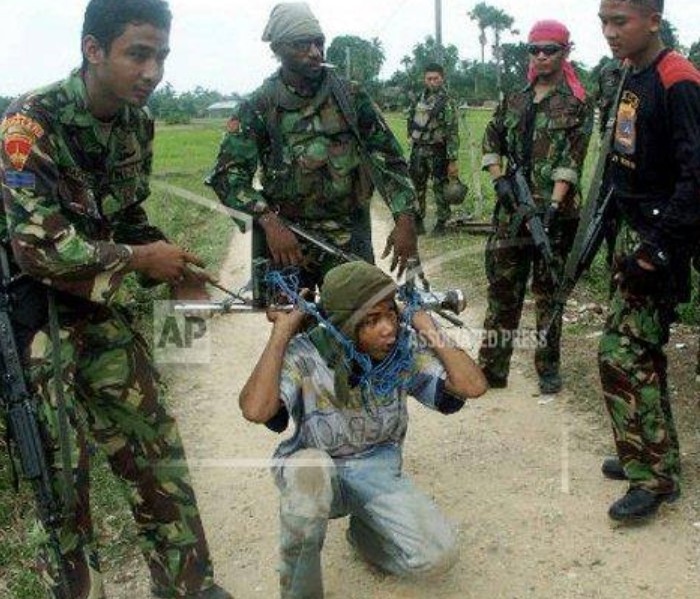
From the results of territorial operations and approaching residents, information was sometimes obtained about the presence of members of the armed GAM group. And with the development of that information, ambush patrols and arrests of GAM members were often carried out. The success of operations like this often began with information from the people to the intelligence task force. This shows a sense of security and trust from the people of Aceh towards the TNI.
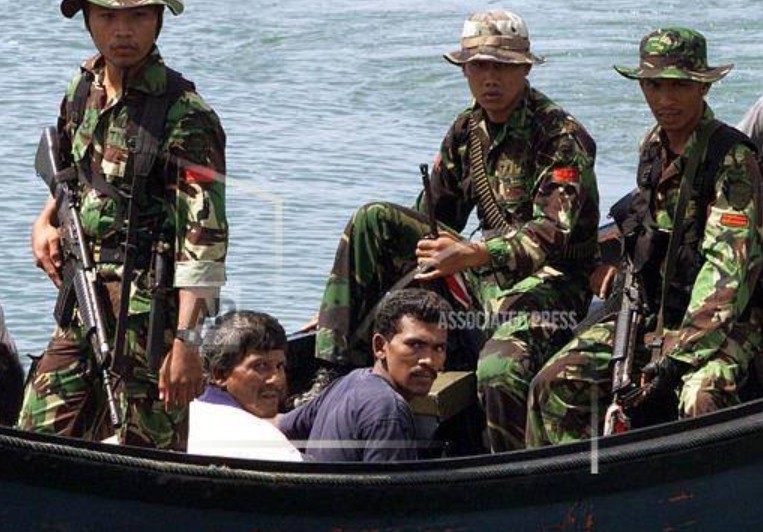
During water patrols, Indonesian Navy Marines also often found GAM members smuggling weapons or hiding in the waters, river mouths, swamps, and shores in the Aceh operational area. Not only fighting GAM members and smugglers. The TNI also fought pirates and hijackers operating around the Malacca Strait in the waters of Aceh.
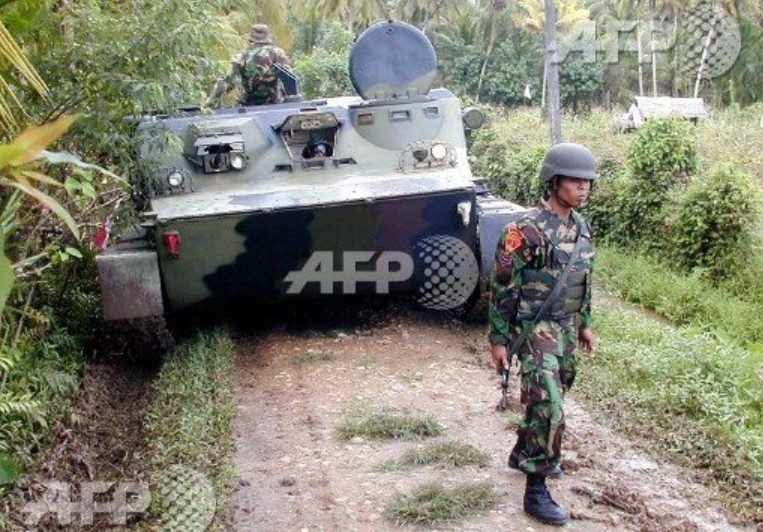
The BTR-50 is a combat vehicle of the Indonesian Navy Marine cavalry that has proven tough in all terrain. Although it has a vulnerable way for troops to get in and out in the face of sudden enemy fire from above, because its hatch doors are on top of the vehicle, this vehicle, bought in the 1960s, is still loved by the Marines.
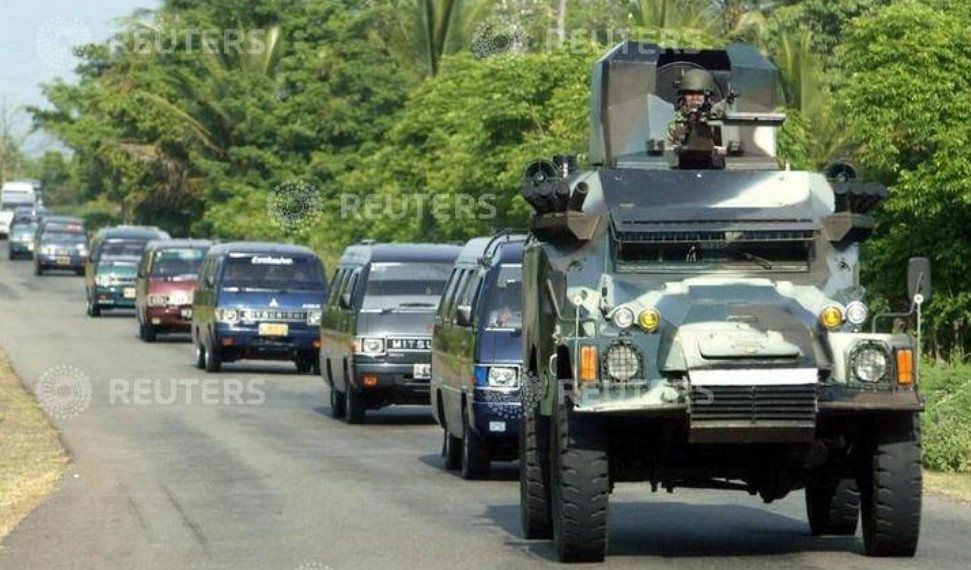
At this time, the TNI was still using old combat vehicles bought in the old order era, for example this BTR-40. Actually, up to this year 2019, tens of years after its purchase, tens of years after the first crew of this combat vehicle retired, this armoured combat vehicle is still used by the TNI. But indeed, it is no longer a first-line military vehicle.
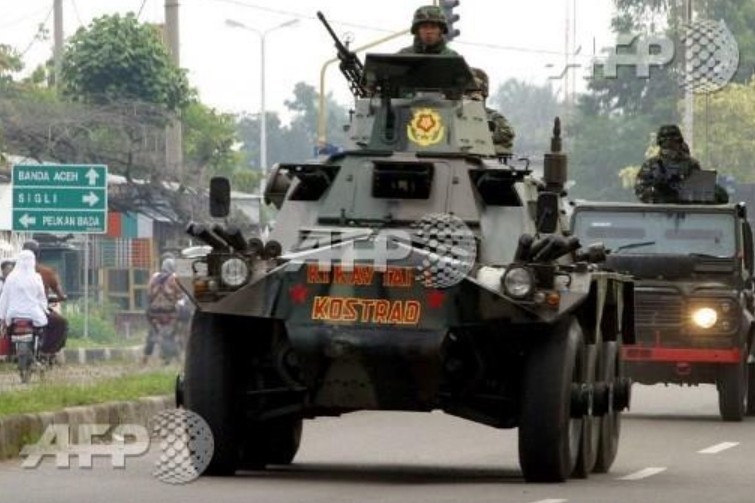
The veteran armoured vehicle of the Indonesian Army Cavalry, the Alvis Saracen, also still played an important role in the security restoration operation in the Aceh region. This armoured vehicle, bought from Britain in the era of President Soekarno, in this year 2019 also still serves in the Indonesian Army. In Aceh, this armoured vehicle often escorted travel and logistics convoys from Medan to Banda Aceh. Escorts were needed so that the supply of basic goods and public transport would not be disrupted in terms of security.
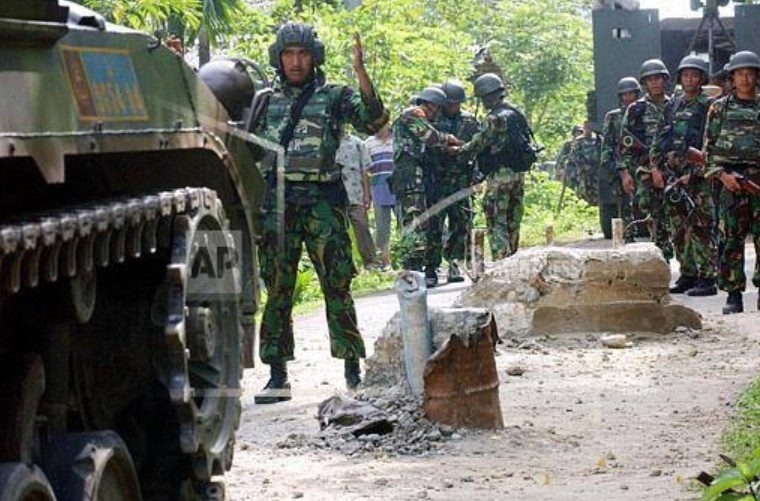
When carrying out ambushes, GAM members did not only attack with light weapons such as AK47, AK74, and M-16 assault rifles. They also used pipe bombs planted as IEDs at the roadside. These bombs would cause damage to ordinary vehicles that had no steel plating or protection against mines.
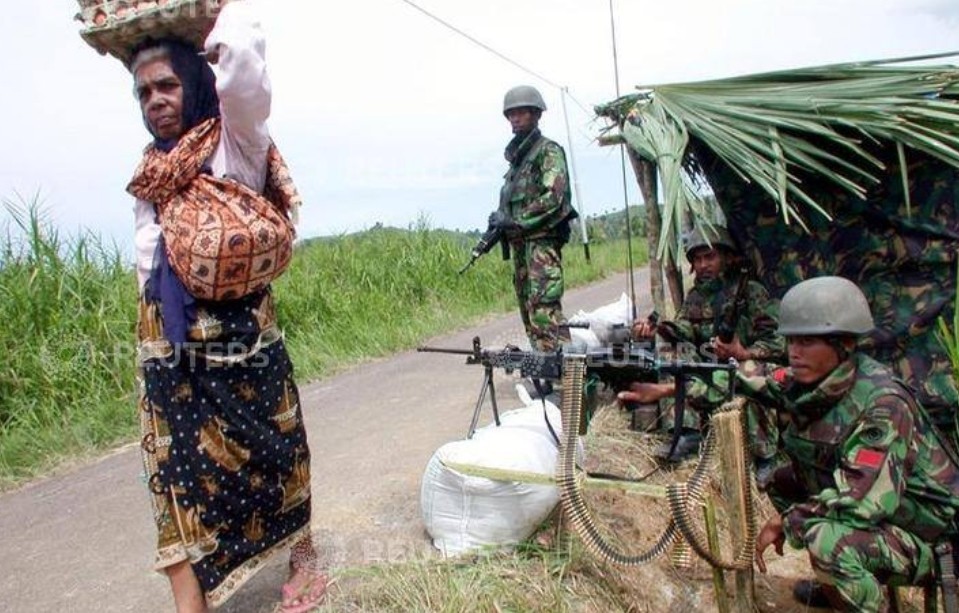
TNI troops set up monitoring posts at the roadside. These posts carried out inspections and security, while also narrowing the room for GAM members to carry out their actions. Villagers can be seen passing a TNI post at the roadside. This post was also a resting place for TNI troops carrying out security patrols.
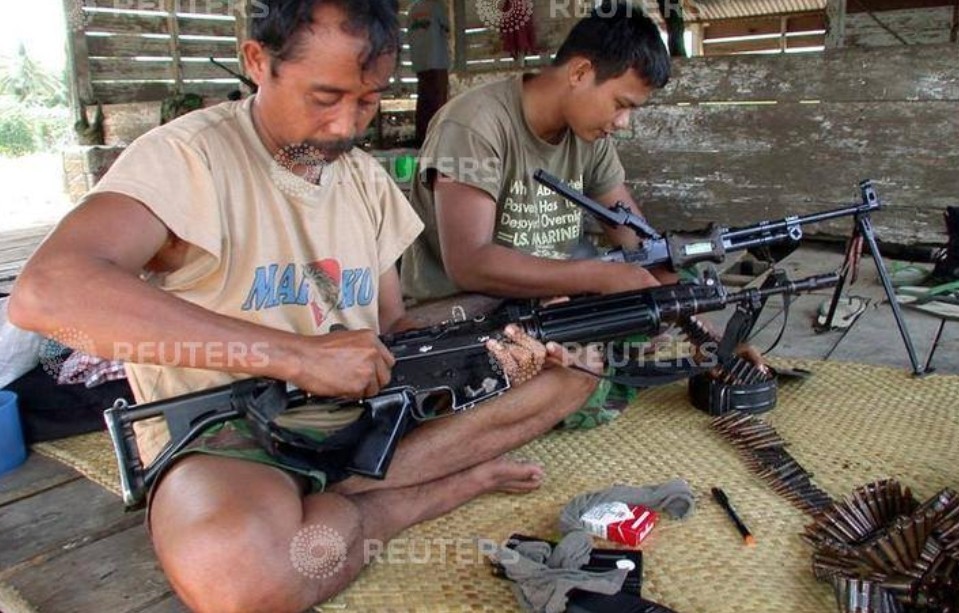
In their spare time, while resting, TNI members had to maintain and clean their weapons so that they would always function well. Especially so they would not jam when used in a firefight if contact with GAM weapons occurred. This weapon is the first wife of a TNI member on duty.
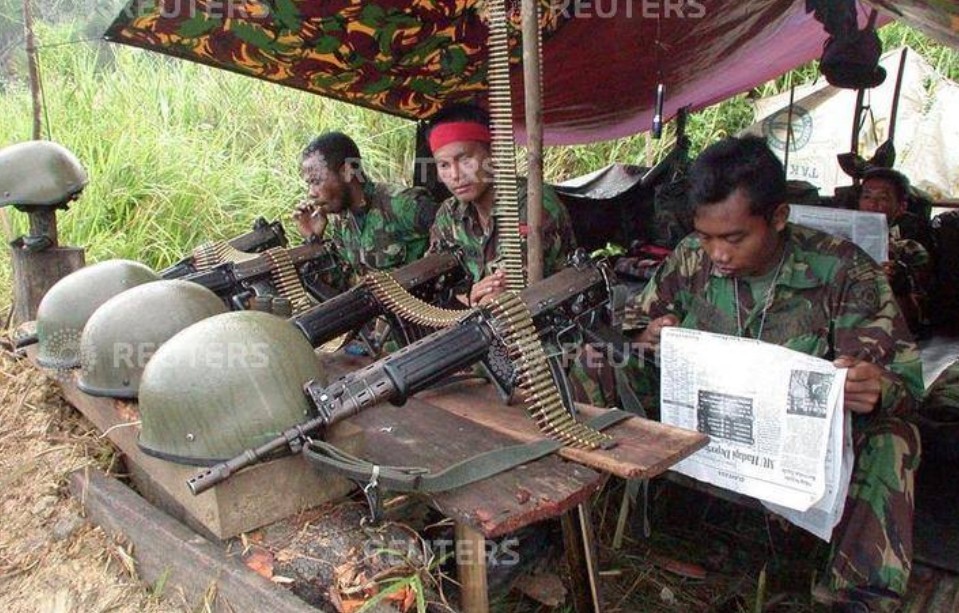
This is the atmosphere at a security post set up by the TNI. Between these posts, routine patrols were carried out randomly. The frequent patrols between posts narrowed the movements of GAM members and could cut off the logistics chain of GAM members. A string of machine-gun bullets can be seen hanging at this post. Even in an operational area, soldiers did not want to miss information, and kept reading newspaper news.
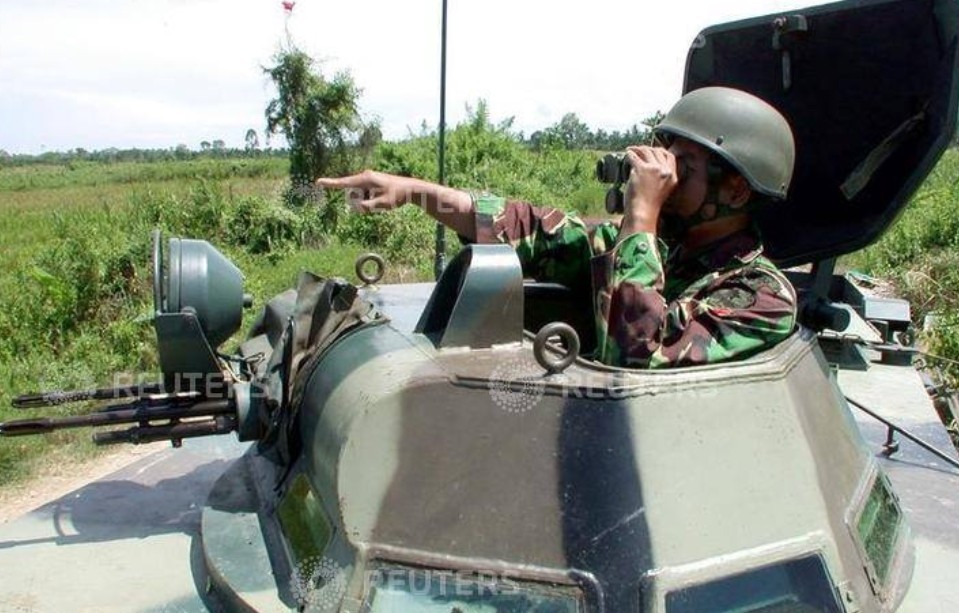
A combat vehicle commander using binoculars directed his vehicle to a certain point. The combat vehicles owned by the TNI, although old-fashioned and vintage, were a force multiplier for TNI strength in carrying out the military operation against GAM in the Aceh region.
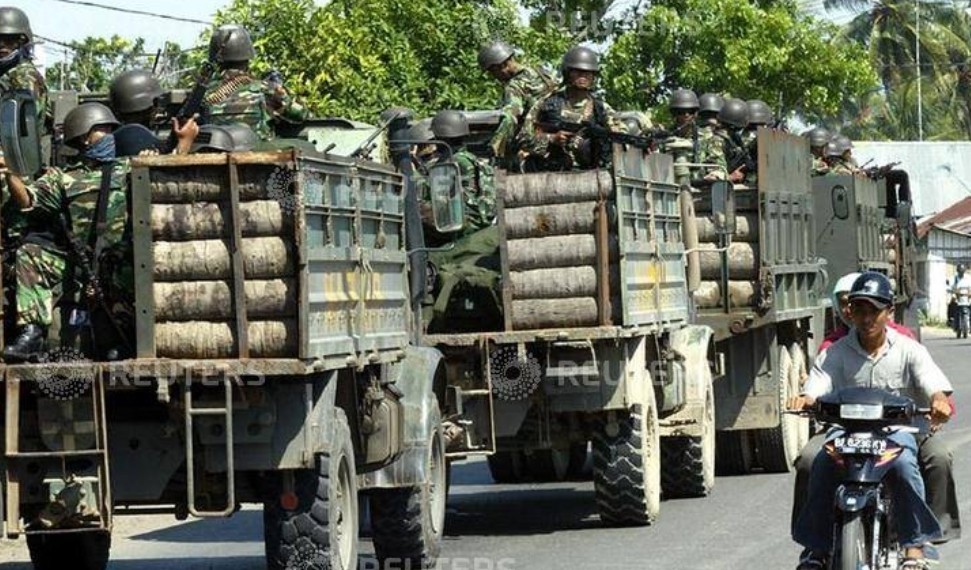
To reduce casualties from ambushes against TNI tactical trucks, TNI members in Aceh improvised on their troop-carrying trucks. Usually an extra steel layer was fitted with manual welding, then coconut trunks were added as extra armour. Although simple, this trick applied in the field was able to reduce the number of victims shot as a result of ambushes by GAM members.
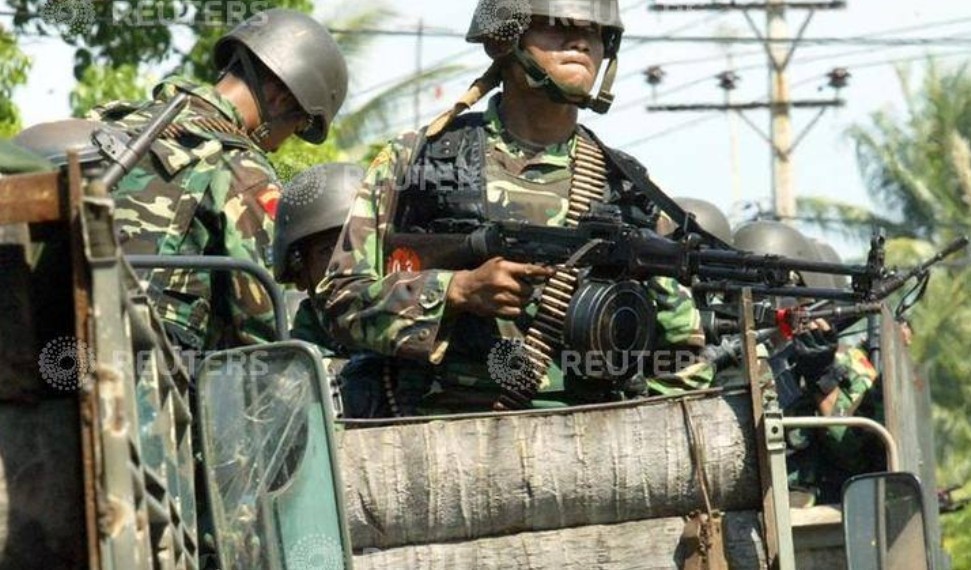
This Glugu Armour was widely applied to TNI tactical trucks, security posts, and other places that often received security disturbances from GAM. From the evaluation of troop movements using tactical vehicles in Aceh, the TNI and Pindad finally built the Anoa 6×6 APC by reverse engineering the VAB 4×4 armoured vehicle. Besides that, the TNI also formed mechanised infantry battalions.
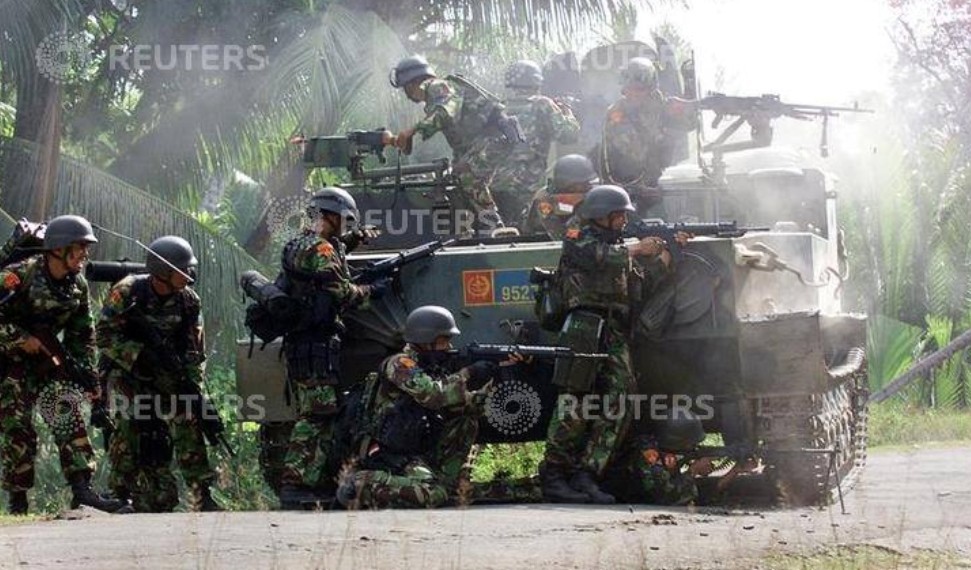
TNI troops rushed down from their combat vehicles to engage in the firefight given by members of the Free Aceh Movement. The armoured vehicle provided protection against small-calibre weapon attacks. The vehicle could also provide additional firepower with the cannon and heavy machine guns it carried.
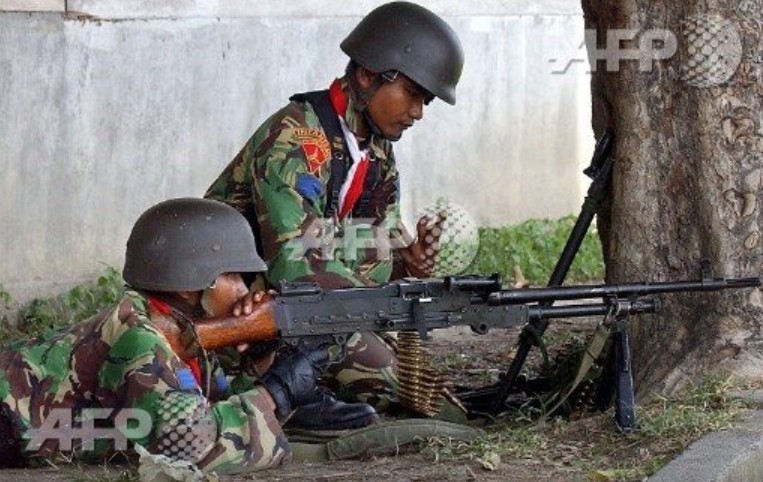
The machine gunner provided covering fire for his fellow troops. Fire given continuously can suppress the enemy to stop their firing and allow friendly troops to advance and return fire at the enemy. This squad machine gun gives a unit several times the firepower compared with the GAM members who were its enemy.
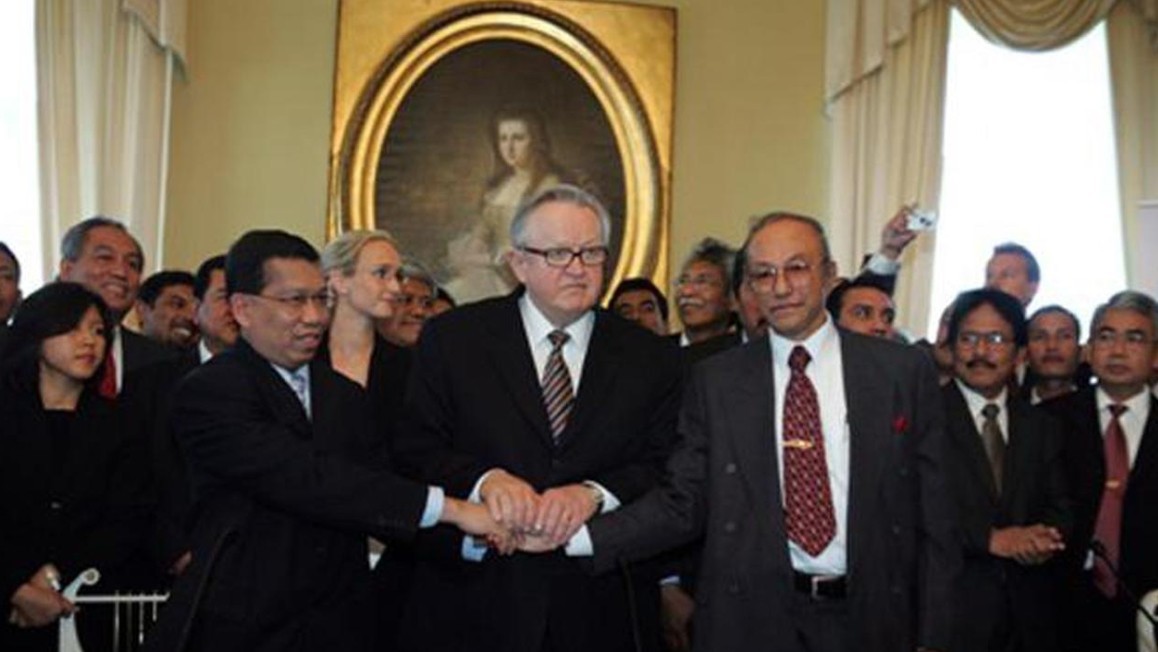
Now everything is over. The Helsinki Agreement has been signed and its points have been implemented. Among them, GAM stopped its resistance, Islamic Sharia was applied in regional law, and there is a local Aceh party. Let us pray that peace will always be present in this Republic of Indonesia.