
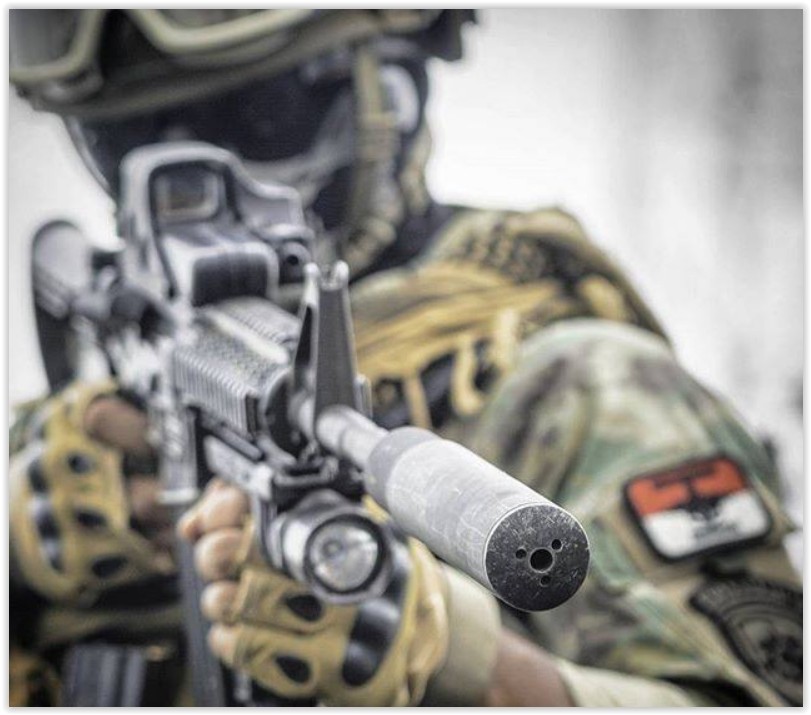
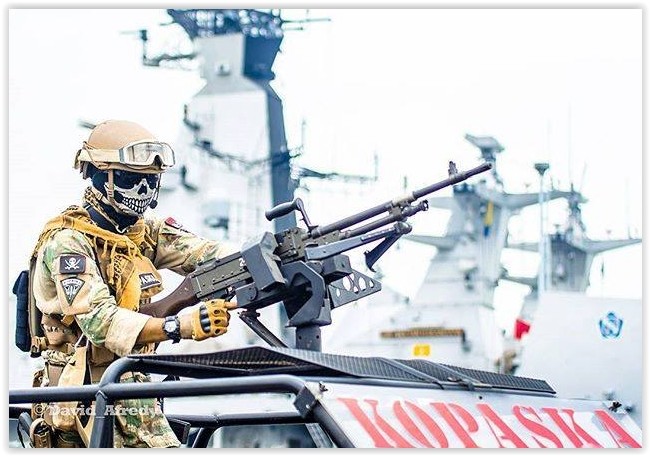
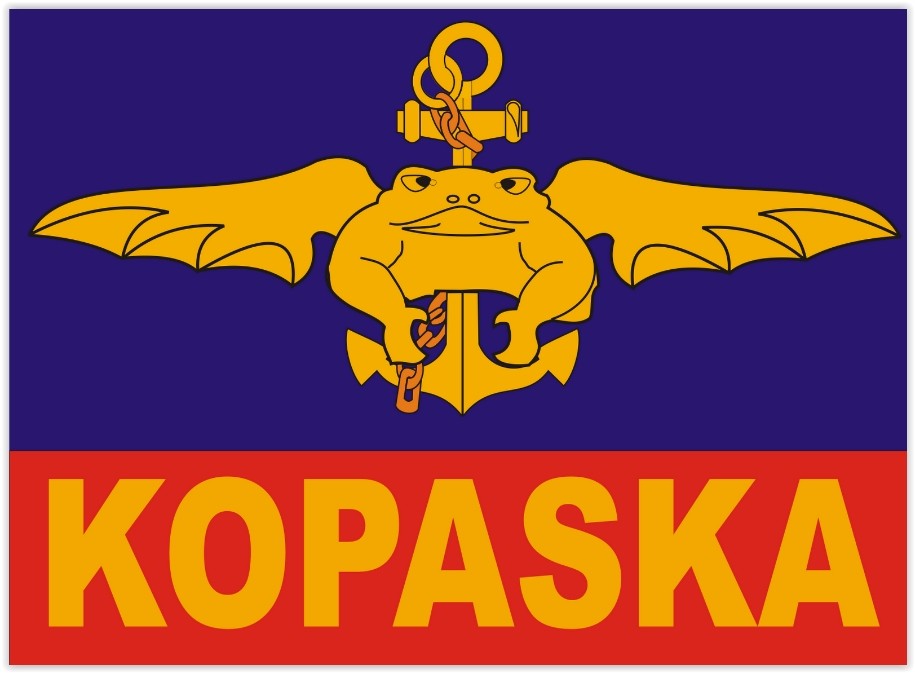
Profile of Kopaska of the Indonesian Navy, Indonesia’s Mainstay Frogman Force – HobbyMiliter.com – When it comes to underwater sabotage and infiltration into the enemy’s lair, the Indonesian Navy has a mainstay. They are the Frogman Command, better known as Kopaska of the Indonesian Navy. Here is a brief profile as well as some of the weaponry and capabilities it possesses. It gives you goosebumps to hear the principle Kopaska follows in carrying out its duties. Just imagine, to devour its target, every member of this Indonesian Navy special force follows a one way ticket doctrine. That means an operation must be carried out successfully, even at the risk of losing one’s life. So it is no exaggeration that the nickname One Way Ticket Commando can stick to Kopaska.
The Frogman Force Was Formed to Sink the Karel Doorman
If traced back, the idea of forming a frogman force began in 1954. At that time several officers under the leadership of Captain (Navy) Iskak opened a Frogman school at the Mine Service in Surabaya. Then, three years later, the Indonesian Navy also sent two officers to take part in Under Water Demolition Team (UDT) training in the US.
When the PRRI/Permesta rebellion erupted in 1958, the frogman unit may not yet have been officially formed. Yet that does not mean underwater special operations could not be carried out. On the contrary, with personnel numbers still very limited, they were required to take part in a real military operation. Clearing sea obstacles for the entry route of Indonesian Navy ships into Teluk Bayur was the task of the embryo of the Frogman Command at that time.
The drums of Operation Trikora, sounded at the end of 1961, marked a major change for the Indonesian Navy’s underwater unit. To support a landing operation involving 150,000 troops and 100 Navy ships, there was no other way. The presence of frogmen was clearly needed to open the way. As a result, the Indonesian Military leaders of the time decided to form the Frogman Command, abbreviated as Kopaska. This elite force unit was officially born on 31 March 1962.
Newly formed did not mean Kopaska could proceed leisurely. On the contrary, the heavy task of supporting Operation Trikora was already waiting. Besides serving as the opener of the amphibious operation, Kopaska was also given other additional tasks. Among them was the plan to destroy the Dutch radar installation in Irian.
That was not all. They were even given two orders that could be called sensational. First, to destroy the Dutch aircraft carrier, Karel Doorman! That symbol of the colonizers’ sea power would be struck with a manned torpedo. Last, to kidnap Admiral Reeser, Commander of the Dutch Armed Forces in West Irian. Clearly, if those symbols of colonial power could be brought down, the Dutch would lose face. Truly a heavy task awaited the soldiers of the Frogman Command.
The Prowess of Kopaska of the Indonesian Navy

Fifty-two years after its formation, there have been many changes in Kopaska’s operational capabilities. Now they no longer only deal with sea mine disposal, the destruction of underwater targets, and all infiltration operations via submarine. One new skill absorbed from the US Navy’s special forces (US Navy SEALs) is the tactic of infiltration by air. The Frogman Command has become even more formidable.
That US-style air infiltration tactic is called Combat Raiding Rubber Craft (CRRC). Its purpose is to set up communications and navigation facilities behind the enemy’s defensive lines. For that, a number of frogmen (about 6 people) are dropped together with a rubber boat into the sea near enemy territory.
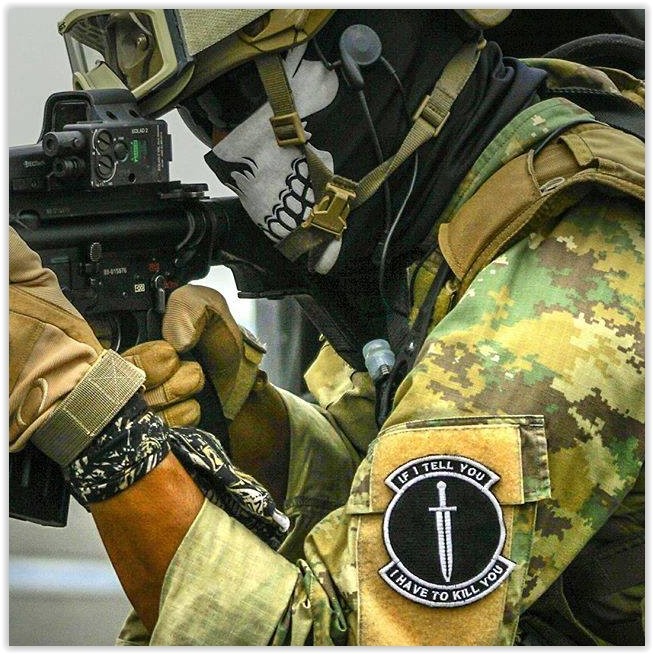
At a glance it does feel easy to do. Just throw the rubber boat weighing 300 kg, containing navigation and communications equipment, diving gear, fuel and weapons, out of the belly of the aircraft. Then just drop the troops. Easy, is it not? Case closed.
But that is a layman’s view. To succeed, an operation like that actually needs special techniques. As an illustration, the way the rubber boat is packed so it can reach the drop point, for example. The seating position for the parachute must be just right, so the parachute can open perfectly. The knots of the packing ropes are also made in such a way. The knots are made so they can come undone in the water with just one cut.
Done? Not yet. When the loading process begins, the position of the boat must be correct. The bow faces the ramp door, and must be parallel to the aircraft cabin wall. That is a condition that cannot be negotiated. Besides that, the boat must also be tied to a wheeled board. This is an effort to smooth the launch through the rear door of the aircraft.
The rubber boat is launched from a height of about 800 meters. So are the frogmen who follow afterwards. But again, here a problem arises that cannot be taken lightly. The reason is that finding the exact point where the rubber boat lands is not easy. Once it lands on the sea surface, the boat could drift away or be covered by waves. As a result, the frogmen must have an instinct as sharp as an eagle’s to identify the location of the boat.
Kopaska Frogman Command’s Invasion of Nasi Island Against GAM
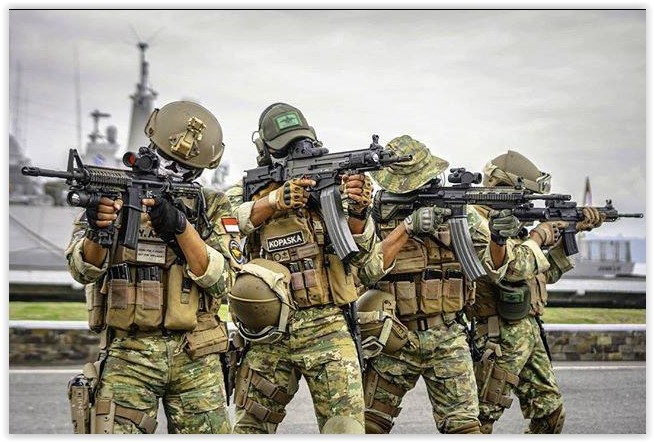
Besides dropping rubber boats, the frogman command also has beach assault capability. A capability of this kind was once proven when the Indonesian Military carried out an assault on a GAM hideout on Nasi Island several years ago. In that operation Kopaska deployed two Sea Raider type boats.
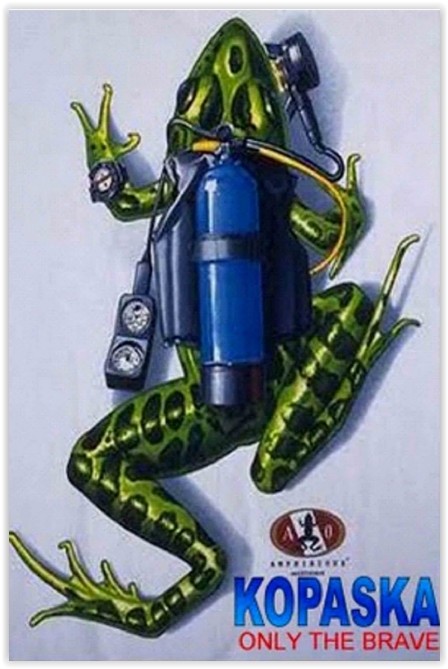
Just so you know, the Sea Raider, a special boat designed in Britain, was packed with more than 20 frogmen. Their task was to clear Nasi Island’s beach of all obstacles, including ambushes by GAM forces.
The whizzing of GAM bullets greeted the arrival of the two Sea Raiders as the operation was launched at dawn. The enemy’s hot lead strikes could be avoided thanks to extreme maneuvers. Fortunately, not a single boat was brought down. Only one GAM bullet managed to hit its target. Fortunately it only hit the engine’s protective layer.
Facing resistance that was quite heavy did not mean the Indonesian Military troops finally retreated. On the contrary, armed with the FN MAG GPMG (General Purpose Machine Gun) they carried, they returned the enemy’s fire. Its 7.62 mm caliber bullets fiercely swept the enemy’s hiding points. Each boat had one GPMG, each carrying 500 rounds.
Kopaska of the Indonesian Navy Training
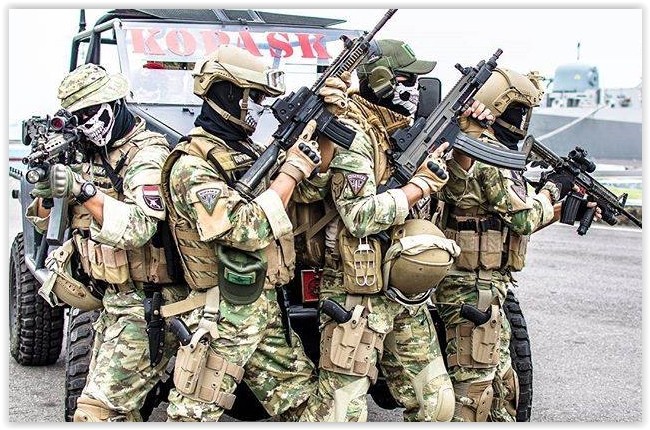
Like any elite force, the education process for prospective members of the Frogman Command is also tough. One of the toughest is the education stage labeled hell week. This education model is taken from the tradition usually applied by the US Navy demolition team (UDT).
At this time the students undergo a truly heavy mental test. No schedule is applied. All orders are given suddenly, without notice or warning. An order could be given during the night rest period or at mealtime. The secrecy of orders is also arranged so that nothing leaks to the students.
The Kopaska education experience can perhaps serve as a vivid illustration. At the final stage of that hell week, the students were required to row to an island from the beach. This activity was carried out at exactly 00.00 Western Indonesian Time. Once they reached their destination, they were indeed allowed to have a dinner they cooked themselves.
This situation did not last long. At exactly 03.20 each team was ordered to hide the rubber boats they had used to cross. Before their bodies had even enjoyed a rest, 40 minutes later the second order came down. The students were required to return to Mauk by swimming. Like a real military operation, this activity was opened with repeated explosions set off by the Indonesian Military.
In that pitch dark yet noisy atmosphere, the students were required to think fast. Before jumping into the sea, they first aimed their compasses while calculating the strength of the sea current in the early morning. Cold and strong currents were challenges that had to be faced on the journey to the beach. As a navigation reference, the light at the destination could also be used as a guide.
That is a brief profile and the capabilities possessed by Kopaska as an Indonesian Navy special warfare element. In line with Kopaska’s motto “Tan Hana Wighna Tan Sima”, which means “no obstacle cannot be overcome”.
Read also: Profile of Denjaka of the Indonesian Navy, Indonesia’s Mysterious Elite Force, a follow-on joint unit for selected Kopaska and Yontaifib personnel.