

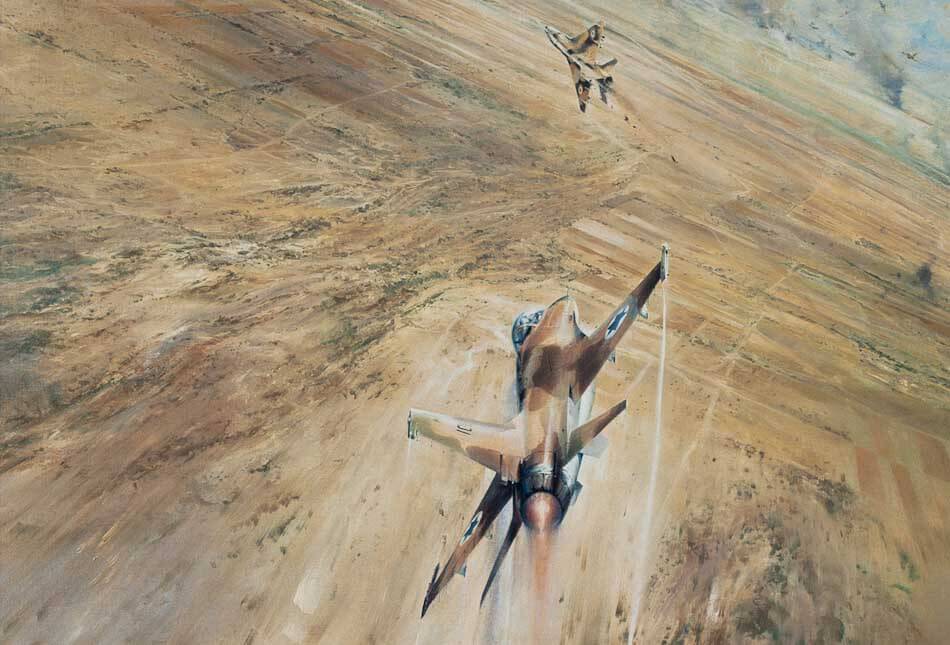
But was it really only Israeli fighter aircraft that decided that absolute victory? It turned out not. Behind the scenes, they also relied on units operating electronic warfare (Pemika) equipment. The facts reveal that it was precisely this unit that was judged to be the deciding factor in the success of the attack in the Bekaa Valley.
The unit, which can also be regarded as the organiser of the battle control system, consisted among other things of ground radar, reconnaissance aircraft (manned and unmanned), and data collection and processing centres. Thanks to this unit, the Israeli Air Force could plan air combat operations extremely effectively. This unit was also what enabled Israeli fighter aircraft to shoot down their targets decisively and accurately.
The electronic warfare equipment that played a crucial role was the RF-4 Phantom tactical reconnaissance aircraft. This aircraft was in fact made by McDonnell Douglas of the United States, but Israel still fitted it with additional electronic reconnaissance devices. These devices were kept highly secret, so it is no wonder that a special destruction operation was once carried out when one of them crashed. This operation was carried out so that Soviet experts could not take and copy the devices.
Besides the RF-4, Israel also relied on Firebee drones and the Scout and Mastiff unmanned reconnaissance aircraft. Both RPVs (Remotely Piloted Vehicles) were fitted with television cameras and wide-angle photo cameras. They were sent on up to 70 flight missions every day just to find out the condition of the targets and whether any targets remained undestroyed. The Israeli Air Force would deploy its fighter aircraft again whenever it was learned that targets remained.