


The Bekaa Valley itself is a valley running parallel to the Israel-Lebanon border. This valley can also be said to stretch from the southern side of Rayak to the Golan Heights controlled by Israel. It can therefore be said that the strength of surface-to-air missiles (SAM) deployed extensively by Syria in the Bekaa Valley was the main obstacle for the Israeli army seeking to pursue PLO guerrillas into southern Lebanon.
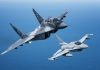
Among the many technical advantages in this battle, it is acknowledged that the Israeli Electronic Warfare (Pernika) unit showed an extremely high level of professionalism. The Israeli Armed Forces succeeded in combining it with support for air operations control and the suppression of the enemy’s ground defence capability. Altogether, all of this supported the success of the battle carried out by the fighter and bomber aircraft in battle formation.
Tel Aviv realised that if the attack were only to avenge the guerrilla attacks, they would draw international criticism. For that reason, they agreed to play up the PLO attack on the Israeli embassy in London on 3 June 1982, which left their ambassador seriously wounded, as the main reason.