


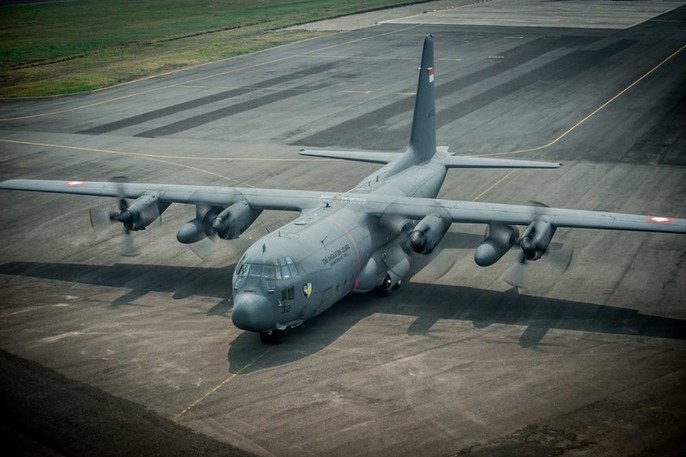
Hobbymiliter.com – Markas Besar TNI Angkatan Udara menandatangani 27 kontrak pengadaan untuk tahun anggaran 2016 senilai Rp 323 miliar.
Kepala Dinas Penerangan TNI AU Marsekal Pertama Dwi Badarmanto mengatakan bahwa kontrak sengaja dibuat pada awal tahun agar bisa diselesaikan dalam tahun anggaran yang sama. Dan menurut pengalaman yang dahulu, proses pengadaan paling cepat dimulai pada bulan Mei.
“Kontrak di awal tahun supaya ekonomi bergerak dan keberadaan suku cadang terdukung. Tidak sampai pertengahan tahun, seluruh kontrak selesai pada bulan Juni dengan belanja modal dan barang di atas Rp 7 triliun untuk TNI AU,” kata Marsekal Pertama Dwi Badarmanto dalam jumpa pers, Rabu (13/1/2016) di Cilangkap, Jakarta.
Kontrak pengadaan barang TNI AU ini dilakukan bersama 24 perusahaan swasta : PT Erindo Mulia Pratama, PT Avindo, PT Karunia Jaya, CV Sumber Anugrah Angkasa, PT Mulindo Citra Pratama, PT Anugerah Jaya Bersama, PT Tiarangkasa, PT Duta Bangun Manunggal dan PT Nusantara Airparts.
Ada juga: PT Vas Aero Indonesia, PT Furaya Lancar Sentosa, PT Tirta Indo Sentosa, PT Askazam Putra Mandiri, PT Trinindo Karya Lumanda, PT Dharma Sanda, PT Eka Bina Sarana, PT Cipta Sarana Mas, PT Puri Adrian Perdana, PT Multikreasindo Lestari, PT Baiq Lafa Putra, PT Global Aero Sejahtera, PT Maju Abadi Senantiasa, PT Sigma Andalan Nusa dan PT Bumi Paradise.
Kontrak yang ditandatangani antara lain, mencakup pengadaan suku cadang pesawat C-130, Super Puma, Pesawat latih, dan ada beberapa dukungan lain seperti alat pendidikan simulator. Adapun untuk pengadaan barang dari luar negeri, kebijakannya berada di tangan Kementerian Pertahanan.






The depth here is impressive. Most guides just skim the surface of link velocity, but your point about “natural variance” hits the nail on the head. It’s exactly what we preach to our clients.
Great read. It reminds me of the strategy we deployed last quarter. The focus on foundational stability really pays off when the algorithm shifts. Thanks for compiling this.
Is there a specific tool you recommend for tracking the velocity? We’ve been doing it manually but it’s becoming unscalable.
This is a solid breakdown. One thing I’d add is that the impact of these updates often lags by 2-3 weeks. We tracked this across multiple projects and found the recovery phase is where most people give up too early.
This is exactly why we moved away from automated PBNs. The risk/reward ratio just doesn’t make sense anymore compared to what you’re describing.
Spot on about the indexing delays. It’s not just about building the link anymore; it’s about the “stickiness” of the placement. We’ve been focusing heavily on that metric lately.
For anyone reading this, pay attention to paragraph 4. That subtle distinction between “diversity” and “randomness” is what saves you during a Core Update.
I bookmarked this for my team. The section on avoiding footprints is crucial. We recently audited a site that got hit exactly because they ignored that principle. Good catch.
I bookmarked this for my team. The section on avoiding footprints is crucial. We recently audited a site that got hit exactly because they ignored that principle. Good catch.
Finally, someone said it. The old school “blast and pray” method is dead. Precision and camouflage are the new standard.
Have you considered the impact of mobile-first indexing on these placements? We’ve noticed that some “desktop-safe” strategies are flagging on mobile crawls.
I’d love to see a follow-up post on how this integrates with social signals. We feel there’s a multiplier effect there that isn’t being fully utilized.
The article provides a detailed look at the Indonesian Air Force’s procurement contracts, highlighting the strategic move to sign early for efficiency. It’s interesting to see how such logistical planning ensures operational readiness. Speaking of precision and synchronization, Clapoint could be a handy tool for anyone editing dance videos to match the original song’s beat, much like how the Air Force aligns its procurement with budget cycles. It’s a different field, but both require careful timing and coordination.
replace audio in video
The article’s focus on the Indonesian Air Force’s efficient procurement scheduling is a great example of how meticulous planning can streamline operations. It reminds me that in any field, from military logistics to personal data management, attention to detail and proactive measures are key. For instance, just as they sign contracts early to avoid delays, using a tool like AI Metadata Remover can help individuals proactively protect their privacy by stripping sensitive location data from photos before sharing them online. Both approaches prioritize readiness and security.
ai metadata remover
Reading about the TNI AU signing 27 contracts worth Rp 323 billion for aircraft spare parts really puts into perspective how much behind-the-scenes work goes into keeping an air force mission-ready. It’s interesting that they deliberately moved the procurement to the start of the year to avoid the usual mid-year delays, which shows a smart shift in planning. I can only imagine the relief for the maintenance crews knowing that parts will arrive sooner rather than later. This kind of logistical foresight reminds me of how important it is to have the right tools ready when inspiration strikes, whether for defense or creative projects. For anyone working on their own creative logistics, having a reliable workspace to generate and organize music can feel just as essential. Musefy – AI Music Generator might be a handy companion for turning ideas into finished tracks without the usual friction.